

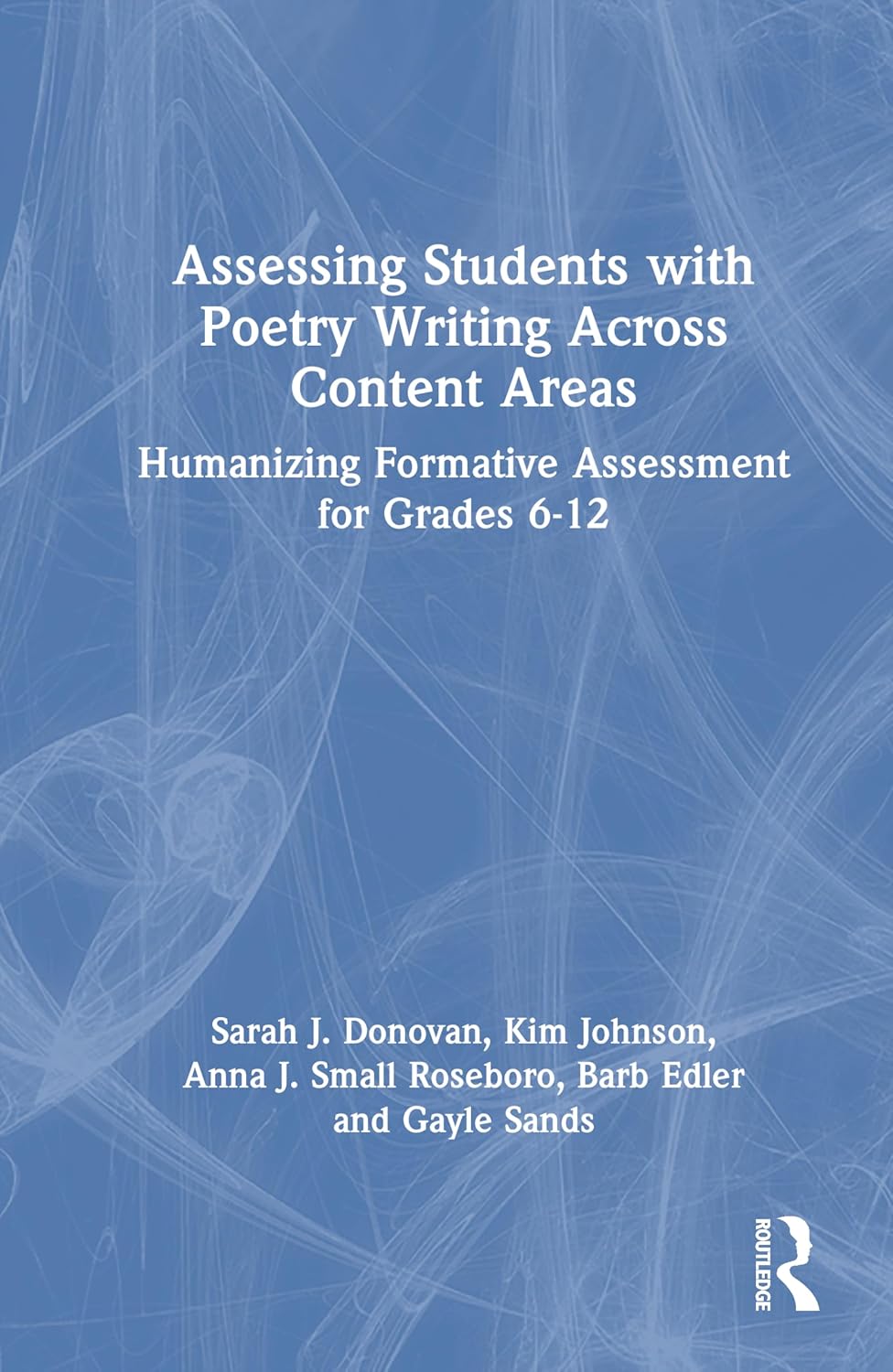
Assessing Students with Poetry Writing Across Content Areas
Assessing Students with Poetry Writing Across Content Areas
Price subject to change. Tap below for current.
Couldn't load pickup availability
Our review of Assessing Students with Poetry Writing Across Content Areas finds it a thoughtful resource for teachers who want to shift formative assessment toward creativity and student meaning-making. The book stands out for treating student texts as windows into understanding rather than merely answers to be scored, making it especially useful for educators seeking practical alternatives to worksheets and quizzes. This review highlights how the authors blend classroom-ready examples with pedagogical framing so teachers can implement poetry-based assessment across subjects.
Key Features
- Formative assessment reframed: Encourages teachers to treat student poetry as evidence of thinking, giving more insight into reasoning than traditional assessments.
- Cross-content adaptability: Demonstrates how poetic forms like acrostics, haiku, and pantoum can be used in science, social studies, and literacy lessons.
- Practical classroom examples: Provides concrete samples teachers can adapt immediately for formative tasks and reflective activities.
- Collaborative and reflective focus: Emphasizes peer conversation and reflection as part of assessment, supporting deeper learning and student voice.
- Creative assessment strategies: Offers methods that broaden what counts as evidence of understanding beyond right-or-wrong answers.
Who It's For
This book is best for K-12 teachers, instructional coaches, and curriculum leaders who want to incorporate poetry-based assessment into content-area teaching and who value qualitative evidence of student thinking. It suits classrooms where teachers are open to alternative demonstrations of learning and want ready-to-use examples.
It is less useful for those seeking standardized test preparation resources or detailed scoring rubrics for high-stakes grading, since the emphasis is on formative, interpretive practice rather than summative numeric scores.
Pros & Cons
Pros
- Presents a clear argument for using student writing as assessment, which can reveal deeper understanding.
- Includes adaptable poetic forms that work across multiple subjects and grade levels.
- Supports collaborative and reflective classroom routines that promote student voice.
Cons
- Not focused on standardized grading systems, so teachers expecting rigid rubrics may need to develop their own.
Specifications
| Title | Assessing Students with Poetry Writing Across Content Areas |
| Authors | Sarah J. Donovan, Kim Johnson, Anna J. Small Roseboro, Barbara Edler, Gayle Sands |
| Focus | Formative assessment via poetry and student texts |
| Classroom use | Cross-content: literacy, science, social studies, arts |
| Included examples | Acrostic, haiku, pantoum and other poetic forms |
| Approach | Holistic, creative, reflective, collaborative |
Our Verdict
Assessing Students with Poetry Writing Across Content Areas is a practical, idea-rich guide for educators who want to expand formative assessment beyond worksheets and quizzes. Teachers seeking to surface student thinking through creative texts will find strong classroom examples and a persuasive rationale, making it a good value for those ready to adopt more interpretive assessment practices.
Frequently Asked Questions
Can poetic forms be used in non-literacy subjects?
Yes. The book shows how forms like haiku and acrostic can be adapted to represent concepts in science and social studies.
Does the book provide scoring rubrics?
The emphasis is formative and interpretive; teachers are encouraged to adapt assessment criteria rather than rely on standardized rubrics.
Is this suitable for elementary classrooms?
Yes. Examples and approaches are adaptable for K-12, with simple forms useful for younger students and more complex tasks for older learners.
Editor's Take
This practical guide shows teachers how to use poetry as formative assessment to surface student thinking across content areas; it is best for educators seeking creative, interpretive assessment methods.

Recently viewed
Recently viewed products will appear here as customers browse the store.