

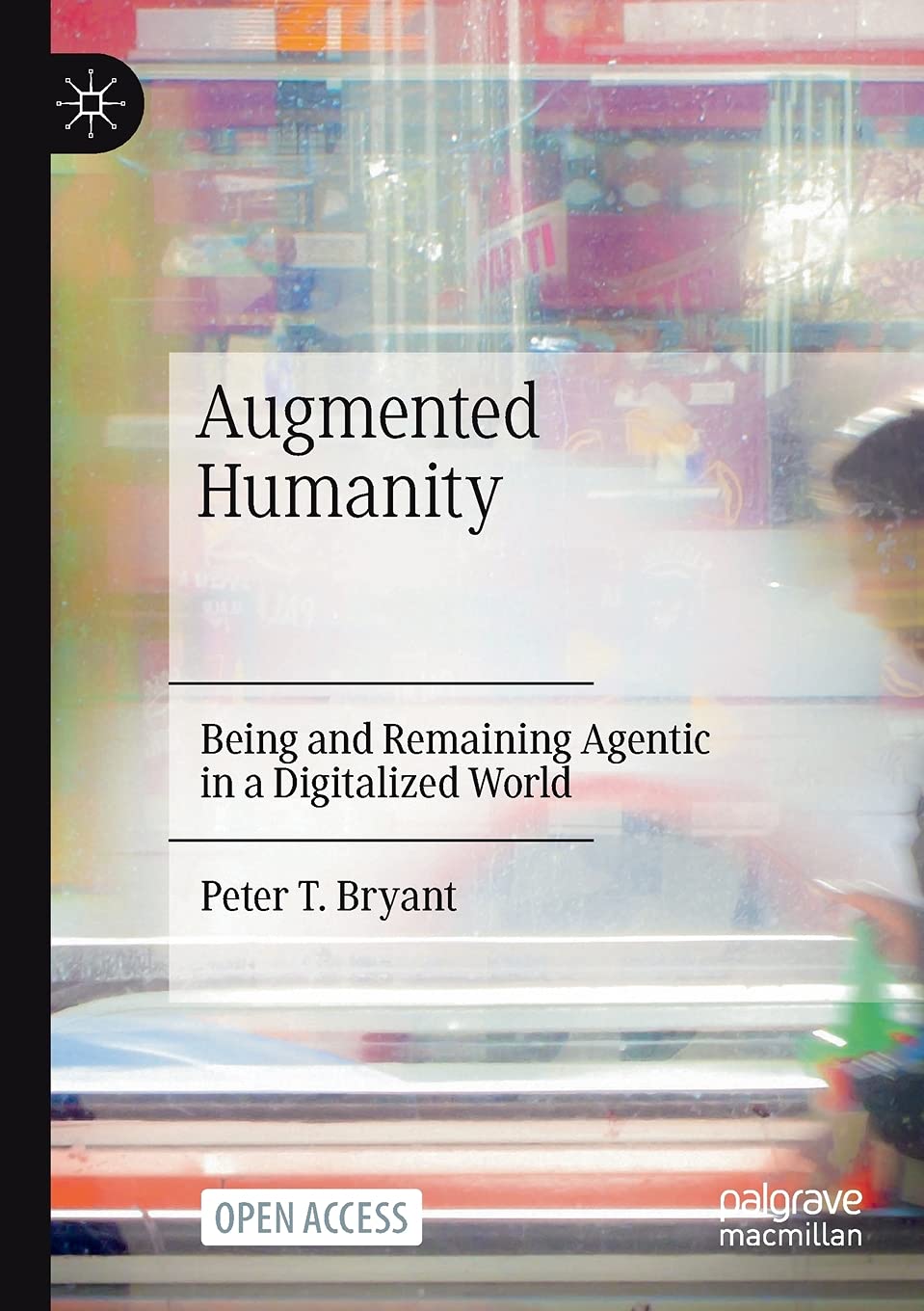
Augmented Humanity: Being and Remaining Agentic in a Digitalized World
Augmented Humanity: Being and Remaining Agentic in a Digitalized World
Price subject to change. Tap below for current.
Couldn't load pickup availability
In this review of Augmented Humanity: Being and Remaining Agentic in a Digitalized World the bottom line is clear: this open access book is for readers who want a thoughtful, theory-driven examination of how digitalization reshapes human agency. The author presents a sustained analysis of intelligent agency and the expanded processing capabilities introduced by digital systems, making it most valuable to scholars, policy makers and advanced students seeking conceptual tools rather than a how-to guide. The volume's greatest strength is its integrative framing of social and behavioral theories around agentic self-generation and cognitive intersubjectivity.
Key Features
- Comprehensive theoretical focus: The book synthesizes social and behavioral theories to show how digitalization affects the idea of humanity as a community of intelligent agents.
- Agentic perspective: It highlights challenges in integrating artificial and human capabilities, offering a coherent lens for debates about human autonomy in digital contexts.
- Decision-making analysis: The text examines altered effects of bounded rationality, helping readers understand new myopias and biases in problem solving.
- Cognitive intersubjectivity: The author explores how shared cognitive processes and learning from performance shift as digital tools mediate interaction.
- Open access availability: As an open access book, it is readily available to researchers and practitioners who need to reference its arguments without paywall barriers.
Who It's For
This book is best suited to academics in social sciences, information science and library management, graduate students, and policy analysts who require a conceptual foundation to understand the social behavioral effects of digitalization. Readers who appreciate close engagement with theory and mechanisms will find its discussions of novel mechanisms and social behavioral effects particularly useful.
It is less appropriate for casual readers seeking practical technology guidance or step-by-step recommendations; the text focuses on conceptual implications rather than implementation details. Practitioners looking for empirical toolkits or hands-on workflow advice should look for complementary, applied texts.
Pros & Cons
Pros
- Careful theoretical integration that clarifies how digitalization expands intelligent processing capability.
- Insightful treatment of bounded rationality and emergent biases that aids critical thinking about decision making.
- Useful discussion of cognitive intersubjectivity and learning from performance for researchers studying social cognition.
Cons
- The book is primarily conceptual and does not provide practical implementation guidance for technology deployment.
Specifications
| Title | Augmented Humanity: Being and Remaining Agentic in a Digitalized World |
| Author | Peter T. Bryant |
| Access | Open access book |
| Scope | Social and behavioral theory; intelligent agency |
| Key topics | Bounded rationality, cognitive intersubjectivity, agentic self-generation |
| Intended audience | Scholars, policy makers, graduate students |
Our Verdict
Augmented Humanity is a thoughtful, well-structured conceptual work for readers who need a rigorous account of how digitalization alters human agency and decision making. It delivers strong value to academics and policy analysts by clarifying mechanisms and behavioral effects, though those seeking practical toolkits should supplement it with applied titles.
Frequently Asked Questions
Is this book freely available?
Yes. The book is published as an open access volume, making it available without paywall restrictions.
Does it offer practical implementation advice?
No. The focus is conceptual and theoretical, so readers seeking hands-on implementation guidance should consult applied resources in addition to this work.
Who benefits most from the book?
Researchers, policy makers and graduate students interested in social and behavioral theories of agency and the effects of digitalization will gain the most from this text.
Editor's Take
Augmented Humanity is a thoughtful conceptual book that clarifies how digitalization reshapes human agency and decision making; it is excellent value for scholars and policy makers though not a practical guide.

Recently viewed
Recently viewed products will appear here as customers browse the store.