

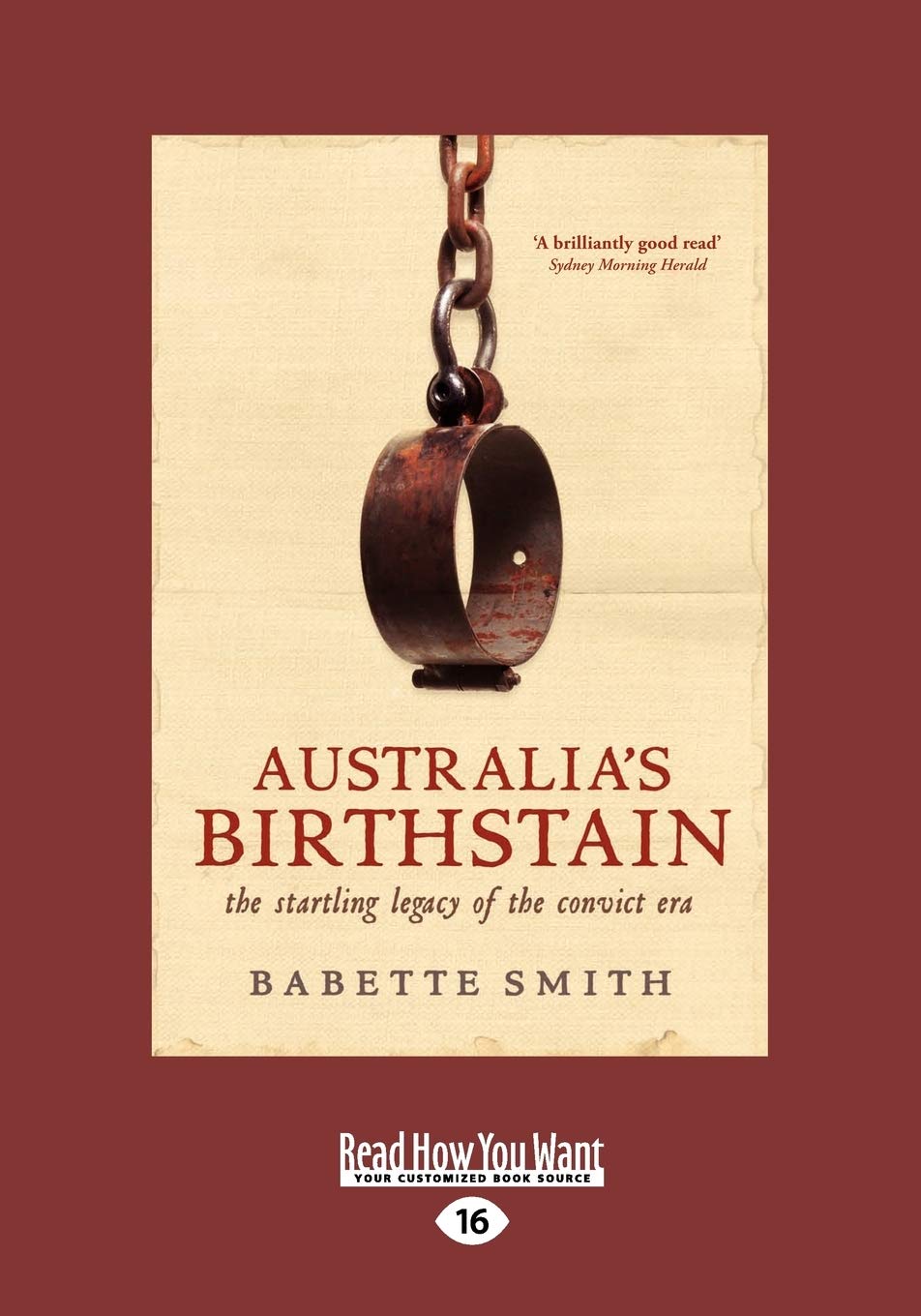
Australia's Birthstain: The startling legacy of the convict era
Australia's Birthstain: The startling legacy of the convict era
Price subject to change. Tap below for current.
Couldn't load pickup availability
In this review of Australia's Birthstain the author Babette Smith offers a measured, thoroughly researched look at Australia's convict foundations, written for readers who want a humanised history rather than sensational legend. The single biggest reason to read this book is its sustained effort to replace myths with individual stories: Smith traces hundreds of convicts across 80 years of transportation and explains why many families were surprised to find convict ancestors. This review finds the book most valuable for history readers, family historians, and anyone curious about how a penal past shaped a nation.
Key Features
- Human-centred narrative: Smith presents convicts as individuals with crimes, motives and later lives, which helps readers understand the human impact of transportation.
- Wide chronological scope: The book covers the full 80 years of convict transportation, giving readers a long-term view of how the system evolved.
- Focus on social memory: By asking why a society sought to hide its past, the book prompts readers to consider cultural attitudes and shame in historical context.
- Detailed case studies: Hundreds of convict stories are woven together, providing concrete examples that support the broader historical argument.
- Accessible prose: The narrative balances scholarship and readability, making it suitable for nonacademic readers and family historians alike.
Who It's For
Babette Smith's book is aimed at readers who enjoy social history and biography, particularly those interested in Australia & New Zealand history or tracing family roots. Family historians who encounter surprising convict ancestors will find the case studies and explanations especially useful in reframing what a convict past could mean for descendants.
Those seeking a comprehensive legal or statistical study of transportation may want more technical detail elsewhere, and readers expecting a sensational catalogue of punishments should look for works focused on specific sites like Port Arthur for a narrower, more graphic focus.
Pros & Cons
Pros
- Brings individual convicts to life, turning abstract policy into relatable human stories.
- Situates convict experience within an 80-year national story, offering breadth and continuity.
- Challenges received myths and encourages readers to rethink family and national memory.
Cons
- Readers seeking dense statistical tables or exhaustive legal records may find the book more narrative than archival in presentation.
Specifications
| Title | Australia's Birthstain: The startling legacy of the convict era |
| Author | Babette Smith |
| Subject | Convict transportation and Australian social history |
| Scope | Stories across 80 years of transportation |
| Approach | Human-centred narrative and social analysis |
| Best for | Family historians and general history readers |
Our Verdict
Australia's Birthstain is a richly told, humane account that reframes convict history by focusing on individuals and social memory. Readers who want to replace myth with documented stories and interpret what a convict past meant for ordinary people will find strong value here; it is particularly worthwhile for family historians seeking context for surprising ancestral finds.
Frequently Asked Questions
Does this book cover the whole period of convict transportation?
Yes. The book traces convicts and the transportation system across approximately 80 years, giving a long-term perspective.
Is it suitable for readers without academic training?
Yes. The prose is accessible and emphasises individual stories, making it approachable for general readers and family historians.
Will it help with genealogy research?
Indirectly. The case studies and context help interpret convict entries in family trees, though it is not a guide to archival research techniques.
Editor's Take
A richly told, humane account that reframes Australia's convict past through individual stories and social analysis; recommended for family historians and readers who want context rather than sensationalism.

Recently viewed
Recently viewed products will appear here as customers browse the store.