

Avenues of Faith: Shaping the Urban Religious Culture of Richmond
Avenues of Faith: Shaping the Urban Religious Culture of Richmond
Price subject to change. Tap below for current.
Couldn't load pickup availability
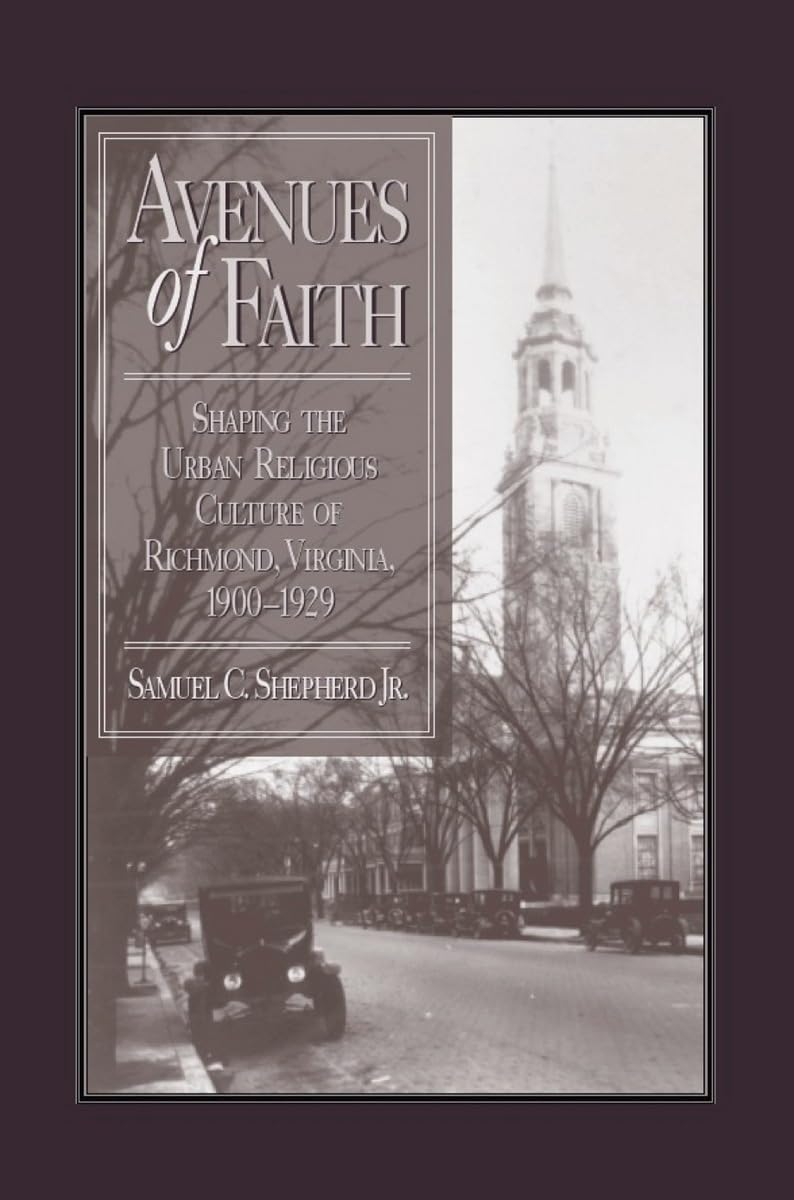
In this review of Avenues of Faith readers will find a focused history of how religion shaped a southern city in the early 20th century and why that story still matters. Samuel C. Shepherd Jr. presents Richmond not as a static relic but as a place where mainline Protestant denominations energized social activism; the single biggest reason to buy this book is its clear tracing of institutional cooperation and outreach that reshaped urban life between 1900 and 1929. The book is best approached as a careful academic narrative that connects evangelism, temperance, and denominational interaction to broader civic change.
Key Features
- Focused urban study: Examines Richmond from 1900 to 1929 to show how religious institutions responded to rapid industrial growth and social change.
- Denominational breadth: Surveys six mainline white denominations to illustrate diversity of Protestant practice and cooperation in the city.
- Social activism emphasis: Emphasizes temperance, evangelism, and interdenominational programs as engines of civic reform and outreach.
- Local context: Places Richmonds Confederate legacy alongside its progressive religious culture to explain historical tensions and developments.
- Archival grounding: Uses denominational records and local examples to support its narrative, giving readers concrete institutional detail.
Who It's For
This book will appeal to readers interested in American religious history, urban studies, and state and local history, especially those who want a case study of how Protestant denominations shaped civic life. Scholars and graduate students researching early 20th century reform movements or the role of religion in southern cities will find the book particularly useful.
Those seeking a comprehensive survey of all faith communities in Richmond should note the book's limits: it foregrounds mainline white Protestant denominations and treats Catholics, African Americans, Mormons, and Jews as areas where blind spots remain, so readers wanting an inclusive social portrait across all communities may need complementary works.
Pros & Cons
Pros
- Provides a clear, well-documented account of how Protestant denominations collaborated on social issues in early 20th century Richmond.
- Useful case studies of evangelism and temperance that connect religious activity to urban reform.
- Situates Richmond's religious life within the city's broader industrial and civic changes for nuanced local history.
Cons
- Focuses on six mainline white denominations and does not deeply cover Catholic, African American, Mormon, or Jewish religious life.
Specifications
| Title | Avenues of Faith: Shaping the Urban Religious Culture of Richmond, Virginia, 19001929 |
| Author | Samuel C. Shepherd Jr |
| Scope | Richmond, Virginia; 1900 to 1929 |
| Focus | Six mainline white Protestant denominations |
| Themes | Evangelism, temperance, interdenominational cooperation, social activism |
| Genre | History; Religion and American Culture |
Our Verdict
Samuel C. Shepherd Jr.'s Avenues of Faith is a well-focused local history that skillfully links denominational action to civic change, making it a strong pick for historians of religion and urban reform. It offers good value for readers who want a detailed Protestant-centered account of Richmond's early 20th century religious life, though it should be paired with other studies for a fully inclusive picture of the city's faith communities.
Frequently Asked Questions
Does this book cover all faith communities in Richmond?
The book concentrates on six mainline white Protestant denominations and acknowledges limited coverage of Catholics, African Americans, Mormons, and Jews.
What period does the book examine?
Its primary focus is Richmond between 1900 and 1929, tracing religious and civic developments in those decades.
Is this suitable for academic research?
Yes; the book uses denominational records and local case studies that make it useful for scholars and graduate students studying religion and urban history.
Editor's Take
Avenues of Faith is a focused local history that links Protestant denominational activity to civic reform in Richmond from 1900 to 1929; recommended for scholars of religion and urban history, though it gives limited coverage to non-Protestant communities.

Recently viewed
Recently viewed products will appear here as customers browse the store.