

Bayesian Reliability (Springer Series in Statistics) - Practical
Bayesian Reliability (Springer Series in Statistics) - Practical
Price subject to change. Tap below for current.
Couldn't load pickup availability
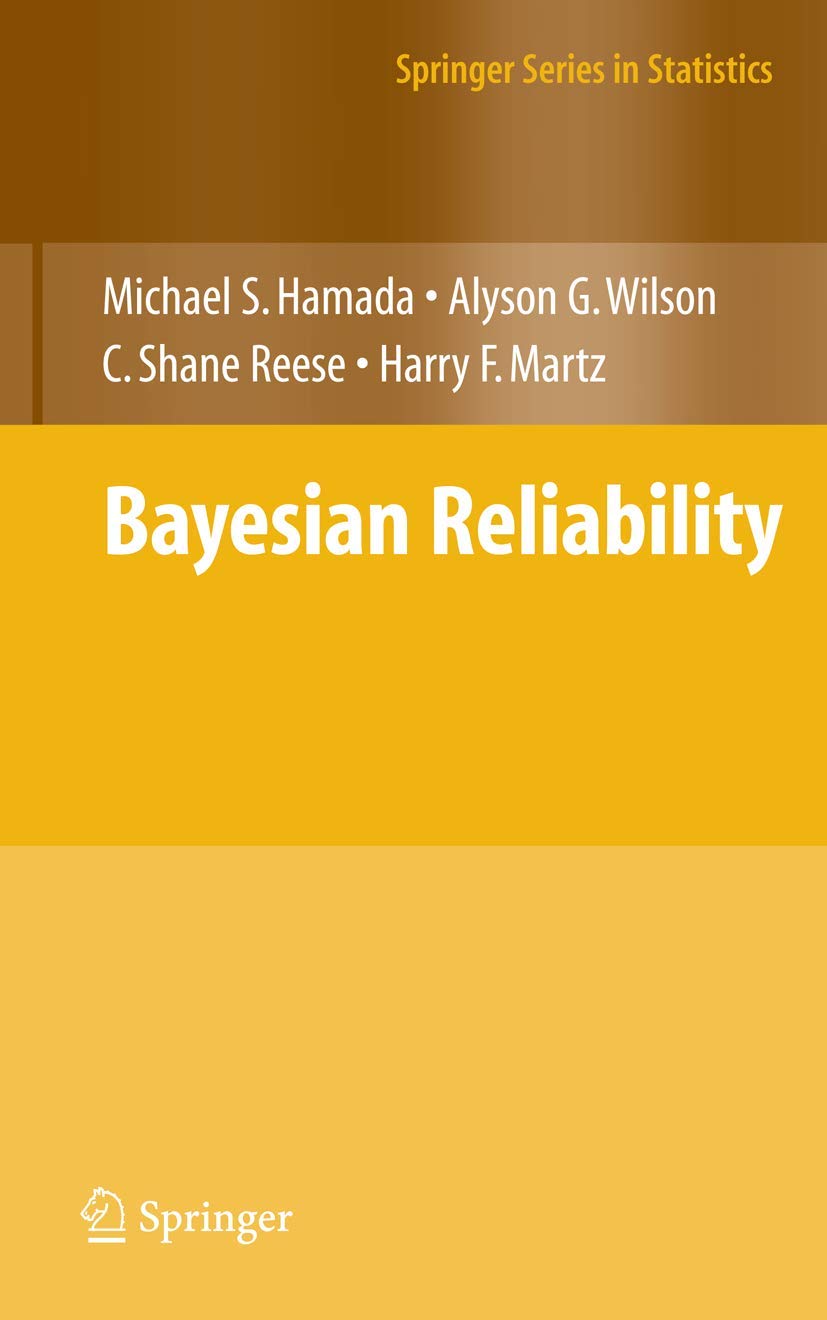
In this review of Bayesian Reliability the authors present a focused, technical treatment of reliability analysis using Bayesian methods; the book is best suited for engineers and statisticians who need a practical guide to modeling failure data and assessing system reliability. The single biggest reason to buy is its sustained attention to computational tools and hierarchical models that make modern Bayesian reliability analysis applicable to real testing and degradation data. This review highlights the book's strengths for applied work and notes when readers might need supplementary background.
Key Features
- Bayesian emphasis: The book explains why Bayesian methods are advantageous for reliability problems and shows how they incorporate prior knowledge into failure-time models.
- Computational focus: Extensive use of simulation-based computational tools is demonstrated to implement Bayesian analyses on realistic data sets.
- Hierarchical models: Coverage of hierarchical modeling gives a practical pathway for pooling information across components and systems to improve estimates.
- Failure-time and accelerated tests: The text treats failure time regression and accelerated testing models that are directly relevant to reliability testing protocols.
- Degradation modeling: Degradation models are included so readers can assess lifetime from progressive damage measurements rather than only from failures.
- Model checking: Attention to Bayesian goodness-of-fit testing and model validation helps readers avoid overconfidence in complex models.
Who It's For
This book is aimed at practicing reliability engineers, statisticians, and graduate students in engineering or applied statistics who already have some familiarity with probabilistic modeling and want to apply Bayesian reliability techniques to components and systems. The worked examples and computational emphasis make it useful as a reference for applied projects.
Readers without prior exposure to Bayesian computation or limited statistical background may find parts of the text dense; they should supplement this book with an introductory Bayesian methods text or a hands-on computational tutorial before tackling the more advanced hierarchical and degradation topics.
Pros & Cons
Pros
- Clear practical orientation toward implementing simulation-based Bayesian methods on reliability data.
- Solid treatment of hierarchical and explanatory-variable models that improve estimation for complex systems.
- Includes models for failure time, accelerated testing, and degradation, covering common reliability applications.
- Emphasis on model checking and Bayesian goodness-of-fit helps ensure robust inferences.
Cons
- The book assumes familiarity with Bayesian computation, so novices may need supplementary introductory materials.
Specifications
| Title | Bayesian Reliability (Springer Series in Statistics) |
| Authors | Michael S. Hamada, Alyson Wilson, C. Shane Reese, Harry Martz |
| Subject focus | Bayesian analysis of reliability, failure-time and degradation models |
| Modeling emphasis | Hierarchical models and models with explanatory variables |
| Computational approach | Simulation-based Bayesian computation |
| Applied areas | Accelerated testing, degradation, reliability assessment |
Our Verdict
Bayesian Reliability is a valuable, application-oriented reference for engineers and statisticians who need to adopt Bayesian methods in reliability work; its emphasis on computational tools and hierarchical models makes it good value for professionals tackling failure-time, accelerated testing, or degradation problems, though newcomers should pair it with a basic Bayesian computation primer.
Frequently Asked Questions
Does the book cover computational techniques?
Yes. It extensively uses simulation-based computational tools to implement Bayesian analyses for reliability problems.
Are hierarchical models included?
Yes. The text pays special attention to hierarchical models and models incorporating explanatory variables for components and systems.
Is this suitable for beginners in Bayesian methods?
It is best for readers with some prior exposure; beginners should consult an introductory Bayesian text or tutorial first.
Editor's Take
Bayesian Reliability is a practical, computation-focused reference for engineers and statisticians who need Bayesian approaches to failure-time, accelerated testing and degradation models; newcomers should pair it with an introductory Bayesian primer.

Recently viewed
Recently viewed products will appear here as customers browse the store.