

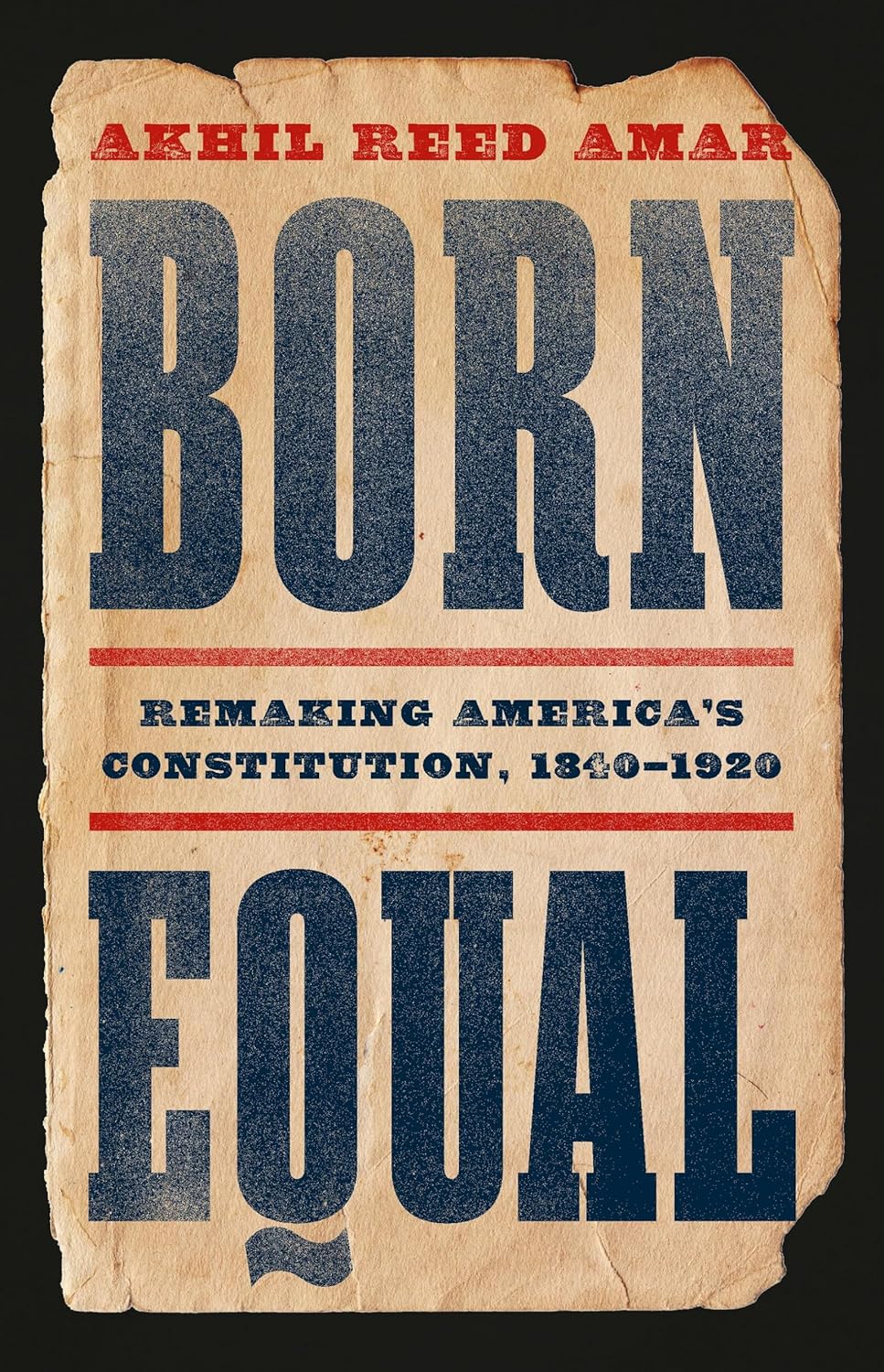
Born Equal: Remaking Americas Constitution, 1840-1920
Born Equal: Remaking Americas Constitution, 1840-1920
Price subject to change. Tap below for current.
Couldn't load pickup availability
In this review of Born Equal: Remaking Americas Constitution, 1840-1920, the reviewer finds a rigorous, readable history for serious readers of American constitutional development. Akhil Reed Amar traces how the ideal of birth equality reshaped the Constitution across eight tumultuous decades, making this a go-to book for readers who want depth and narrative clarity about emancipation, Reconstruction, and womens suffrage. The book is especially valuable to students, history readers, and civic educators seeking a coherent legal and political through-line from antebellum debates to the expanded franchise by 1920.
Key Features
- Comprehensive sweep: Covers 1840 to 1920 in sustained detail so readers can follow constitutional change across the Civil War, emancipation, and suffrage movements.
- Constitutional focus: Emphasizes debates about slavery, secession, and amendments so readers understand legal arguments as well as political events.
- Narrative clarity: Presents complex constitutional shifts in an accessible narrative that helps non-specialists grasp why amendments mattered.
- Scholarly grounding: Written by a prizewinning constitutional historian, offering authoritative interpretation of how birth equality became central to American law.
- Crosscutting themes: Frames rights, citizenship, and suffrage as evolving ideas, useful for classroom discussion or civic study.
Who It's For
Born Equal is aimed at readers who want more than a chronological survey: law students, historians, and engaged lay readers who appreciate close readings of constitutional debates and the political struggles that produced four consequential amendments. Its strength is in connecting legal reasoning to the lived politics of emancipation and the womens suffrage movement.
Readers seeking a light narrative or a brief primer on the Civil War era should look elsewhere; this book rewards sustained attention and is best when used as a close-reading text or a seminar book rather than casual beach reading.
Pros & Cons
Pros
- Deep constitutional analysis ties legal changes directly to social and political movements for equal birthright.
- Clear historical narrative makes complex amendment debates intelligible to non-specialists.
- Useful for academic discussion, teaching, and informed civic reflection on citizenship and suffrage.
Cons
- The sustained scholarly focus means the book is dense at times and may feel demanding for casual readers.
Specifications
| Title | Born Equal: Remaking Americas Constitution, 1840-1920 |
| Author | Akhil Reed Amar |
| Time period covered | 1840 to 1920 |
| Primary themes | Slavery, emancipation, citizenship, womens suffrage, constitutional amendments |
| Approach | Historical and constitutional analysis |
| Best for | Students, historians, civic educators |
Our Verdict
Born Equal is a richly argued and authoritative history that rewards readers who want to understand how the idea of birth equality transformed American constitutional law between 1840 and 1920. Its thoroughness and narrative clarity make it a strong value for anyone studying the Civil War era, Reconstruction, or the long fight for suffrage and citizenship.
Frequently Asked Questions
Does the book cover womens suffrage?
Yes. The narrative follows changes through 1920 and treats womens suffrage as a central outcome of constitutional debates over citizenship and equality.
Is this suitable for classroom use?
Yes. Its scholarly grounding and clear narrative make it well suited for seminars, upper-level history courses, or law classes examining post-Civil War amendments.
Will casual readers find it accessible?
It is readable but dense; casual readers may prefer a shorter survey, while committed readers will appreciate the depth of analysis.
Editor's Take
Born Equal is a richly argued, authoritative history that explains how birth equality transformed American constitutional law from 1840 to 1920; recommended for students and engaged readers who want deep, narrative constitutional analysis.

Recently viewed
Recently viewed products will appear here as customers browse the store.