

Breeding Bio Insecurity - How U.S. Biodefense Backfires
Breeding Bio Insecurity - How U.S. Biodefense Backfires
Price subject to change. Tap below for current.
Couldn't load pickup availability
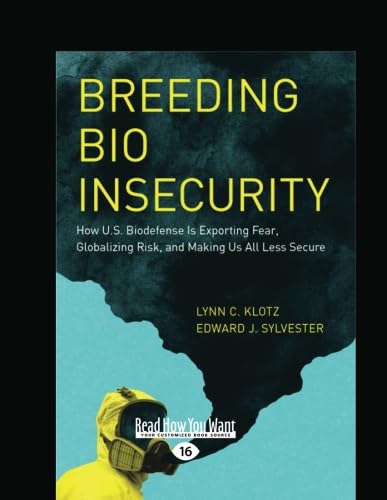
In this review of Breeding Bio Insecurity, the authors Lynn C. Klotz and Edward J. Sylvester present a challenging, well argued critique of post-9/11 U.S. biodefense spending and policy. The book is aimed at readers who want a sober, evidence-driven examination of how large, secretive biodefense programs can unintentionally increase risk rather than reduce it. The bottom line: readers seeking a policy-focused, critical analysis will find a clear, unsettling case that current practices spread vulnerability and merit urgent reform.
Key Features
- Clear critique of policy: The authors lay out how billions spent since 9/11 and the anthrax incidents have not yielded proportional public safety benefits, helping readers understand policy missteps.
- Focus on scale and secrecy: The book explains how thousands of scientists working at hundreds of locations multiplies the chance of accidental release and secrecy undermines oversight.
- Evidence-based argument: Klotz and Sylvester marshal historical context and program descriptions to support claims, making the critique grounded rather than speculative.
- Action-oriented recommendations: Beyond diagnosis, the book lays out necessary steps to move toward true biosecurity, useful for policymakers and informed citizens.
- Accessible to nonexperts: The writing translates technical biodefense issues into clear points, allowing readers without scientific training to follow the argument.
Who It's For
This book is best suited for policy analysts, public health professionals, bioethicists, and engaged citizens who want a critical assessment of U.S. biodefense strategy and concrete suggestions for reform. It works well as a discussion text in graduate courses on security policy or public health management.
Readers looking for a textbook on laboratory techniques, a technical manual on biosafety procedures, or a purely optimistic account of biodefense investment should look elsewhere; the book is a critique and presumes interest in systemic risk and governance issues.
Pros & Cons
Pros
- Thoughtful, evidence-driven critique that challenges mainstream assumptions about biodefense funding and protection.
- Highlights the real-world danger of scale and secrecy in biodefense programs, increasing awareness among nontechnical readers.
- Offers practical recommendations and steps toward improved biosecurity and oversight.
Cons
- The book's critical stance means readers seeking upbeat or purely technical guidance on bioscience will not find that here.
Specifications
| Title | Breeding Bio Insecurity: How U.S. Biodefense Is Exporting Fear, Globalizing Risk, and Making Us All Less Secure |
| Authors | Lynn C. Klotz and Edward J. Sylvester |
| Primary subject | U.S. biodefense policy and risk |
| Focus | Scale, secrecy, and consequences of biodefense programs |
| Argument | Current spending and secrecy increase vulnerability |
| Audience | Policy analysts, public health professionals, informed citizens |
Our Verdict
Breeding Bio Insecurity is a compelling, well documented critique that should be read by anyone concerned with national security policy and public health governance. Its examination of the unintended effects of large, secretive biodefense efforts makes it a valuable investment for policy discussions and for readers seeking thoughtful, practicable reform ideas.
Frequently Asked Questions
Does the book argue that biodefense spending is entirely harmful?
The authors do not claim all spending is harmful but argue that current scale and secrecy create significant risks and that reforms are needed.
Is technical scientific knowledge required to follow the book?
No; the book explains policy and program issues in accessible language intended for policymakers and nontechnical readers.
Who will benefit most from reading it?
Policy makers, public health professionals, academics in security studies, and engaged citizens will gain the most from the book's critique and recommendations.
Editor's Take
A compelling, well documented critique arguing that large, secretive U.S. biodefense programs can increase vulnerability; recommended for policy makers and public health professionals.

Recently viewed
Recently viewed products will appear here as customers browse the store.