

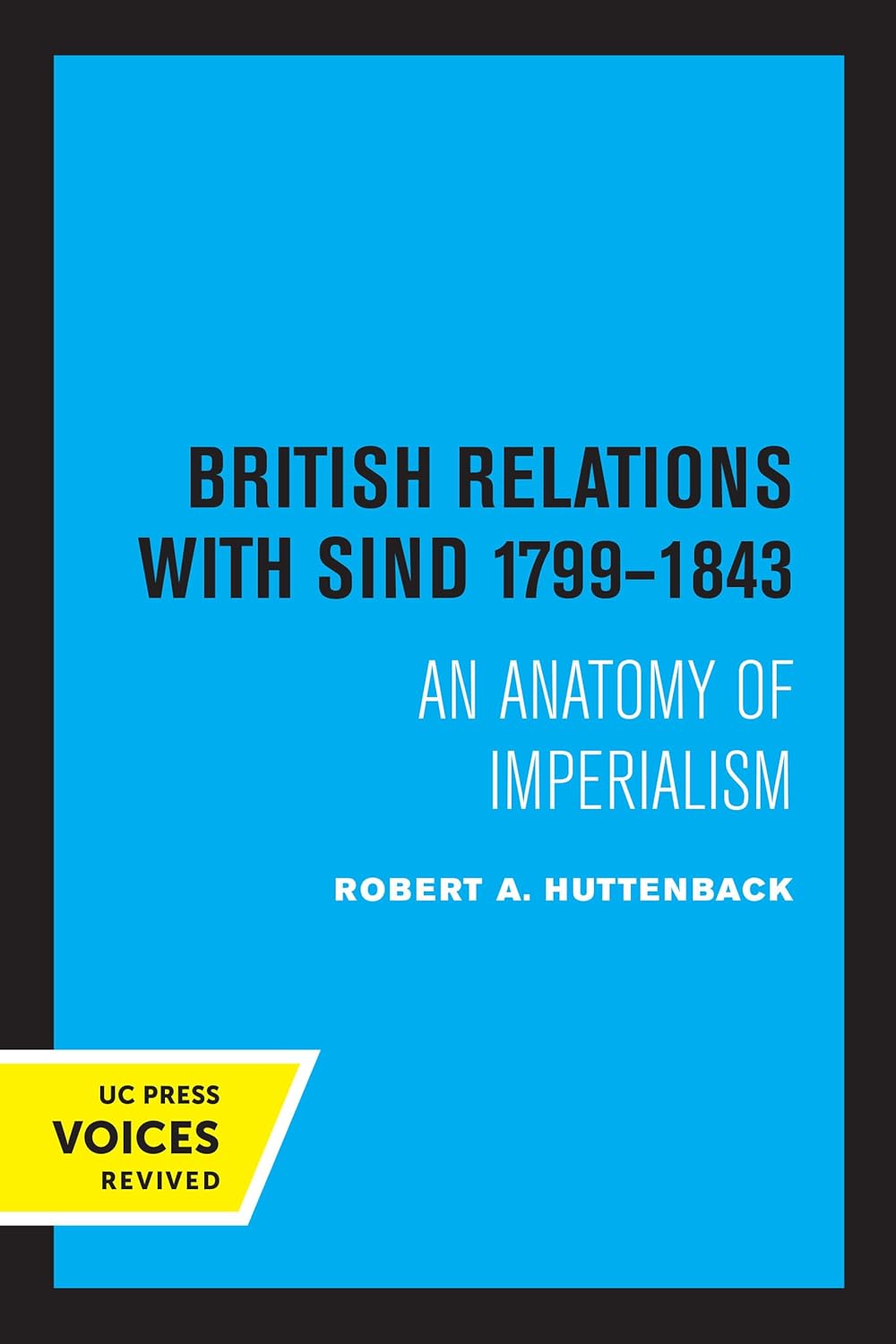
British Relations with Sind 1799 - 1843: An Anatomy of Imperialism
British Relations with Sind 1799 - 1843: An Anatomy of Imperialism
Price subject to change. Tap below for current.
Couldn't load pickup availability
Our review of British Relations with Sind 1799 - 1843 assesses Robert A. Huttenback's densely researched study for readers who want a rigorous, archival account of early 19th-century British expansion in South Asia. The book's single biggest reason to buy is its detailed reconstruction of policy debates and the transition from commercial to strategic motives within the East India Company, making it essential for historians, graduate students, and informed readers seeking a serious, source-driven interpretation rather than a popular overview.
Key Features
- Archival depth: The text draws on primary documents to trace the evolution of British policy toward Sind, offering readers a close view of official deliberations and correspondence.
- Political context: Huttenback situates the annexation under Sir Charles Napier within wider 19th-century imperial strategy, clarifying how geopolitical fears influenced local decisions.
- Focus on actors: The book examines interactions between British officials and the Talpur rulers, illuminating the personalities and negotiations behind the formal annexation.
- Chronological clarity: Coverage from 1799 to 1843 follows changing priorities over decades, helping readers understand gradual shifts rather than a single abrupt event.
- Analytical framing: The author frames the annexation as a paradox of imperialism, prompting readers to question conventional nationalist and celebratory narratives about expansion.
Who It's For
This book is aimed at academic readers, historians of South Asia, and graduate students who need a careful, document-based study of British imperial practice and the specific case of Sind. Its emphasis on primary sources and policy detail rewards readers prepared for dense argumentation rather than light narrative.
Those seeking a concise popular history, an illustrated timeline, or a general survey of Indian history should look elsewhere; this is not a breezy introduction but a specialized work best used alongside complementary overviews or classroom discussion.
Pros & Cons
Pros
- Thorough use of primary sources provides a trustworthy foundation for its claims about imperial motives.
- The study connects local events in Sind to broader 19th-century geopolitical concerns, offering valuable context.
- Detailed treatment of British-Talpur interactions brings nuance to familiar accounts of annexation.
Cons
- The dense academic prose and level of detail make it a challenging read for non-specialists.
Specifications
| Title | British Relations with Sind 1799 - 1843: An Anatomy of Imperialism |
| Author | Robert A. Huttenback |
| Period Covered | 1799 - 1843 |
| Central Event | Annexation of Sind under Sir Charles Napier |
| Perspective | History of British imperial policy and East India Company strategy |
| Focus Areas | British officials, Talpur dynasty, geopolitical context |
Our Verdict
Huttenback's study is a valuable scholarly contribution for readers who need a serious, document-based analysis of how British commercial interests shifted toward territorial control in Sind. While demanding in style, it offers strong explanatory payoff and remains recommended for historians and graduate students seeking depth and archival grounding.
Frequently Asked Questions
Does this book cover the annexation of Sind?
Yes; it examines the annexation under Sir Charles Napier and places that event within wider British strategic thinking.
Is this suitable for general readers?
The book is scholarly and detailed, so general readers may find it dense; it is best for students and specialists.
What sources does the author use?
The author relies on primary documents and official correspondence to reconstruct British policy and interactions with the Talpur rulers.
Editor's Take
Huttenback's archival study offers a rigorous, document-based account of British policy in Sind and the annexation under Sir Charles Napier; recommended for historians and graduate students who want depth and context.

Recently viewed
Recently viewed products will appear here as customers browse the store.