

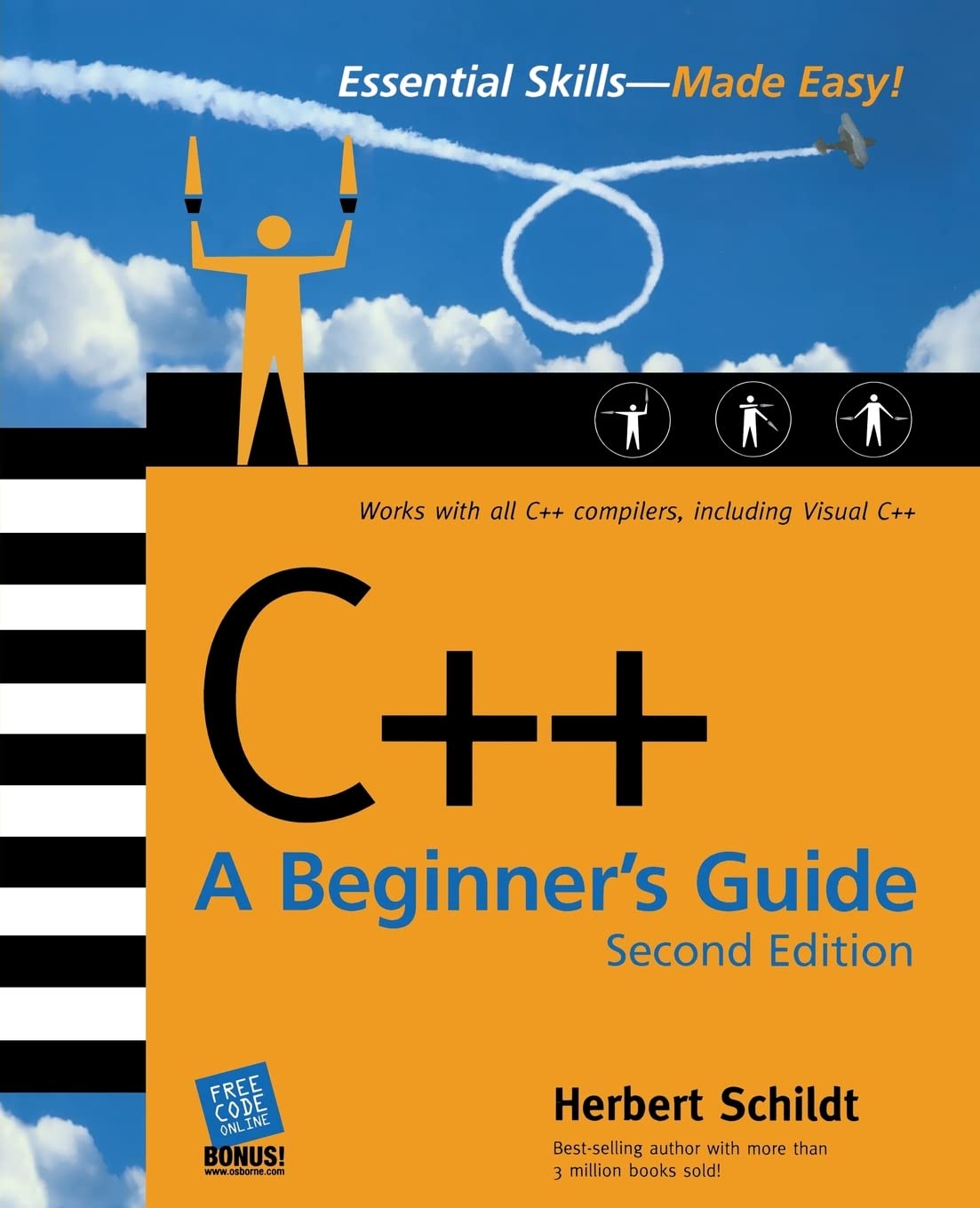
C++: A Beginner's Guide, Second Edition - Clear, Practical C++ Intro
C++: A Beginner's Guide, Second Edition - Clear, Practical C++ Intro
Price subject to change. Tap below for current.
Couldn't load pickup availability
Our review of C++: A Beginner's Guide, Second Edition finds it to be a straightforward introductory text aimed at firsttime programmers or developers new to C++. The bottom line: this book is best for readers who want a modular, exampledriven path into C++ with clear explanations and practice problems. It stands out because the author breaks topics into digestible sections and includes sample projects and progress checks that make selfpaced learning practical and measurable.
Key Features
- Stepbystep learning: Chapters are organized so a novice can build understanding incrementally, reducing overwhelm when tackling core C++ concepts.
- Modular approach: The book divides topics into short, focused units, which helps readers practice specific skills and return to sections as needed.
- Sample projects: Handson examples and projects illustrate how to apply concepts in real code rather than only describing theory.
- Progress checks: Endofsection questions let learners verify comprehension and reinforce retained material before moving on.
- Accessible writing style: The author uses clear, direct prose that customers praise for making complex topics approachable.
Who It's For
Beginners who have little or no prior programming experience will get the most value from this book, as will programmers transitioning from other languages who need a concise, examplebased introduction to C++. Hobbyists and students seeking structured practice problems will appreciate the projects and progress checks.
Experienced C++ developers or readers seeking an advanced reference should look elsewhere, because the second edition emphasizes fundamentals and learning structure rather than comprehensive coverage of modern advanced features or deep language internals.
Pros & Cons
Pros
- Clear, approachable explanations that make core C++ topics easier to understand for novices.
- Practical sample projects that reinforce learning through doing rather than passive reading.
- Modular chapters and progress checks that support selfpaced study and skill reinforcement.
Cons
- Does not serve as an exhaustive reference for advanced C++ topics, so further resources are needed as skills progress.
Specifications
| Title | C++: A Beginner's Guide, Second Edition |
| Author | Herb Schildt |
| Audience | Firsttime programmers and those new to C++ |
| Format emphasis | Modular lessons, sample projects, progress checks |
| Publisher note | Thirdparty purchases not guaranteed for publisher entitlements |
| Use case | Selfpaced learning and introductory coursework |
Our Verdict
This second edition is a practical, goodvalue introduction to C++ for beginners and those switching languages. Its modular layout, sample projects, and clear writing make it an effective starting point; readers should supplement it later for advanced, uptodate C++ specifics.
Frequently Asked Questions
Is this book suitable for someone who has never programmed?
Yes. The book is written for firsttime programmers with stepbystep explanations and progress checks to build fundamentals.
Does it include handson exercises?
Yes. Customers note the inclusion of sample projects and exercises that help reinforce concepts through practice.
Will this replace an advanced C++ reference?
No. It is an introductory guide focused on basics; advanced developers should consult more comprehensive references later.
Editor's Take
This second edition is a practical, goodvalue introduction to C++ for beginners and those switching languages; its modular layout, sample projects, and clear writing make it an effective starting point.

Recently viewed
Recently viewed products will appear here as customers browse the store.