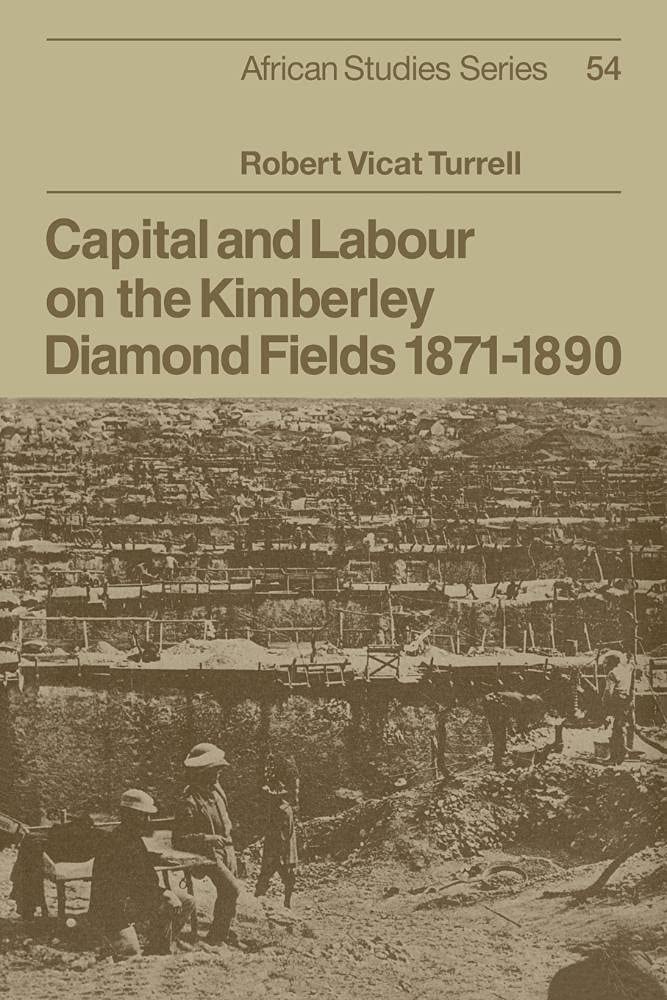
Capital and Labour on the Kimberley Diamond Fields: A Deep Dive
Capital and Labour on the Kimberley Diamond Fields: A Deep Dive
Price subject to change. Tap below for current.
Couldn't load pickup availability
The book Capital and Labour on the Kimberley Diamond Fields by Robert Vicat Turrell offers an in-depth exploration of the intricate dynamics between labor and capital during a pivotal era in South African history. Spanning from 1871 to 1890, this work provides a comprehensive analysis of the diamond mining industry that flourished in Kimberley, a town that became synonymous with wealth and exploitation.
Turrell meticulously examines the socio-economic conditions that shaped the lives of workers in the diamond fields. The author highlights the harsh realities faced by laborers, many of whom were drawn from various backgrounds, including indigenous populations and migrant workers. The book delves into the impact of colonial policies on labor practices, revealing how these policies were designed to benefit capitalists at the expense of workers.
One of the standout features of this book is its rich historical context. Turrell provides readers with a vivid portrayal of the Kimberley diamond fields, illustrating how this region transformed into a bustling hub of activity. The author discusses the technological advancements that revolutionized mining practices, as well as the economic implications of diamond discoveries on both local and global scales.
In addition to the economic aspects, Turrell also addresses the social fabric of the diamond fields. He explores the relationships between different groups of workers and the tensions that arose from competition for jobs. The book sheds light on the struggles for workers' rights and the formation of labor movements, which played a crucial role in shaping the future of labor relations in South Africa.
Turrell's writing is both engaging and informative, making complex historical themes accessible to a broad audience. The use of primary sources, including letters and official documents, enriches the narrative and provides a firsthand look at the experiences of those who lived through this transformative period. The author's ability to weave personal stories into the broader historical narrative makes this book a compelling read.
For anyone interested in the history of South Africa, labor studies, or the diamond mining industry, Capital and Labour on the Kimberley Diamond Fields is an essential addition to their library. It not only chronicles the past but also prompts readers to reflect on the ongoing issues of labor exploitation and economic inequality that persist today.
In conclusion, Robert Vicat Turrell's work stands out as a significant contribution to African studies. It challenges readers to consider the lasting effects of colonialism and the importance of understanding the historical context of labor relations. This book is a must-read for scholars, students, and anyone interested in the complexities of capital and labor in a historical setting.
Share