

Chemical Equilibria in Analytical Chemistry - Clear Theory for Lab
Chemical Equilibria in Analytical Chemistry - Clear Theory for Lab
Price subject to change. Tap below for current.
Couldn't load pickup availability
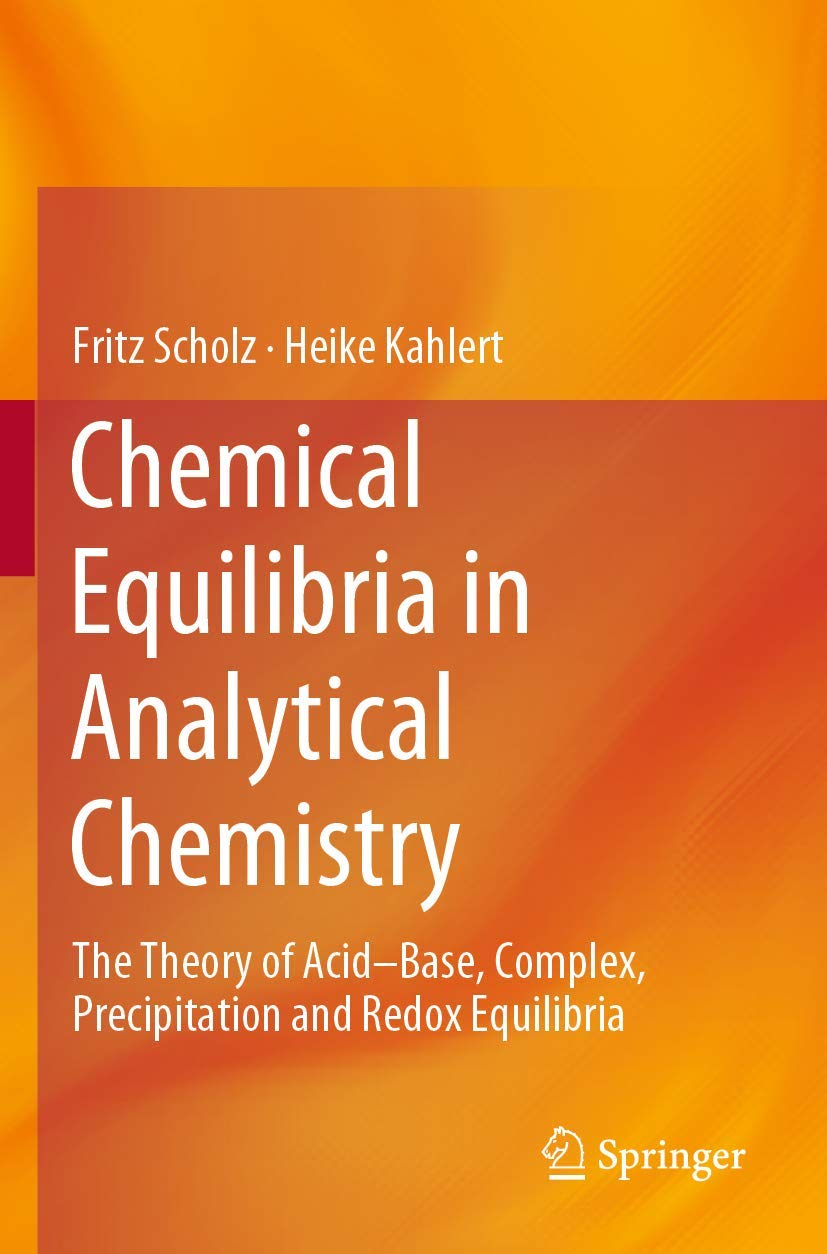
In this review of Chemical Equilibria in Analytical Chemistry, the bottom line is simple: this is a focused textbook for students and practitioners who need a clear, theory-first introduction to solution equilibria. The book's single biggest reason to buy is its systematic treatment of acid-base, complex, precipitation and redox equilibria, presented with examples and Q&A that make the theory directly applicable to experimental work. It reads like a classroom companion that bridges fundamental concepts and practical analytical tasks.
Key Features
- Comprehensive scope: Covers the main classes of solution equilibria so readers gain a unified view of reactions relevant to analytical chemistry.
- Focus on aqueous solutions: Emphasizes aqueous systems while noting non-aqueous behavior, which benefits students working in standard laboratory settings.
- Examples and boxed material: Illustrative example boxes highlight practical calculations and common experimental interpretations for quick reference.
- Questions and answers: End-of-section Q&A helps reinforce understanding and supports self-study or use in coursework.
- Reference-rich: Numerous literature citations provide clear pathways for readers who want to dig deeper into specific equilibrium topics.
Who It's For
This book is best for undergraduate and graduate chemistry students, teaching assistants, and laboratory analysts who need a solid theoretical underpinning for handling solution chemistry in the lab. It is particularly useful for those studying analytical chemistry, environmental chemistry, biochemistry and related fields where solution reactions are central.
Those looking for an exhaustive lab manual, step-by-step experimental protocols, or a purely mathematical treatment heavy on formal proofs may want to supplement this volume with specialized lab guides or advanced physical chemistry texts. The book prioritizes conceptual clarity and practical understanding over exhaustive derivations.
Pros & Cons
Pros
- Clear, structured coverage of the four major equilibrium classes makes it easier to transfer theory to experiments.
- Example boxes and Q&A sections speed up comprehension and support self-directed study.
- Wide applicability to environmental chemistry, biochemistry and pharmaceutics broadens its usefulness beyond analytical labs.
Cons
- The book is theory-focused and not a substitute for a dedicated experimental protocol manual.
Specifications
| Title | Chemical Equilibria in Analytical Chemistry: The Theory of AcidBase, Complex, Precipitation and Redox Equilibria |
| Authors | Fritz Scholz, Heike Kahlert |
| Subject focus | Solution equilibria in analytical chemistry |
| Coverage | Acid-base, complex, precipitation and redox equilibria |
| Applications | Analytical, environmental, biochemical and pharmaceutical contexts |
| Includes | Examples, questions and answers, literature references |
Our Verdict
This book is a compact, well-structured introduction to solution equilibria that delivers practical theoretical guidance for students and lab workers. Its clear examples and Q&A make it a good value for anyone who needs to understand how equilibrium theory informs experimental decisions across analytical and related chemistry fields.
Frequently Asked Questions
Does this book cover non-aqueous solutions?
It primarily focuses on aqueous solutions but does address non-aqueous systems where relevant.
Is this suitable for self-study?
Yes; the example boxes and questions with answers are designed to support self-study and course use.
Will it replace a lab manual?
No; it provides theoretical foundations and practical insight but not step-by-step experimental protocols.
Editor's Take
A compact, well-structured introduction to solution equilibria that gives students and lab practitioners clear theoretical guidance with practical examples and Q&A; recommended for analytical and related chemistry fields.

Recently viewed
Recently viewed products will appear here as customers browse the store.