

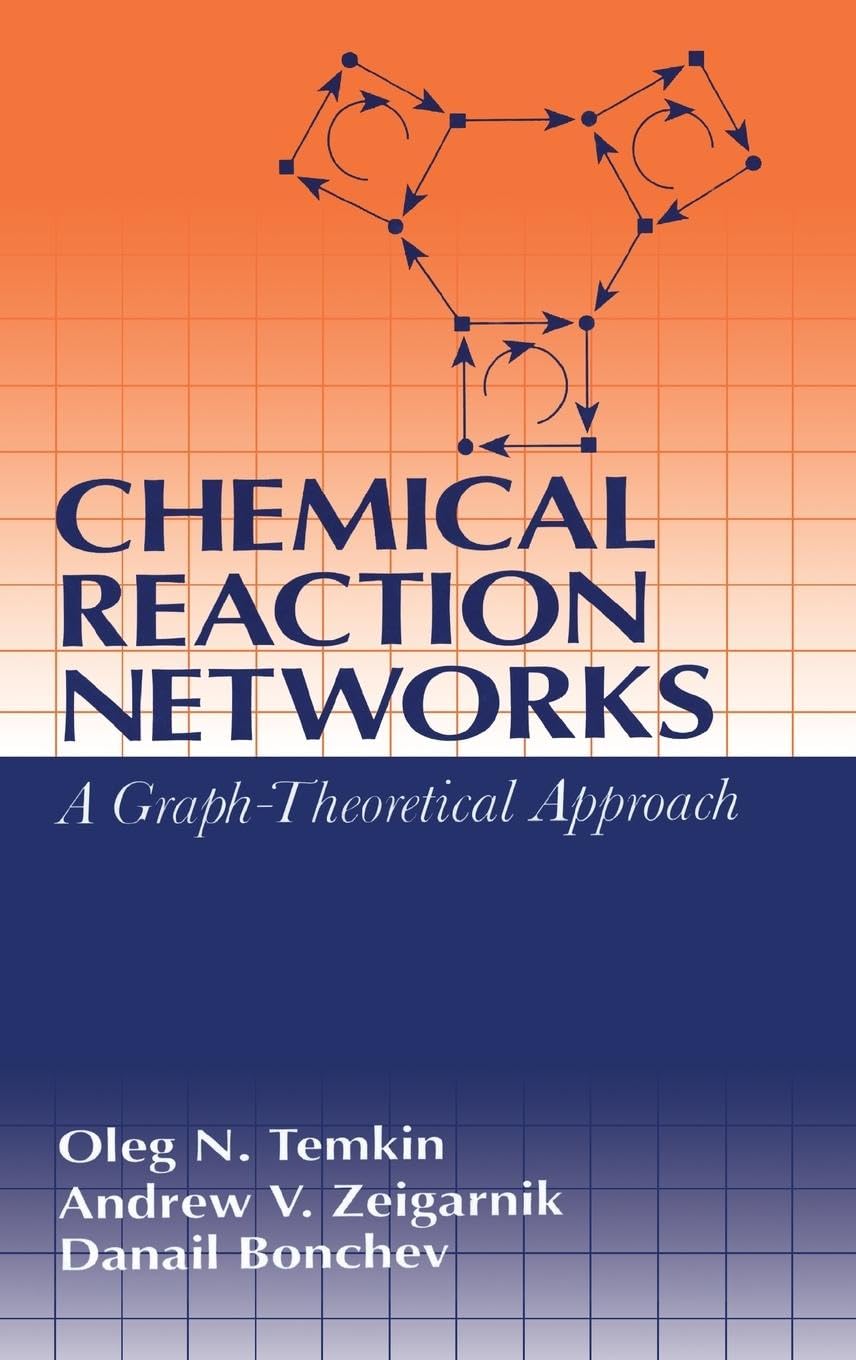
Chemical Reaction Networks: A Graph-Theoretical Approach
Chemical Reaction Networks: A Graph-Theoretical Approach
Price subject to change. Tap below for current.
Couldn't load pickup availability
In this review of Chemical Reaction Networks: A Graph-Theoretical Approach the bottom line is clear: this book is for chemists, modelers, and advanced students who need a rigorous, graph-based toolkit to describe reaction mechanisms and kinetics. The author brings together graph theory and mechanistic chemistry in a way that highlights practical coding and topological analysis, making it a valuable reference for anyone working on mathematical modeling of chemical processes. Readers looking for introductory organic chemistry or purely experimental protocols will find the focus firmly theoretical and computational.
Key Features
- Graph-theoretical formalism: Presents graph theory as an advanced formalism for describing reaction networks, which helps translate mechanisms into mathematical structures for analysis.
- Canonical representation: Explains canonical representation, numbering, and coding of elementary steps so mechanisms can be compared and catalogued consistently.
- Topological analysis: Covers analysis of topological structure to reveal connectivity and motif patterns that influence reaction dynamics.
- Complexity estimation: Offers methods to estimate the complexity of mechanisms, aiding decisions about model reduction and computational effort.
- Application to kinetics and catalysis: Links graph approaches to chemical kinetics and catalysis, supporting mechanistic interpretation and computational studies.
Who It's For
Ideal readers include computational chemists, chemical engineers, and graduate students focused on mechanistic modeling who need a rigorous framework to encode and analyze reaction steps. The material suits those applying computers to chemical studies and anyone involved in mathematical modeling of chemical processes.
Those who should look elsewhere are readers seeking elementary introductions to chemistry, lab bench protocols, or general audience science writing, since the book emphasizes graph theory and mechanistic formalism rather than hands-on experimental guidance.
Pros & Cons
Pros
- Provides a focused, advanced perspective on using graph theory for chemical mechanisms useful to modelers and theorists.
- Offers concrete approaches to canonical coding and numbering that improve reproducibility in mechanism description.
- Connects topological insights directly to kinetics and catalysis, which aids interpretation of computational results.
Cons
- Emphasis is theoretical and computational, so experimentalists seeking lab methods may find limited practical protocols.
Specifications
| Title | Chemical Reaction Networks: A Graph-Theoretical Approach |
| Author / Brand | O. N. Temkin |
| Scope | Graph theory applied to mechanistic theory, kinetics, and catalysis |
| Focus areas | Canonical representation, numbering, coding, topological analysis |
| Intended audience | Computational chemists, modelers, advanced students |
| Approach | Theoretical and mathematical modeling with computer application emphasis |
Our Verdict
Chemical Reaction Networks: A Graph-Theoretical Approach is a strong choice for readers who need a mathematically rigorous, graph-based treatment of reaction mechanisms. It delivers practical coding conventions and topological tools that improve mechanistic analysis and model building, offering good value to researchers and graduate students who work at the interface of computation and chemical kinetics.
Frequently Asked Questions
Is this book suitable for beginners?
The book is best for readers with prior exposure to chemical kinetics or graph theory; it is not an elementary introduction.
Does it cover experimental methods?
No, the emphasis is theoretical and computational rather than experimental protocols.
Will this help with computational modeling?
Yes, it provides representations and coding approaches intended to aid computer-based studies of reaction networks.
Editor's Take
A rigorous, graph-theoretical treatment of reaction mechanisms that provides practical coding conventions and topological tools; highly recommended for computational chemists and advanced students.

Recently viewed
Recently viewed products will appear here as customers browse the store.