

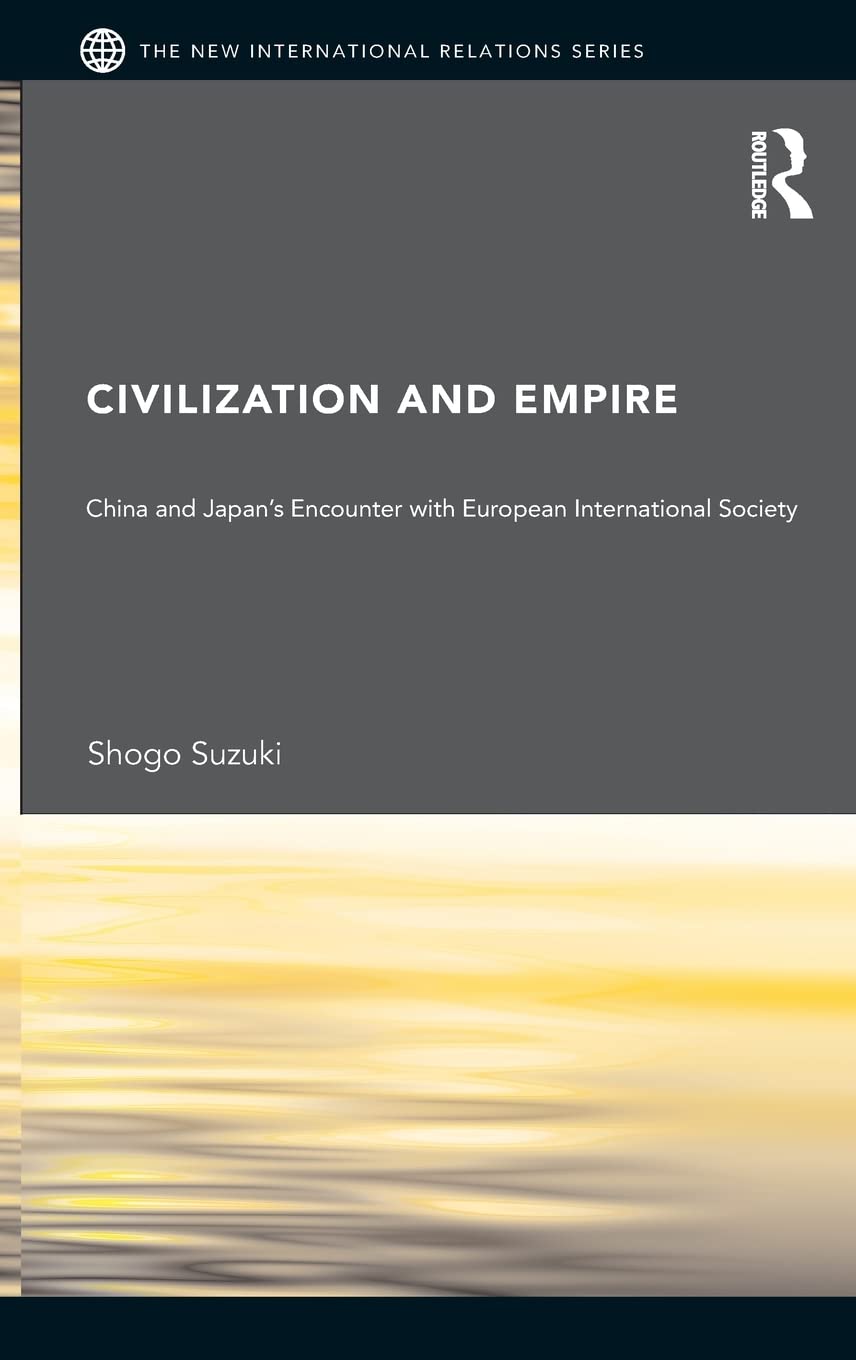
Civilization and Empire: China and Japan's Encounter with European
Civilization and Empire: China and Japan's Encounter with European
Price subject to change. Tap below for current.
Couldn't load pickup availability
In this review of Civilization and Empire: China and Japan's Encounter with European International Society, Shogo Suzuki offers a focused, critical account of how European notions of International Society and a civilising mission shaped East Asian diplomacy and conflict. The book is for readers who want a historically grounded reinterpretation of imperialism's role in global order and for students seeking a clear argument about the interaction between China, Japan and European powers. Its single biggest reason to buy is Suzuki's argument that the expansion of International Society was not a linear progress but a contested process driven by imperial ideology.
Key Features
- Critical reinterpretation: Suzuki challenges conventional narratives by arguing that imperialism and a civilising ideology were central to the historic development of International Society, forcing readers to rethink standard teleologies.
- Focus on East Asia: The book traces how China and Japan encountered European norms and how those encounters influenced their diplomatic choices and conflicts, offering regional depth.
- Comparative approach: By examining both Chinese and Japanese responses, the author highlights contrast and convergence in how each state perceived a Janus-faced International Society.
- Scholarly grounding: The narrative situates arguments within existing literature that previously framed expansion as progressive, making it suitable for academic courses or research reading lists.
- Thematic clarity: Suzuki concentrates on the themes of civilization, barbarism and imperialism, giving the book a tightly argued through-line for readers seeking a concentrated thesis.
Who It's For
This book is best for scholars, graduate students and informed general readers interested in international relations theory, imperial history and East Asian diplomatic history. It suits seminar reading lists where focused critique of European-centred narratives is required.
Those looking for a broad survey of modern China or Japan, a biography, or a populist narrative of economic or social history should look elsewhere; this work is explicitly argumentative and centred on the relationship between International Society and imperial ideology.
Pros & Cons
Pros
- Clear, focused thesis that reframes conventional accounts of International Society.
- Useful comparative study of China and Japan that reveals divergent reactions to European pressure.
- Well-suited to academic use with a critical perspective on imperialism and civilization rhetoric.
Cons
- The book's concentrated theoretical focus may feel dense or narrow to casual readers seeking wider historical narrative.
Specifications
| Title | Civilization and Empire: China and Japan's Encounter with European International Society |
| Author | Shogo Suzuki |
| Series | New International Relations |
| Subject | International Society, imperialism, East Asia |
| Regional focus | China and Japan |
| Approach | Critical, comparative analysis |
Our Verdict
Suzuki's book is a disciplined, thought-provoking study for readers who want to challenge Eurocentric narratives about the spread of International Society; it offers clear value for scholars and students by reframing imperialism's role in diplomatic history and supplying a concise comparative analysis of China and Japan.
Frequently Asked Questions
Does this book compare China and Japan directly?
Yes. The author examines both states to show how each encountered and imagined a Janus-faced International Society.
Is this suitable for undergraduate courses?
It is suitable for advanced undergraduates or graduate seminars that focus on international history, imperialism or East Asian diplomacy.
Is the book more theoretical or narrative?
The work is primarily theoretical and argumentative, emphasising critique over broad narrative history.
Editor's Take
Suzuki's book is a disciplined, thought-provoking study that reframes Eurocentric narratives about International Society and imperialism; it is strong value for scholars and students seeking a concise comparative analysis of China and Japan.

Recently viewed
Recently viewed products will appear here as customers browse the store.