

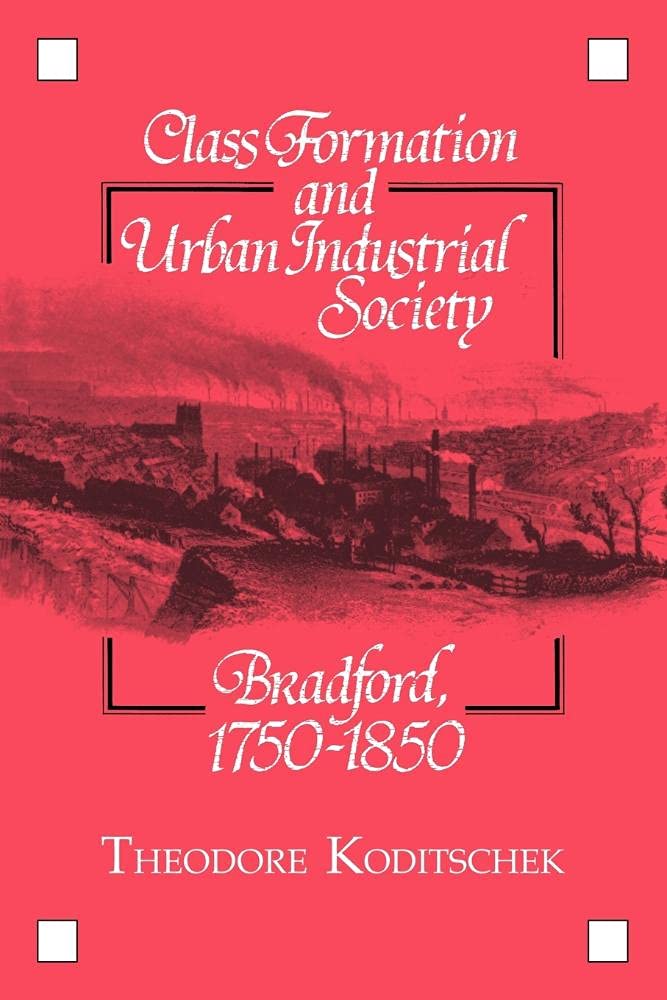
Class Formation and Urban Industrial Society: Bradford, 1750-1850
Class Formation and Urban Industrial Society: Bradford, 1750-1850
Price subject to change. Tap below for current.
Couldn't load pickup availability
In this review the book Class Formation and Urban Industrial Society: Bradford, 1750-1850 is recommended for readers who want a focused, historically grounded explanation of how a market town became a major industrial city. Theodore Koditschek traces the social transformation that accompanied Bradford's explosive growth, making this a useful account for students and general readers seeking a clear case study of early industrial capitalism. The single biggest reason to read it is the book's concentrated examination of class formation in one urban setting, which clarifies how population growth, trade, and industrial organization reshaped everyday life.
Key Features
- Local focus: The book concentrates on Bradford between 1750 and 1850, offering a detailed case study of urban change that illuminates wider patterns in nineteenth-century Britain.
- Social analysis: Koditschek explains the process of class formation and how social relations evolved alongside industrial growth.
- Population narrative: The text follows the town's shift from about 4,000 inhabitants to roughly 100,000, helping readers understand the human scale of industrialization.
- Economic context: The study links Bradford's rise as the international centre of worsted production to changes in labour, trade, and capitalist organization.
- Comparative value: Although focused on Bradford, the book highlights processes that were gradually transforming the wider society of nineteenth-century Britain and beyond.
Who It's For
This book suits history students, scholars of industrialisation, and general readers who want a concentrated urban case study of social change. It is especially helpful for those researching class, labour, and the development of textile manufacturing in Britain.
Readers seeking a broad global survey or a richly illustrated social history may want to supplement this with wider syntheses or collections with visual material, since the strength here is concentrated textual analysis of Bradford's transition.
Pros & Cons
Pros
- Clear, focused narrative of Bradford's transformation that makes the mechanisms of industrial change understandable.
- Effective linkage of demographic growth to economic and social shifts, useful for studies of urbanisation.
- Useful as a case study for courses on British industrial history or class formation.
Cons
- The narrow focus on Bradford means readers seeking broad comparative charts or extensive illustrations may find coverage limited.
Specifications
| Title | Class Formation and Urban Industrial Society: Bradford, 1750-1850 |
| Author | Theodore Koditschek |
| Setting | Bradford, Yorkshire, West Riding |
| Period covered | 1750 to 1850 |
| Main topic | Class formation and industrial society |
| Industry focus | Worsted production and trade |
Our Verdict
For readers who need a compact, well-argued case study of how capitalist social relations emerged in a rapidly growing industrial town, this book offers strong value. Koditschek's concentrated focus on Bradford provides clarity about class formation and the economic forces at work, making it a worthwhile purchase for students and researchers interested in nineteenth-century British urban history.
Frequently Asked Questions
Does the book cover economic as well as social history?
Yes. It links Bradford's role in worsted production and trade to changes in labour, population, and social structure.
Is this suitable for undergraduate courses?
Yes. The focused case study format makes it useful as a course reading or supplementary text for British industrial history.
Does it discuss population growth in detail?
Yes. The narrative traces Bradford's rise from about 4,000 inhabitants to roughly 100,000 during the period covered.
Editor's Take
Koditschek's study is a clear, focused case study of Bradford's transformation from market town to industrial centre, valuable for students and researchers of nineteenth-century British urban and social history.

Recently viewed
Recently viewed products will appear here as customers browse the store.