

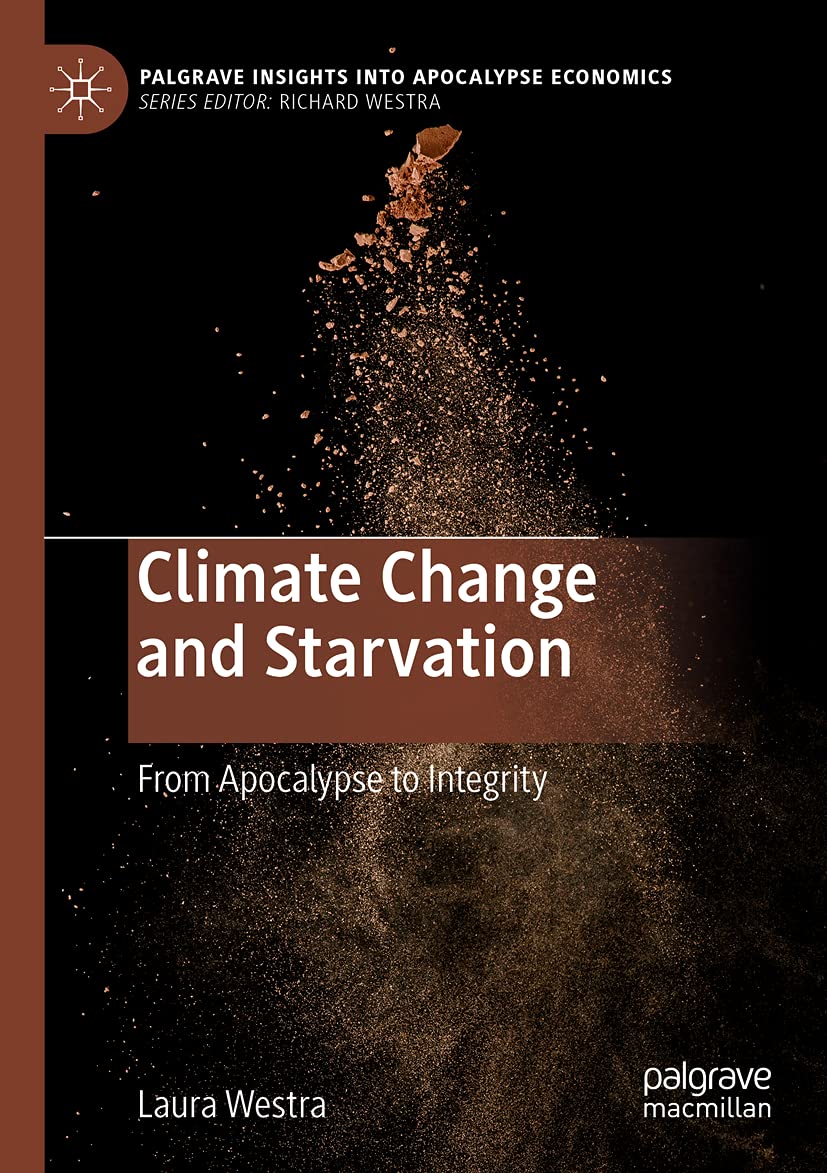
Climate Change and Starvation: From Apocalypse to Integrity - In-depth
Climate Change and Starvation: From Apocalypse to Integrity - In-depth
Price subject to change. Tap below for current.
Couldn't load pickup availability
In this review of Climate Change and Starvation: From Apocalypse to Integrity the reviewer finds a tightly argued academic work aimed at readers who want a legal and ethical account of how climate change intersects with hunger. Laura Westra connects international law and the lived reality of nutritional deprivation, and the single biggest reason to read it is its focus on the jurisdictional and case law implications of climate-related hunger rather than a general overview of environmental science. This makes it a valuable review pick for scholars, policymakers and students seeking a critical, jurisprudential perspective.
Key Features
- Interdisciplinary legal analysis: The book examines case law and the jurisdiction of the ICC to show how legal mechanisms can relate to climate-driven hunger.
- Focus on nourishment: It clarifies the difference between caloric shortage and lack of safe, healthy food to highlight nuanced forms of starvation in wealthy and poor countries.
- Critical approach: The author adopts a thorough critical stance that challenges simplistic links between climate change and food insecurity.
- Contribution to debate: The text advances the discussion on climate change by situating hunger within legal and ethical frameworks rather than only economic metrics.
- Scholarly tone: The book is structured for readers who require careful argumentation and citation rather than casual readership.
Who It's For
Climate Change and Starvation is best for legal scholars, graduate students in development or environmental law, and policymakers who need a rigorous, jurisdictional perspective on how climate impacts food systems and human nourishment. The book assumes comfort with legal reasoning and familiarity with international institutions like the ICC.
Readers looking for a primer on climate science, popular treatments of food systems, or a practical how-to guide for humanitarian interventions should look elsewhere; this is not a field handbook or an introductory textbook for general audiences.
Pros & Cons
Pros
- Clearly links international legal frameworks to questions of famine and nourishment, offering a concrete perspective for policy debates.
- Distinguishes forms of deprivation to deepen understanding of what starvation means beyond calorie counts.
- Provides a thorough critical approach that challenges accepted narratives and stimulates further research.
Cons
- The scholarly, jurisprudential tone limits accessibility for readers without legal training.
Specifications
| Title | Climate Change and Starvation: From Apocalypse to Integrity |
| Series | Palgrave Insights into Apocalypse Economics |
| Author | Laura Westra |
| Primary focus | Connection between climate change and hunger/nourishment |
| Approach | Legal analysis of case law and ICC jurisdiction |
| Intended audience | Scholars, policymakers, graduate students |
Our Verdict
Laura Westra delivers a focused, well-argued examination of how climate change and starvation intersect within legal and ethical discourse. Readers seeking a rigorous, jurisprudential analysis will find it excellent value for informing policy debates and academic work; those wanting introductory or practical field guidance will need a different resource.
Frequently Asked Questions
Does the book discuss international courts?
The review notes that the book examines case law and the jurisdiction of the ICC to explore legal avenues related to climate-driven hunger.
Is this suitable for general readers?
The book has a scholarly tone and is best suited to readers with some background in law, policy, or development studies rather than casual readers.
Does it offer policy recommendations?
The work is primarily analytical and critical; it contributes to debate and legal understanding, which can inform policy but is not a practical field manual.
Editor's Take
Laura Westra offers a rigorous jurisprudential analysis linking climate change and forms of starvation; recommended for scholars and policymakers who need a legal, ethical perspective rather than a practical field guide.

Recently viewed
Recently viewed products will appear here as customers browse the store.