

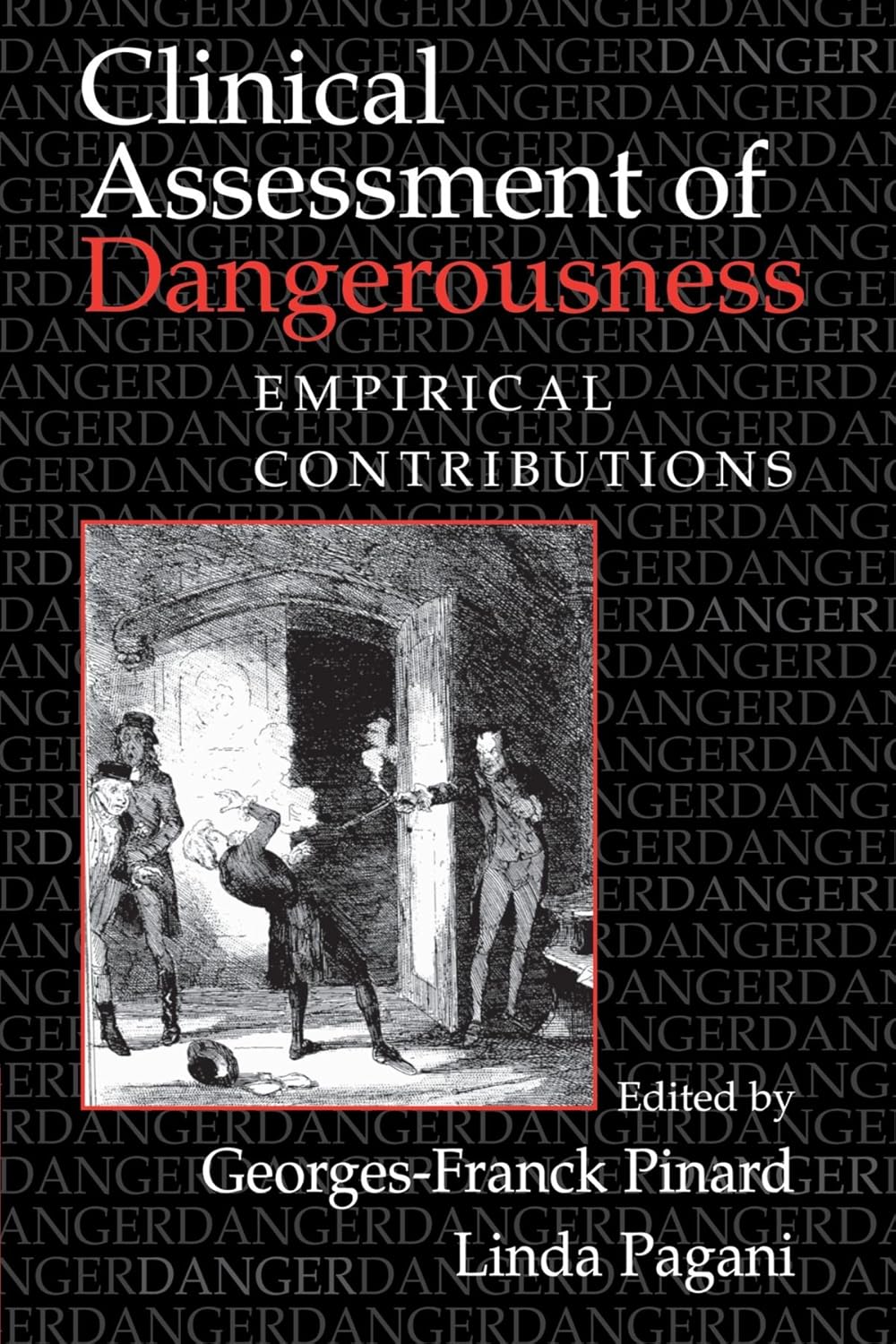
Clinical Assessment of Dangerousness: Empirical Contributions
Clinical Assessment of Dangerousness: Empirical Contributions
Price subject to change. Tap below for current.
Couldn't load pickup availability
In this review of Clinical Assessment of Dangerousness: Empirical Contributions the bottom line is clear: clinicians and forensic practitioners who need a research-informed framework for assessing violence risk will find a rigorous, issue-focused reference. The book gathers internationally recognized scholars to bridge empirical findings and clinical practice, making it especially useful when legal pressure demands defensible, evidence-based risk judgments. Its greatest value is the clear translation of research themes into assessment-relevant guidance rather than simplistic prediction checklists.
Key Features
- Issue-focused chapters: Each chapter frames major conceptual issues in violence research and explains why those issues matter for clinical assessment.
- Research to practice translation: Essays emphasize how empirical findings can be applied to improve risk formulation and case formulation in clinical settings.
- International perspectives: Contributors include scholars from multiple countries, offering diverse viewpoints on assessment challenges and legal climates.
- Population relevance: The book outlines key information for conducting risk assessments across different populations rather than a one-size-fits-all approach.
- Reference orientation: Designed as a reference, it supports clinicians who must justify decisions in settings that expect prediction and accountability.
Who It's For
This book is best for forensic psychologists, psychiatrists, and clinical professionals who perform structured risk assessments and need to ground their opinions in empirical literature. It is also valuable to trainees and researchers seeking concise essays that link violence research to assessment practice.
Those seeking a step-by-step assessment instrument or a short primer for nonclinical audiences should look elsewhere; this volume assumes familiarity with clinical risk assessment concepts and focuses on conceptual and empirical contributions rather than operational tools.
Pros & Cons
Pros
- Collects high-quality, research-informed perspectives that strengthen clinical reasoning in risk assessment.
- Provides clear links between empirical findings and assessment implications, aiding defensible clinical decisions.
- Includes international voices that broaden applicability across legal and clinical contexts.
Cons
- Not a practical handbook with standardized tools, so clinicians wanting protocols will need supplementary materials.
Specifications
| Title | Clinical Assessment of Dangerousness: Empirical Contributions |
| Authors/Brand | Georges-Franck Pinard, Linda Pagani |
| Content focus | Conceptual issues and themes in violence research |
| Use case | Reference for clinical risk assessment and prediction of violence |
| Audience | Clinicians, forensic practitioners, researchers, trainees |
| Approach | Issue-based essays translating research to assessment |
Our Verdict
Clinical Assessment of Dangerousness is a valuable, research-driven reference for clinicians and forensic professionals who must integrate empirical evidence into risk assessments. It offers thoughtful, internationally informed essays that improve clinical reasoning and help justify assessments in demanding legal contexts, though it should be paired with practical tools when standardized instruments are required.
Frequently Asked Questions
Does this book provide assessment tools?
No. The book focuses on empirical and conceptual contributions rather than step-by-step instruments, so use it alongside standardized tools.
Who are the contributors?
Internationally recognized scholars in violence research contribute issue-based essays tying findings to clinical assessment.
Is this suitable for trainees?
Yes. Trainees in forensic psychology or psychiatry will benefit from the research-to-practice framing, though prior exposure to risk assessment concepts is helpful.
Editor's Take
Clinical Assessment of Dangerousness is a research-driven reference that helps forensic clinicians translate violence research into defensible risk assessments; pair it with standardized tools for practical implementation.

Recently viewed
Recently viewed products will appear here as customers browse the store.