

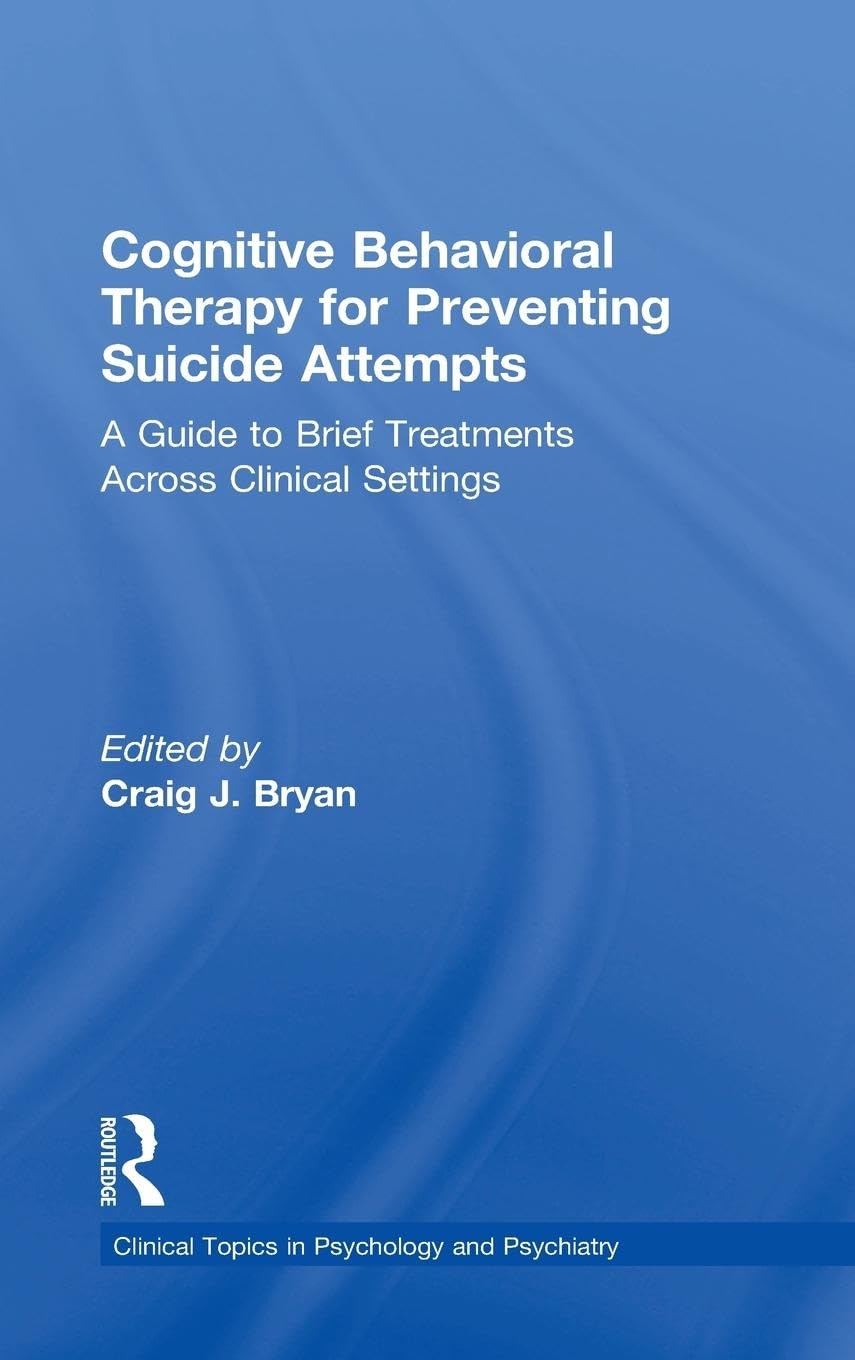
Cognitive Behavioral Therapy for Preventing Suicide Attempts
Cognitive Behavioral Therapy for Preventing Suicide Attempts
Price subject to change. Tap below for current.
Couldn't load pickup availability
Our review of Cognitive Behavioral Therapy for Preventing Suicide Attempts finds it most valuable for clinicians and mental health teams seeking a practical, evidence-based approach to reduce suicide attempts. The book consolidates work from leading researchers and shows how a common cognitive behavioral model produced large reductions in attempts across clinical settings. Readers will appreciate clear, clinician-friendly descriptions of techniques and the rationale behind them, making this a hands-on resource rather than a purely theoretical text.
Key Features
- Evidence-based model: Describes a common cognitive behavioral model of suicide that links theory to interventions backed by research.
- Practical techniques: Provides simple, straightforward descriptions of therapeutic techniques clinicians can apply immediately in sessions.
- Clear rationale: Explains why each intervention works and summarizes the scientific support for those methods.
- Adaptations for settings: Offers specific adaptations to fit diverse clinical settings and populations to increase real-world applicability.
- Clinician-friendly format: Organized as a how-to guide so practitioners can use it as a reference during treatment planning.
Who It's For
This book is aimed at practicing clinicians, psychologists, psychiatrists, and advanced trainees who need actionable strategies to reduce suicide attempts in clinical practice. It is particularly useful for teams implementing structured interventions across inpatient, outpatient, and community settings and for those who value a clear link between clinical technique and research.
Readers looking for a quick self-help manual for patients or a broad public-audience overview should look elsewhere, as the book assumes clinical background and focuses on interventions for professionals rather than lay readers.
Pros & Cons
Pros
- Consolidates evidence into a coherent cognitive behavioral framework useful for treatment planning.
- Clear, practical descriptions make it easy to translate research into session-level interventions.
- Includes adaptations for diverse settings, improving generalizability across clinical environments.
Cons
- Written for clinicians, so nonprofessionals may find the material technical rather than accessible.
Specifications
| Title | Cognitive Behavioral Therapy for Preventing Suicide Attempts (Clinical Topics in Psychology and Psychiatry) |
| Authors | Craig J. Bryan, Bret A. Moore |
| Scope | Clinical, evidence-based interventions for preventing suicide attempts |
| Audience | Clinicians, psychologists, psychiatrists, trainees |
| Focus | Practical how-to techniques and adaptations for diverse settings |
| Approach | Common cognitive behavioral model linked to intervention outcomes |
Our Verdict
Cognitive Behavioral Therapy for Preventing Suicide Attempts is a strong choice for clinicians who need a concise, evidence-linked guide to reducing suicide attempts. Its practical focus and clear explanations make it good value for professionals seeking interventions they can implement across settings, though it is not designed as a lay self-help resource.
Frequently Asked Questions
Is this book suitable for trainees?
Yes. Advanced trainees and clinical interns will find the intervention descriptions and rationale useful for learning applied techniques.
Does it include research support for the methods?
Yes. The book explains the scientific support for the cognitive behavioral model and reports reductions in suicide attempts across clinical settings.
Can nonclinicians use this book?
It is written for professionals, so nonclinicians may find it technical and should consider other consumer-focused resources instead.
Editor's Take
A clinician-focused, evidence-based how-to guide that links a cognitive behavioral model to practical interventions for reducing suicide attempts, offering strong value for mental health professionals.

Recently viewed
Recently viewed products will appear here as customers browse the store.