

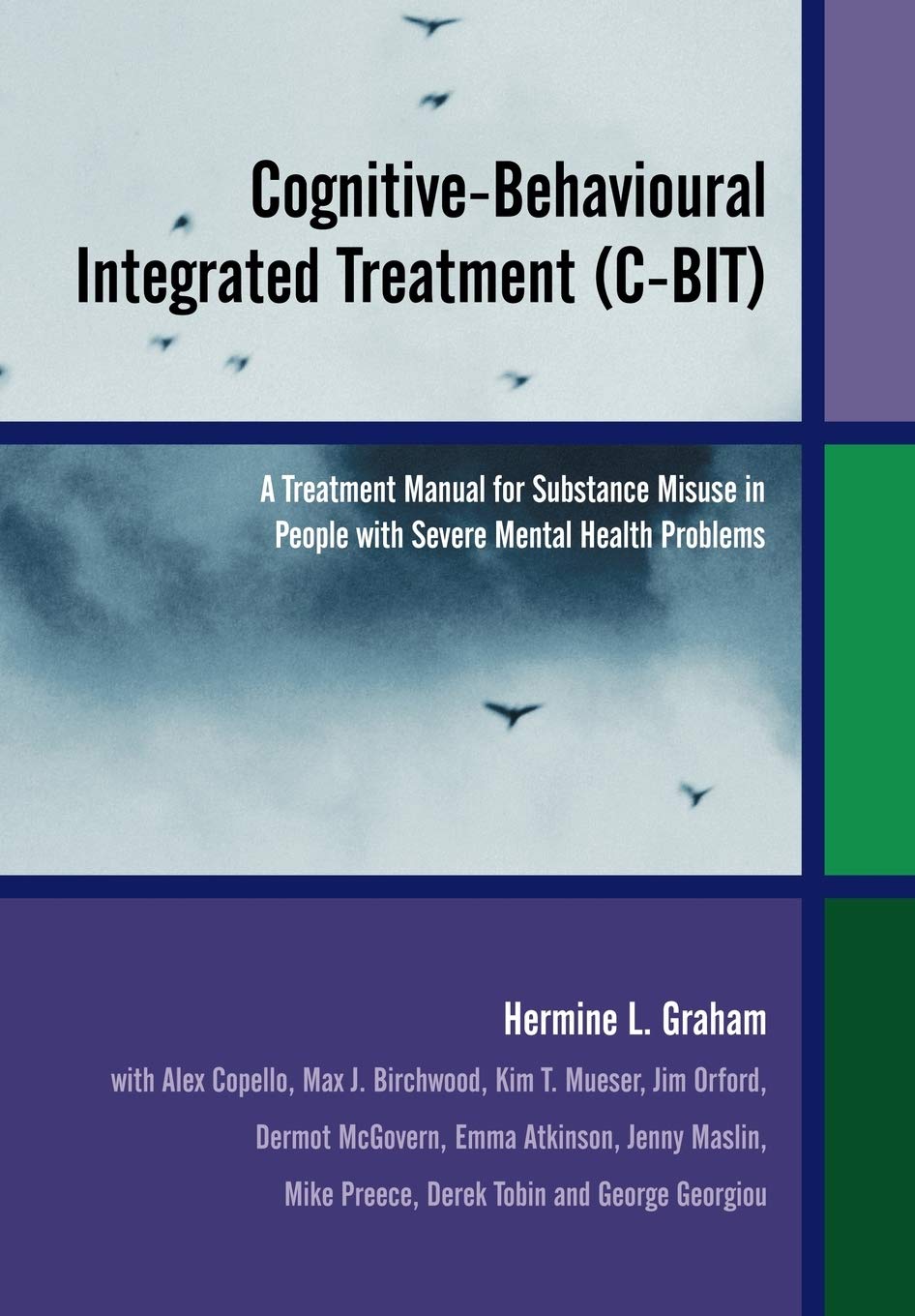
Cognitive-Behavioural Integrated Treatment (C-BIT) - Practical Manual
Cognitive-Behavioural Integrated Treatment (C-BIT) - Practical Manual
Price subject to change. Tap below for current.
Couldn't load pickup availability
In this review of Cognitive-Behavioural Integrated Treatment (C-BIT) the bottom line is clear: clinicians and service planners working at the interface of severe mental illness and substance misuse will find a focused, practice-oriented resource that links theory to clinical examples. The book assembles international perspectives and models of integrated care, making it valuable for teams seeking realistic approaches to dual-diagnosis work. Readers should expect a chapter-driven manual that balances conceptual framing with illustrative case material rather than a quick how-to protocol.
Key Features
- Integrated focus: The book presents a sustained emphasis on combined treatment for psychosis and substance misuse, helping clinicians plan interventions that address both conditions together.
- International perspectives: Chapters from authors in the UK, Germany, Australia, USA and Canada offer comparative models that broaden understanding of service configuration and delivery.
- Case material: Illustrative clinical cases are used throughout to translate theory into practice and demonstrate how integrated approaches work with real clients.
- Service model survey: A range of integrated service models is described, enabling teams to consider different organizational options for dual-diagnosis care.
- Expert contributors: Chapters are written by experienced clinicians and researchers, providing authoritative viewpoints and practical insight for applied work.
Who It's For
This manual is best suited to mental health clinicians, substance misuse specialists, team leaders and service planners who need a well-grounded, clinically oriented overview of integrated care for people with psychosis and substance use problems. Trainees in psychology, psychiatry and addiction studies will also benefit from the case material and comparative service descriptions.
Anyone seeking a short pocket guide or a highly prescriptive CBT workbook for immediate client sessions should look elsewhere; this volume is more of a treatment manual and programmatic survey than a single-session handout or step-by-step client workbook.
Pros & Cons
Pros
- The integrated emphasis makes it practical for teams aiming to coordinate mental health and substance services.
- International chapters provide useful contrasts and transferable ideas for service design.
- Case illustrations help bridge the gap between theory and clinical application.
Cons
- The manual is not a brief clinical cheat-sheet and requires time to read and adapt material for local practice.
Specifications
| Title | Cognitive-Behavioural Integrated Treatment (C-BIT) |
| Scope | Treatment manual for substance misuse in people with severe mental health problems |
| Content style | Theory and illustrative clinical case material |
| Coverage | International perspectives (UK, Germany, Australia, USA, Canada) |
| Structure | Arranged in five sections including service models and introduction to psychosis and substance misuse |
| Contributors | Multiple expert authors and clinicians |
Our Verdict
C-BIT is a thoughtful, practice-focused manual ideal for clinicians and service designers working with co-occurring psychosis and substance misuse. Its international chapters and case material make it a durable reference for planning integrated services, though it works best when read as a programmatic guide rather than a quick clinical primer.
Frequently Asked Questions
Does this book include practical case examples?
Yes. The manual uses illustrative clinical case material throughout to demonstrate how integrated approaches operate in real practice.
Is this a step-by-step CBT workbook for clients?
No. It is a treatment manual and survey of integrated models, intended for clinicians and teams rather than as a single-session client workbook.
Which countries' models are described?
The book includes chapters offering perspectives from the UK, Germany, Australia, the USA and Canada.
Editor's Take
C-BIT is a practice-focused manual for clinicians and service planners addressing co-occurring psychosis and substance misuse, offering international models and case material that are valuable for designing integrated services.

Recently viewed
Recently viewed products will appear here as customers browse the store.