

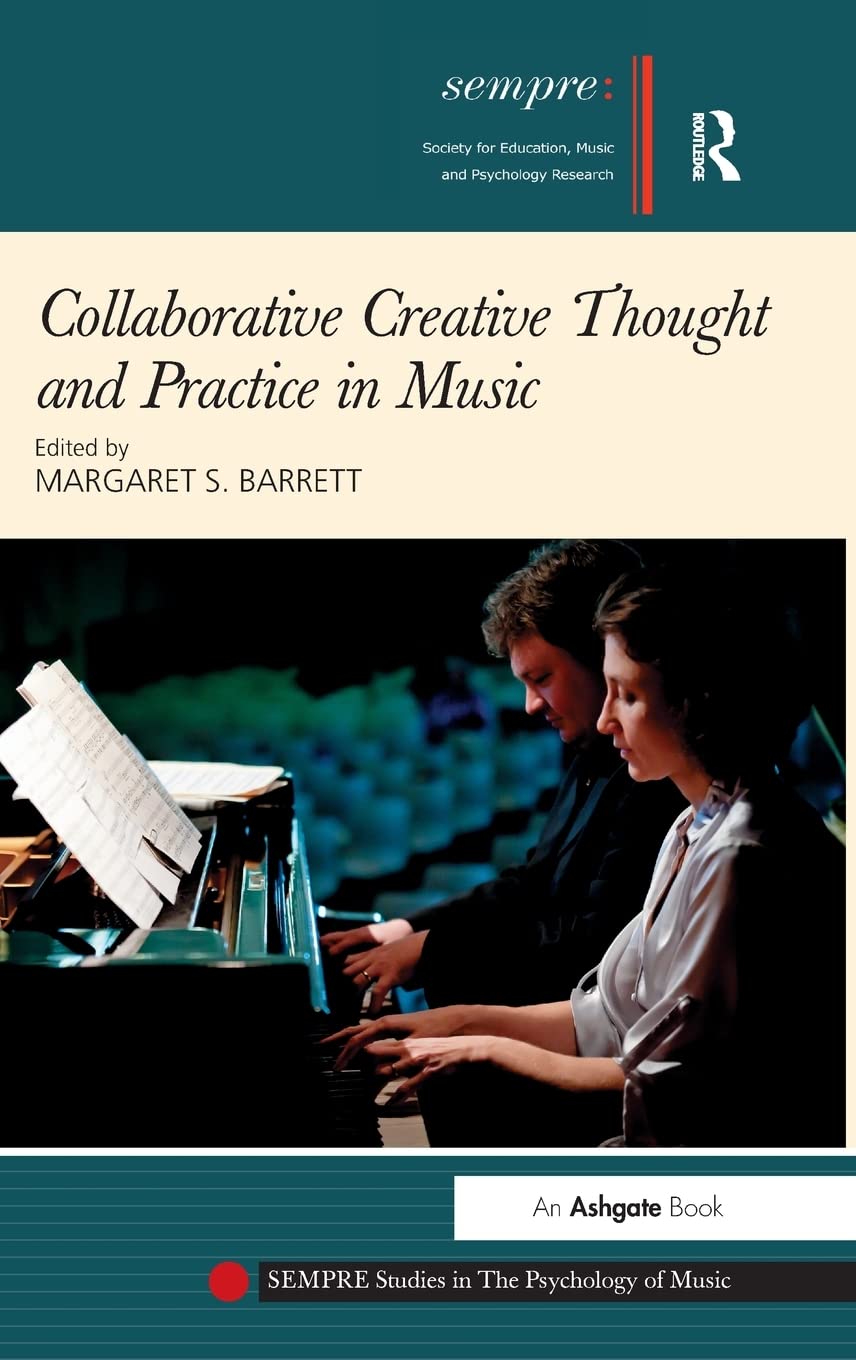
Collaborative Creative Thought and Practice in Music - Social
Collaborative Creative Thought and Practice in Music - Social
Price subject to change. Tap below for current.
Couldn't load pickup availability
In this review of Collaborative Creative Thought and Practice in Music, the book is recommended for music scholars and practitioners interested in how creativity emerges from social interaction rather than solely from isolated individuals. The single biggest reason to buy is its sustained argument that creativity in music is mutually constituted across people and contexts, offering a corrective to romanticized notions of the lone genius. The review focuses on the book's scope, clarity of argument, and usefulness for research and teaching in music psychology and composition.
Key Features
- Socially grounded perspective: The book foregrounds creativity as a social construct, helping readers rethink individual authorship in musical practice.
- Music-focused case studies: Focusing on the domain of music, it applies theory to relevant musical examples that clarify abstract ideas.
- Critical engagement with systems theories: It contrasts systems approaches with interactional views, making conceptual distinctions useful for researchers.
- Cross-cultural sensitivity: The discussion acknowledges collectivist cultural practices, providing broader context for comparative study.
- Scholarly framing: The structure into investigative sections helps readers follow the progression from theory to application.
Who It's For
The book is best suited to graduate students, researchers, and advanced undergraduates in music psychology, ethnomusicology, composition studies, and arts education who want a critical, research-informed perspective on creativity. Practitioners curious about collaborative composition or ensemble practices will also find theoretical insights that inform pedagogy and group work.
Those seeking a how-to manual for collaborative music projects or a popular overview with many audio examples should look elsewhere; the book is more conceptual and geared to academic discussion than step-by-step creative exercises.
Pros & Cons
Pros
- Offers a clear alternative to the lone-creator model by emphasizing the mutual constitution of creative acts.
- Provides useful comparisons between collectivist cultural practices and Western narratives of authorship.
- Useful for framing research questions and classroom discussion about creativity in music.
Cons
- Not a practical handbook for collaborative methods, so readers seeking applied instruction may feel the need for supplemental resources.
Specifications
| Title | Collaborative Creative Thought and Practice in Music |
| Series | SEMPRE Studies in The Psychology of Music |
| Author | Margaret S. Barrett |
| Focus | Creativity as a social construct in the domain of music |
| Approach | Theoretical investigations and music-focused applications |
| Comparative scope | Includes discussion of collectivist cultures and systems theories |
Our Verdict
Collaborative Creative Thought and Practice in Music is a thoughtful, well-argued contribution that reframes creativity in music as a relational phenomenon. It is good value for scholars and teachers who need a rigorous, theory-driven account that challenges individual-centered models and supports richer study of collaborative musical practices.
Frequently Asked Questions
Does this book focus on practical collaboration techniques?
The emphasis is conceptual and theoretical rather than a how-to guide, so readers should supplement it with practical method texts for step-by-step techniques.
Is the book suitable for undergraduate courses?
Advanced undergraduates in music psychology or composition who are comfortable with theoretical discussion will find it appropriate; introductory students may need additional context.
Does it compare cultural perspectives on creativity?
Yes, the book discusses collectivist cultural practices alongside Western models and critiques systems-based approaches.
Editor's Take
This book reframes musical creativity as a socially constituted process, making it valuable for scholars and teachers who want a rigorous theoretical alternative to individual-centered models.

Recently viewed
Recently viewed products will appear here as customers browse the store.