

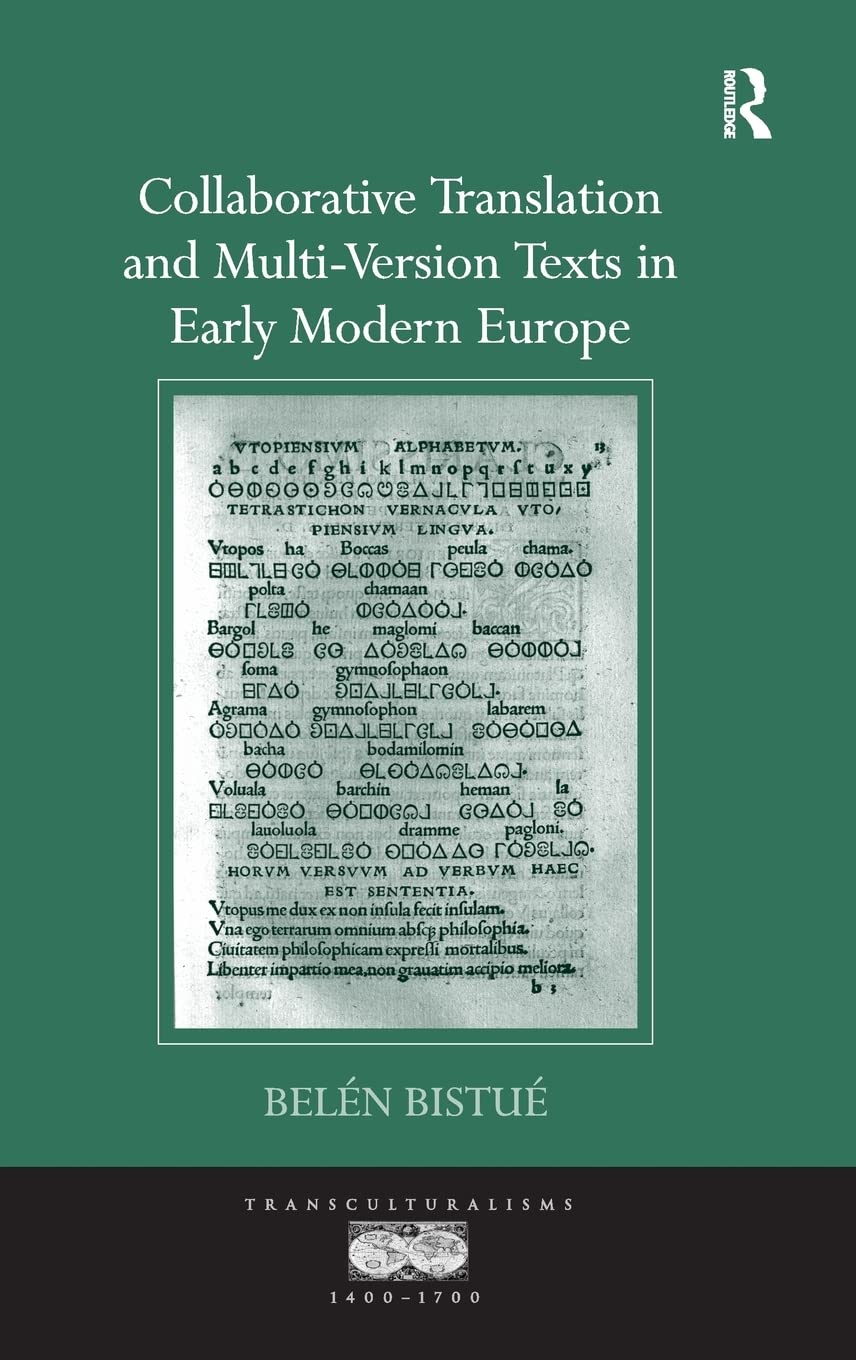
Collaborative Translation and Multi-Version Texts in Early Modern
Collaborative Translation and Multi-Version Texts in Early Modern
Price subject to change. Tap below for current.
Couldn't load pickup availability
In this review of Collaborative Translation and Multi-Version Texts in Early Modern Europe, the bottom line is clear: this is a careful, scholarship-driven study best suited to academics and advanced students interested in translation history and textual practices. Belen Bistue examines how team translation and multilingual editions complicate Renaissance translation theory, and the book's principal contribution is its focused recovery of collaborative textual practices that traditional histories have ignored. Readers seeking a readable synthesis of how multi-version texts functioned across genres will find this volume particularly useful.
Key Features
- Focus on team translation: The book foregrounds collaborative processes and explains why they resist the ideal of a single authoritative translation.
- Multilingual editions: Bistue traces how multilingual print and manuscript editions were produced and circulated, illuminating editorial choices.
- Genre breadth: The study covers a diverse range of genres, from the Scriptures to herbals and pamphlets, showing the practices at work across contexts.
- Historical challenge to theory: The book demonstrates how practical translation techniques undermined contemporary theoretical calls for unity of style.
- Manuscript and print evidence: Close attention to both media provides a nuanced picture of textual variation and editorial strategy.
- Recovery of excluded practices: It recovers widespread medieval and Renaissance practices that have been overlooked in translation and literary histories.
Who It's For
This book is aimed primarily at scholars of translation studies, Renaissance literature, and book history, as well as graduate students researching textual transmission and editorial practice. The detailed case studies and genre-by-genre approach will reward readers who already have some familiarity with early modern textual cultures.
Those looking for a general introduction to translation theory or a popular history of early modern Europe should look elsewhere; the focus here is specialist and archival rather than broad or introductory. Practitioners seeking practical translation techniques for modern collaborative projects may also find the emphasis too historical and theoretical.
Pros & Cons
Pros
- Recovers neglected collaborative and multilingual practices that broaden understanding of translation history.
- Uses a variety of genres to show the persistence of multi-version texts across contexts.
- Balances manuscript and print material to reveal editorial decisions and textual variation.
Cons
- Specialist tone and archival detail may be dense for readers without prior background in Renaissance studies.
Specifications
| Title | Collaborative Translation and Multi-Version Texts in Early Modern Europe |
| Series | Transculturalisms, 1400-1700 |
| Author | Belen Bistue |
| Scope | Team translation, multilingual editions, manuscript and print practices |
| Genres examined | Scriptures, astrological and astronomical treatises, herbals, poems, pamphlets |
| Period | Medieval and Renaissance Europe |
Our Verdict
Collaborative Translation and Multi-Version Texts is a rigorous, valuable contribution to translation and book history that restores collaborative editorial practices to view. Scholars and advanced students will appreciate its archival grounding and cross-genre analysis, making it worth acquiring for research libraries and specialist courses despite a dense, scholarly tone.
Frequently Asked Questions
Does this book cover printed as well as manuscript texts?
Yes. The study addresses both manuscript and print evidence to trace multilingual and collaborative practices.
Is prior knowledge of translation theory required?
Familiarity with basic concepts in translation studies or Renaissance textual culture is helpful, as the book assumes some disciplinary background.
Which genres are included?
The book examines a range of genres including scriptures, herbals, astrological and astronomical treatises, goliardic poems, and pamphlets.
Editor's Take
A rigorous, archival study that restores collaborative and multilingual practices to translation history; ideal for scholars and advanced students seeking detailed case studies across genres.

Recently viewed
Recently viewed products will appear here as customers browse the store.