

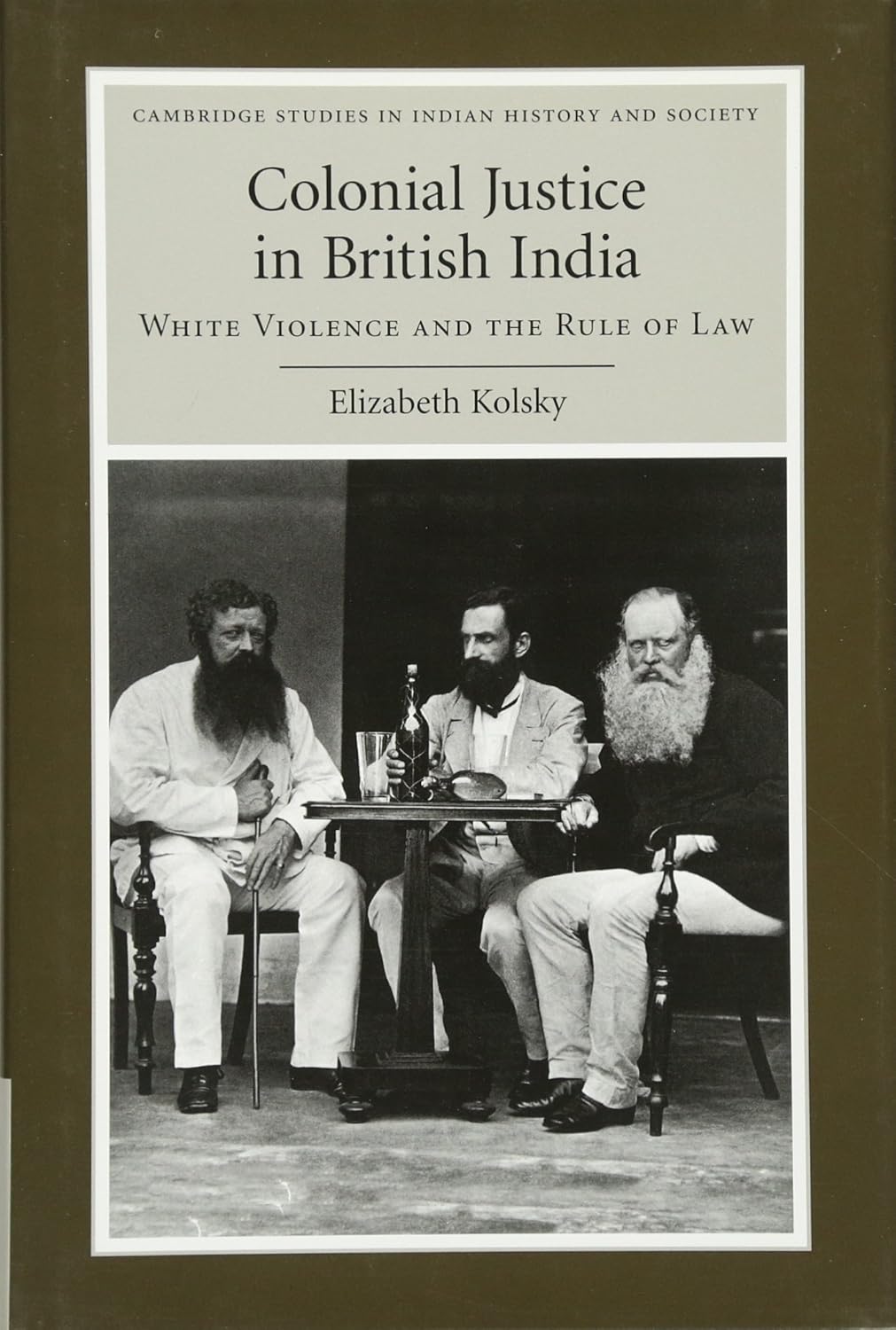
Colonial Justice in British India: White Violence and the Rule of Law
Colonial Justice in British India: White Violence and the Rule of Law
Price subject to change. Tap below for current.
Couldn't load pickup availability
In this review of Colonial Justice in British India the author Elizabeth Kolsky is examined as a historian who brings a stark, documented perspective on how violence shaped colonial rule. The book is for readers interested in legal history, empire studies and the social dynamics of race and power, and its single biggest reason to buy is the way Kolsky foregrounds the crimes of ordinary Europeans-planters, soldiers, sailors and paupers-to show that violence was an ordinary instrument of British authority rather than an aberration. The narrative reframes familiar imperial themes through court records and judicial practice, making it essential reading for serious students of modern South Asian history.
Key Features
- Focus on white violence: The book documents specific instances and patterns of violence by European residents to argue that brutality was embedded in colonial governance.
- Legal and archival evidence: Kolsky uses court records, trial reports and police practice to show how legislation and courts often placed Europeans above the law.
- Social cast of perpetrators: By highlighting planters, paupers, soldiers and sailors, the work expands the cast of characters beyond administrative elites and shows the social reach of violent privilege.
- Argument about racialized justice: The author links racial hierarchy to the functioning of police, juries and judges, explaining how race distorted legal outcomes.
- Historiographical contribution: The book reframes British rule by shifting attention from formal policy to everyday practices that normalized impunity.
Who It's For
This book is best for graduate students, historians and informed general readers seeking a rigorous, documented account of how violence and law interacted in colonial India. Scholars of empire, legal history and race will find its archival approach and focus on court process particularly valuable.
Readers looking for a broad political narrative of imperial diplomacy, a lightweight survey or a biography will find this tighter, evidence-driven study less suitable. The book assumes some familiarity with colonial institutions and benefits from patience with archival detail.
Pros & Cons
Pros
- Provides a clear archival foundation that makes the argument about racialized justice persuasive and hard to dismiss.
- Expands the historical cast to include lesser-known Europeans, offering fresh social context for colonial violence.
- Connects legal procedure to broader patterns of imperial power, useful for interdisciplinary work.
Cons
- The dense archival style may feel demanding for readers seeking lighter narratives rather than a focused academic intervention.
Specifications
| Title | Colonial Justice in British India: White Violence and the Rule of Law |
| Author | Elizabeth Kolsky |
| Series | Cambridge Studies in Indian History and Society, Series Number 17 |
| Subject | Colonial legal history and violence in India |
| Primary focus | White violence and the operation of colonial courts and police |
| Audience | Scholars, graduate students, serious general readers |
Our Verdict
Colonial Justice in British India is a rigorous, archival study that reframes how historians should think about violence and the rule of law under empire. Those seeking a challenging, evidence-rich account of how race and legal institutions produced impunity will find strong value here; the book repays close reading and contributes important nuance to histories of colonial power.
Frequently Asked Questions
Does this book rely on primary sources?
Yes. Kolsky grounds her argument in court records, trial reports and police practices drawn from archival material.
Is it suitable for nonacademic readers?
It is accessible to informed general readers but adopts an academic style and assumes some familiarity with colonial institutions.
What is the central argument?
The central claim is that white violence was ordinary under British rule and that legal institutions often enabled European impunity through biased legislation and practice.
Editor's Take
A rigorous, archival study that reframes how violence and the rule of law functioned under British rule; recommended for scholars and serious readers interested in empire and legal history.

Recently viewed
Recently viewed products will appear here as customers browse the store.