

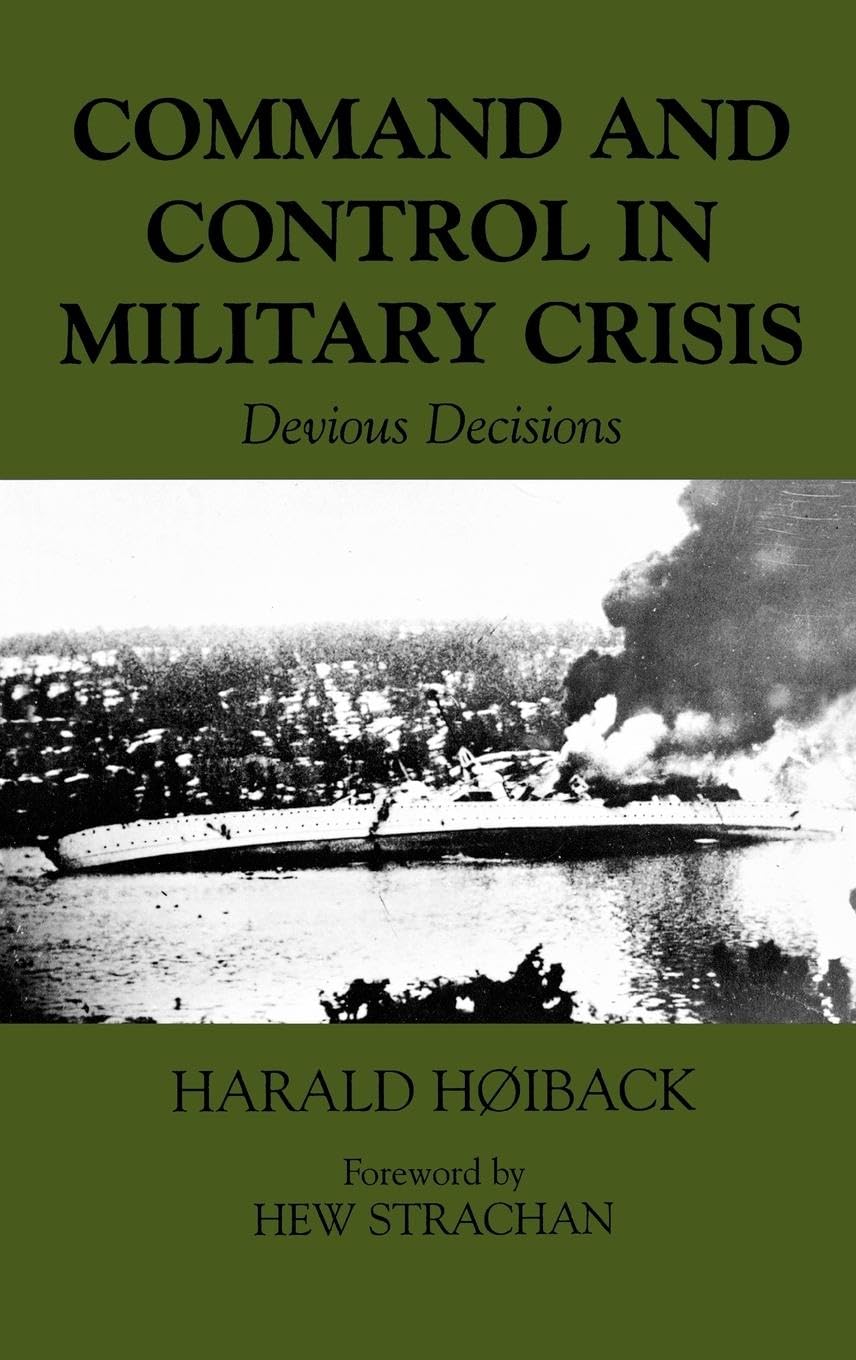
Command and Control in Military Crisis - Historical Case Studies
Command and Control in Military Crisis - Historical Case Studies
Price subject to change. Tap below for current.
Couldn't load pickup availability
In this review of Command and Control in Military Crisis, the reviewer assesses Harald Hoiback's focused study of two pivotal decisions in 1918 and 1940 and explains why the book matters to students of strategy. The bottom line: this compact scholarly work is best for readers who want a tightly argued, case-driven examination of how command arrangements shaped outcomes in critical moments, and the single biggest reason to buy is its clear comparison of Allied and Norwegian decision processes that links command choice to strategic consequence.
Key Features
- Dual case focus: The book compares the 1918 Allied meeting at Doullens and Norway in 1940 to show how different command choices produced markedly different outcomes.
- Analytic clarity: Hoiback isolates decision points to let readers trace cause and effect between command arrangements and operational results.
- Historical depth: Detailed attention to the Doullens meeting and the Norwegian colonel decision provides concrete context rather than abstract theory.
- Policy relevance: The study links historical episodes to broader questions about civil-military relations and centralized control in crises.
- Concise format: The focused scope makes the book suitable for classroom reading or seminar discussion without requiring a large time investment.
Who It's For
Readers interested in military history, civil-military relations, and decision-making under pressure will find this book especially useful. It suits advanced undergraduates, graduate students, and practitioners who prefer comparative case studies that illuminate how command structures matter in crisis.
Those seeking a comprehensive single-volume history of World War I or World War II will want a broader survey elsewhere, because the book intentionally restricts itself to two illustrative episodes rather than providing exhaustive coverage of either conflict.
Pros & Cons
Pros
- Focused comparison highlights how different command choices led to divergent strategic consequences.
- Clear narrative of the Doullens meeting makes the Allied decision to cede control easy to follow and evaluate.
- Useful link between historical episodes and modern questions of policy and control for classroom discussion.
Cons
- The narrow scope means readers seeking exhaustive operational detail or broad chronological coverage may find the treatment limited.
Specifications
| Title | Command and Control in Military Crisis |
| Authors | Harald Hoiback, Hew Strachan |
| Main focus | 1918 Doullens meeting and Norway 1940 decision |
| Subject area | Military history and policy |
| Approach | Comparative case study |
| Use case | Teaching, policy analysis, historical study |
Our Verdict
Command and Control in Military Crisis is a concise, well-argued study that rewards readers who want to understand how command arrangements shaped two decisive moments in 1918 and 1940. It represents good value for students and professionals seeking focused comparative analysis rather than a sweeping history, and it stimulates useful discussion about control, authority, and crisis decision-making.
Frequently Asked Questions
Does the book cover both World War I and World War II?
The study concentrates on an Allied 1918 meeting and the Norwegian 1940 decision as two case studies rather than delivering full war histories.
Who wrote the analysis?
The book is by Harald Hoiback with contribution from Hew Strachan and focuses on command and control decisions in crisis.
Is this suitable for classroom use?
Yes; its concise comparative format makes it practical for seminar readings and policy courses that discuss civil-military relations.
Editor's Take
A concise, well-argued comparative study showing how command arrangements in 1918 and 1940 shaped outcomes; ideal for students and practitioners seeking focused analysis rather than broad narrative.

Recently viewed
Recently viewed products will appear here as customers browse the store.