

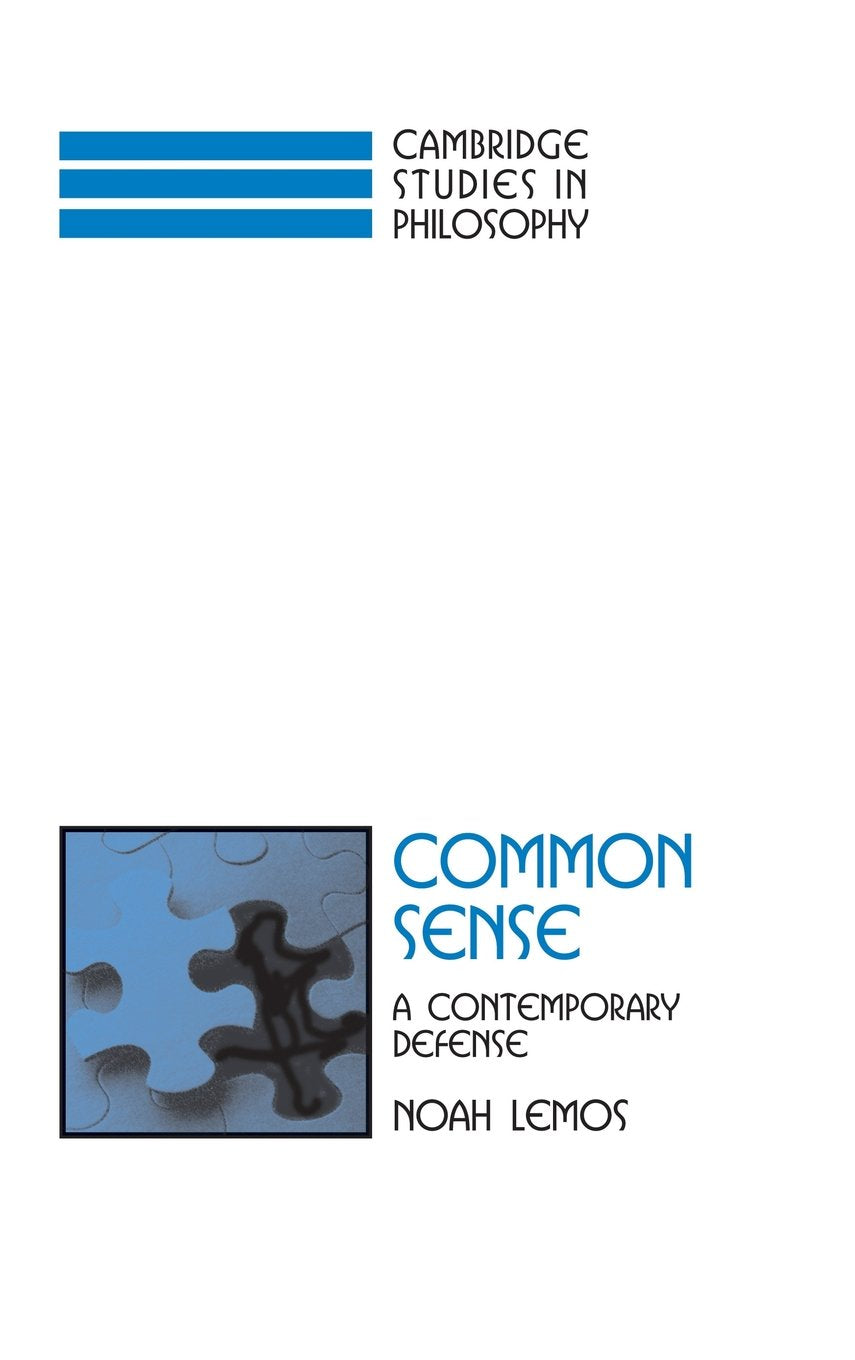
Common Sense: A Contemporary Defense - Clear Case for Common Sense
Common Sense: A Contemporary Defense - Clear Case for Common Sense
Price subject to change. Tap below for current.
Couldn't load pickup availability
In this review of Common Sense: A Contemporary Defense, the bottom line is straightforward: Noah Lemos offers a focused, accessible defense of the common sense tradition that will appeal to students and philosophers seeking a sustained argument for ordinary epistemic commitments. The book serves as a concise bridge between historical thinkers like Thomas Reid and G.E. Moore and contemporary epistemology, making the case that many everyday beliefs can legitimately ground philosophical inquiry without radical skepticism. For readers who want a thoughtful, text-driven presentation rather than an exhaustive textbook, this work is a strong choice.
Key Features
- Historical framing: Lemos situates his defense in the writings of Thomas Reid, G.E. Moore and Roderick Chisholm, clarifying how the tradition developed and why it matters today.
- Philosophical focus: The book concentrates on the justification of ordinary knowledge claims, offering a sustained argument relevant to epistemology and ethics.
- Concise exposition: The text is written to be accessible to students while remaining rigorous enough for professional philosophers to engage with.
- Contemporary relevance: Lemos connects classical common sense views to modern debates, showing practical implications for philosophical methodology.
- Textual clarity: The prose emphasizes clear argumentation and careful definition of terms, helping readers follow complex positions without losing sight of the central claim.
Who It's For
This book is best for undergraduate and graduate students in philosophy, particularly those working in epistemology or ethics who want to understand a modern defense of ordinary epistemic practices. It also suits professional philosophers seeking a concise restatement of the common sense position linked to Reid, Moore and Chisholm.
Readers looking for a broad survey of all schools in epistemology or a heavily technical treatise in formal epistemology should look elsewhere; this book is a focused defense rather than an encyclopedic reference or methodological primer in logic or probability.
Pros & Cons
Pros
- Clear engagement with historical figures offers readers a coherent intellectual lineage for the common sense tradition.
- Suitable length and focus make it accessible for classroom use and seminar discussion.
- Relevant connections to contemporary debates help bridge historical and modern concerns in epistemology.
Cons
- The focused scope means it does not cover every opposing view in full detail, so readers wanting exhaustive criticism of common sense positions may need supplementary texts.
Specifications
| Title | Common Sense: A Contemporary Defense |
| Series | Cambridge Studies in Philosophy |
| Author | Noah Lemos |
| Subject | Epistemology and ethics; philosophical defense of ordinary beliefs |
| Focus | Defense of the common sense tradition following Reid, Moore, Chisholm |
Our Verdict
Noah Lemos delivers a compact, persuasive defense of the common sense tradition that is especially useful for students and philosophers who want a readable, historically informed argument against radical skepticism. Its focused coverage and clear writing make it worthwhile classroom material and a good value for readers seeking a principled justification of ordinary knowledge claims.
Frequently Asked Questions
Is this book suitable for introductory students?
Yes. The exposition aims to be accessible to undergraduates while maintaining philosophical rigor.
Does the book engage contemporary debates?
Yes. Lemos connects historical common sense views to current epistemological and ethical discussions.
Will it replace a comprehensive epistemology textbook?
No. It is a focused defense of a particular tradition and is best used alongside broader surveys for a full curriculum.
Editor's Take
Noah Lemos provides a compact, persuasive defense of the common sense tradition, ideal for students and philosophers who want a readable, historically informed argument against radical skepticism.

Recently viewed
Recently viewed products will appear here as customers browse the store.