

Compound Trinocular Microscope 40X-5000X Magnification - Research
Compound Trinocular Microscope 40X-5000X Magnification - Research
Price subject to change. Tap below for current.
Couldn't load pickup availability
Our review of this Compound Trinocular Microscope finds it best suited for labs, advanced students, and hobbyists who need a long-range magnification set and a durable mechanical stage. The single biggest reason to consider this microscope is its broad magnification range and flat-field achromatic objectives that promise clear, color-accurate imaging across multiple powers, making it useful for detailed specimen study. The review covers handling, optics, and common issues reported by owners so a buyer knows what to expect for lab and classroom use.
Key Features
- Wide magnification: A set of flat-field achromatic objective lenses covers common powers from low to very high magnification so users can examine both coarse and fine specimen detail.
- High light transmission: The achromatic optics and illumination system work together to deliver clearer, sharper images and improved color reproduction for better observation.
- Coaxial coarse and fine focus: Thick and thin coaxial focus knobs let the operator make both rapid and precise adjustments to bring targets into sharp view.
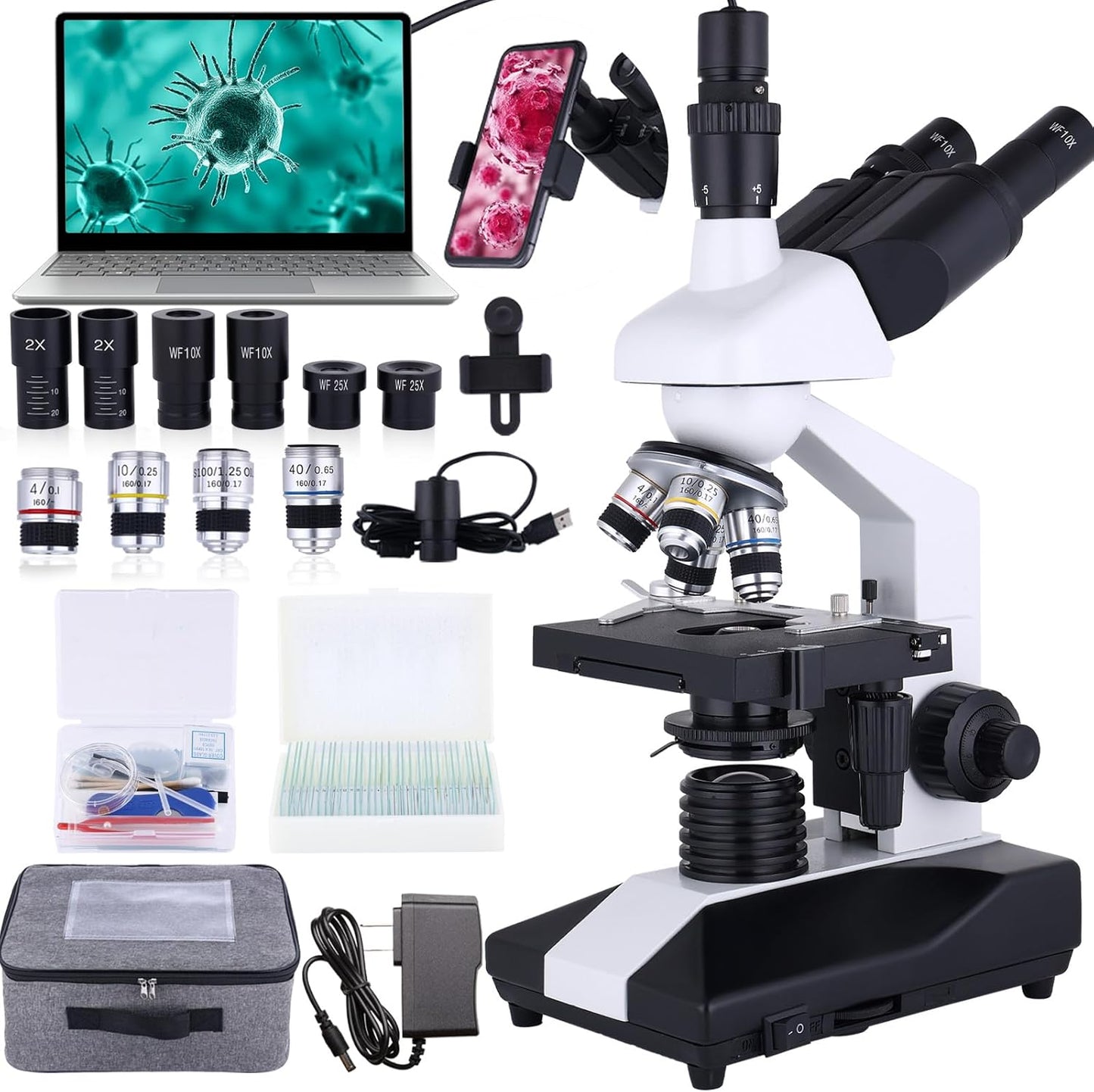
- Triocular head: A hinged binocular viewing tube with a 30 degree tilt provides comfortable viewing and a triocular port accepts a camera for recording or broadcasting images.
- Dual mechanical stage: The large, double-layer mechanical stage with condenser and adjustable aperture supports precise slide movement and variable light control for different specimens.
- USB camera option: The system can be used with a USB microscope camera to capture and share images, expanding the microscope beyond eyepiece observation.
Who It's For
This microscope is aimed at high school and college classrooms, research hobbyists, and laboratory users who need versatile magnification and a stable mechanical stage for routine specimen work. It is particularly useful when image capture or projection is required via the triocular head and USB camera accessory.
Users who need plug-and-play software support or very beginner-friendly instructions may find the included documentation sparse, and those who expect flawless out-of-box electronics should note some buyers reported LED or cord issues. Anyone needing a lightweight, travel-ready microscope should look elsewhere.
Pros & Cons
Pros
- Optics deliver clear, color-accurate images across multiple magnifications when properly aligned.
- Robust mechanical stage and coaxial focus make precise positioning and focusing straightforward.
- Triocular head and USB camera compatibility allow recording and sharing of enlarged specimen images.
- Good value for laboratory-grade features considering the price point.
Cons
- Some users report intermittent LED illumination or cord durability issues, which can affect out-of-box reliability.
- Instructions and bundled software are reported as vague, so initial setup and camera configuration may require extra effort.
Specifications
| Product type | Compound trinocular microscope |
| Magnification | 40X, 100X, 250X, 400X, 1000X and 5000X |
| Objective | 195 flat-field achromatic lenses |
| Viewing head | Hinged binocular tube with triocular port, 30 degree tilt |
| Focus | Coaxial coarse and fine adjustment |
| Stage | Large double-layer mechanical stage with adjustable condenser |
| Camera | Triocular port supports additional electronic eyepieces or USB camera |
Our Verdict
The Compound Trinocular Microscope is a solid choice for classrooms and hobbyist labs that need wide magnification, reliable mechanical controls, and the option to capture images. It offers good optical performance and useful ergonomics for the price, but buyers should be prepared to troubleshoot illumination or camera setup and consult support if parts arrive defective.
Frequently Asked Questions
Does this microscope support image capture?
Yes, the triocular head accepts additional electronic eyepieces or a USB camera so users can record, broadcast, and capture specimen images.
What magnifications are available?
The optics provide a range including 40X, 100X, 250X, 400X, 1000X and up to 5000X using the supplied objective set.
Are replacement parts or support available?
The product notes indicate customer service is available; contact the seller for assistance with LEDs, cords, or setup questions.
Editor's Take
The microscope is a good-value lab instrument offering wide magnification, achromatic optics, a sturdy mechanical stage and a triocular port for image capture; expect to troubleshoot illumination or setup issues if they occur.

Recently viewed
Recently viewed products will appear here as customers browse the store.