

Computational Design of Rolling Bearings - Engineering Reference
Computational Design of Rolling Bearings - Engineering Reference
Price subject to change. Tap below for current.
Couldn't load pickup availability
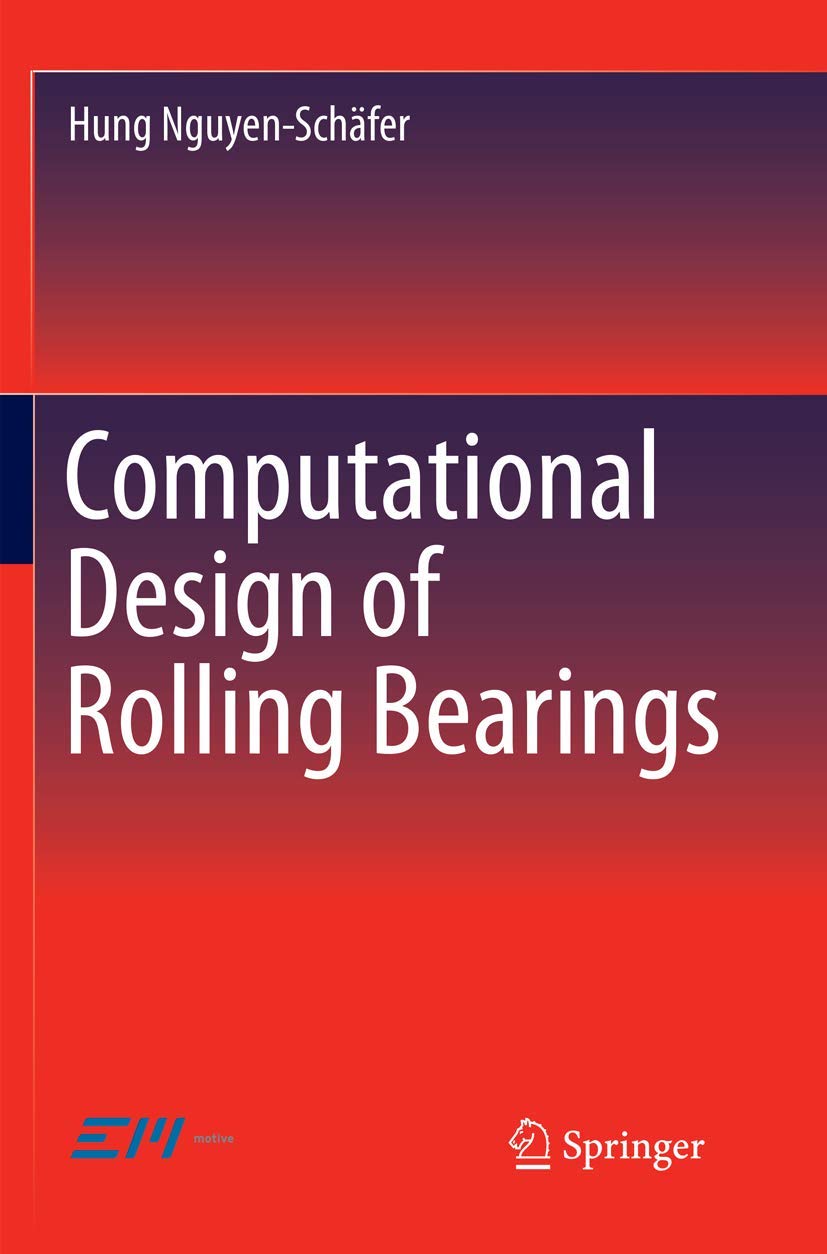
In this review of Computational Design of Rolling Bearings the book is presented as a focused technical reference for engineers and advanced students. The bottom line: this title is best for readers who need a rigorous, computation-oriented treatment of bearing design because it consolidates elastohydrodynamics, contact theory and fatigue modeling into a single, example-driven volume. Our review finds the book strongest where practical formulas and up-to-date DIN ISO norms are required for applied design work rather than as a casual introduction.
Key Features
- Comprehensive coverage: The book brings together EHD, Hertzian contact theory and oil-film thickness to let readers follow the full chain from contact mechanics to lubrication behavior.
- Fatigue and lifetime modeling: It explains fatigue failure mechanisms and Weibull distribution approaches so designers can estimate bearing lifetimes and plan maintenance.
- Tribology and surface texture: Practical treatments of surface texture effects and lubricating greases help predict real-world performance under mixed lubrication regimes.
- Bearing dynamics and NVH: Dedicated material on rotor balancing and airborne noises delivers guidance for reducing vibration and noise in rotating machinery.
- Standards and formulas: The text provides hands-on formulas tied to current DIN ISO norms, making computational methods easier to apply in engineering workflows.
Who It's For
The book is aimed squarely at undergraduate and graduate students in mechanical and materials engineering, research scientists, and practicing bearing designers who need computational methods that tie theory to industry norms. Its focus on formulas, examples and standards makes it a practical desk reference for design offices and university courses covering bearings and lubrication.
Readers looking for a high-level survey or a beginner's introduction to tribology should look elsewhere, since the material assumes familiarity with mechanics, contact theory and basic tribology concepts rather than teaching them from first principles.
Pros & Cons
Pros
- Consolidates interdisciplinary topics like EHL and contact mechanics into a single reference useful for computation.
- Includes practical formulas and examples aligned with DIN ISO norms that speed real design computations.
- Addresses dynamics, rotor balancing and NVH, connecting bearing design with system-level noise and vibration concerns.
Cons
- The text is technical and assumes prior background, so it is not an introductory primer for newcomers.
Specifications
| Title | Computational Design of Rolling Bearings |
| Author / Brand | Hung Nguyen-Schafer |
| Primary topics | Elastohydrodynamics, contact theory, EHL oil-film thickness |
| Applied topics | Tribology, fatigue lifetimes, lubricating greases, Weibull distribution |
| Dynamics & NVH | Bearing dynamics, rotor balancing, airborne noises |
| Standards | Includes formulas based on DIN ISO norms |
Our Verdict
Computational Design of Rolling Bearings is a solid technical reference for engineers and advanced students who need computational methods tied to standards. Its integration of EHL, fatigue modeling and NVH considerations makes it a practical value for design work and research, though it requires a good technical background to use effectively.
Frequently Asked Questions
Is this book suitable for beginners?
No. The book assumes prior knowledge in mechanics and tribology and is written as an advanced, computation-focused reference.
Does it include practical formulas to use in design?
Yes. The text provides hands-on formulas based on current DIN ISO norms to support computational design tasks.
Will it help with noise and vibration issues?
Yes. It contains sections on bearing dynamics, rotor balancing and airborne noises to help diagnose and reduce NVH in rotating systems.
Editor's Take
Computational Design of Rolling Bearings is a practical, computation-focused reference that integrates EHL, contact theory, fatigue modeling and NVH guidance for engineers and advanced students, offering good value when standards-based formulas are needed.

Recently viewed
Recently viewed products will appear here as customers browse the store.