

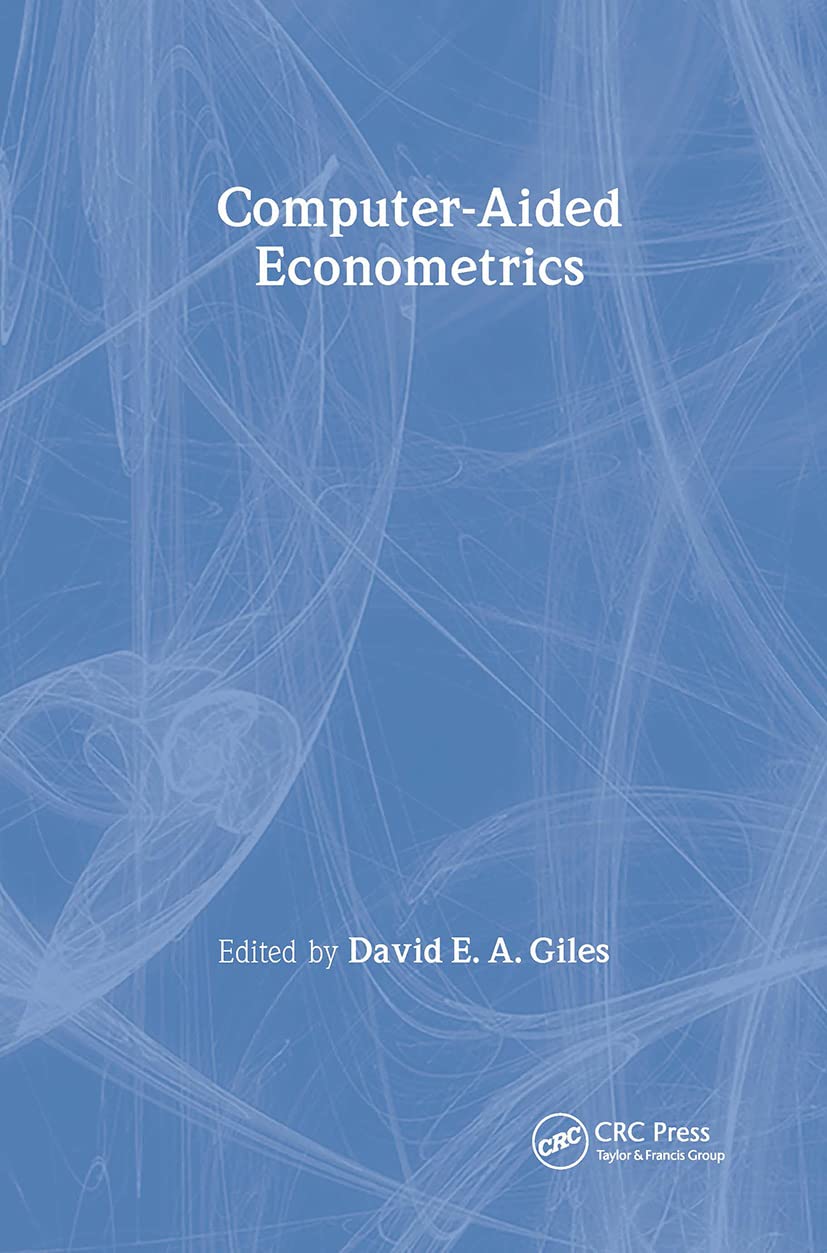
Computer-Aided Econometrics - Practical Guide to Computational Methods
Computer-Aided Econometrics - Practical Guide to Computational Methods
Price subject to change. Tap below for current.
Couldn't load pickup availability
In this review of Computer-Aided Econometrics the focus is on how computerized tools reshape applied econometrics. This text is for graduate students, researchers, and practitioners who need a pragmatic bridge between econometric theory and modern computational practice; the single biggest reason to buy is its sustained emphasis on using software-led methods to improve model testing, simulation, and Bayesian inference in real-world analysis. The review finds the book most valuable as a methods companion rather than a purely theoretical textbook.
Key Features
- Computer-focused approach: Emphasizes how contemporary computer software and computational technology influence econometric theory and practice, making methods easier to apply to large or complex datasets.
- Monte Carlo simulation: Presents advances in Monte Carlo simulation that help readers assess estimator behavior under controlled, repeatable experiments.
- Computer-aided testing: Covers practical computer-aided testing procedures that streamline hypothesis checks and diagnostic workflows.
- Model selection guidance: Discusses recent innovations in model selection so researchers can choose specifications supported by computational evidence rather than intuition alone.
- Bayesian methodology: Includes Bayesian techniques adapted for computerized environments to improve inference when traditional assumptions are fragile.
Who It's For
Computer-Aided Econometrics is best suited to graduate students and applied researchers in economics, finance, and related social sciences who already have basic econometric training and want to extend that foundation into computational methods. It is particularly useful for those conducting simulation studies, performing intensive model selection, or implementing Bayesian procedures with software support.
Readers seeking an introductory primer on elementary statistics or a strictly theoretical treatment without computational emphasis should look elsewhere; this book assumes interest in practical, computer-assisted techniques rather than step-by-step software tutorials for specific packages.
Pros & Cons
Pros
- Strong emphasis on the role of computational technology in advancing econometric methods.
- Detailed treatment of Monte Carlo and simulation approaches useful for testing estimator properties.
- Practical focus on model selection and computer-aided testing that aligns with applied research workflows.
Cons
- Not a hand-holding software manual; readers need familiarity with computational tools to get full value.
Specifications
| Title | Computer-Aided Econometrics (Statistics: Textbooks and Monographs) |
| Author | David E. A. Giles |
| Primary focus | Impact of computer software and computational technology on econometrics |
| Key topics | Monte Carlo simulation, computer-aided testing, model selection, Bayesian methodology |
| Audience | Graduate students, researchers, applied econometricians |
| Category hint | Books; Science & Math; Probability & Statistics |
Our Verdict
Computer-Aided Econometrics is a valuable, practical text for those who want to incorporate contemporary computational methods into econometric work. It is good value for researchers and advanced students seeking method-driven guidance on simulation, testing, and Bayesian approaches, while those needing stepwise software tutorials may need supplementary resources.
Frequently Asked Questions
Does this book teach software step-by-step?
The book emphasizes computational methods and their theoretical implications rather than providing stepwise tutorials for a specific software package.
Who benefits most from the Monte Carlo sections?
Researchers and students running simulation studies to evaluate estimator performance or to validate inference methods will gain the most from the Monte Carlo coverage.
Is Bayesian methodology covered in a practical way?
Yes; Bayesian methods are discussed with attention to how they are implemented and interpreted in computer-assisted econometric analyses.
Editor's Take
Computer-Aided Econometrics is a practical, method-focused text that helps graduate students and researchers apply Monte Carlo, computer-aided testing, model selection, and Bayesian techniques using computational tools; ideal for those with prior econometric training.

Recently viewed
Recently viewed products will appear here as customers browse the store.