

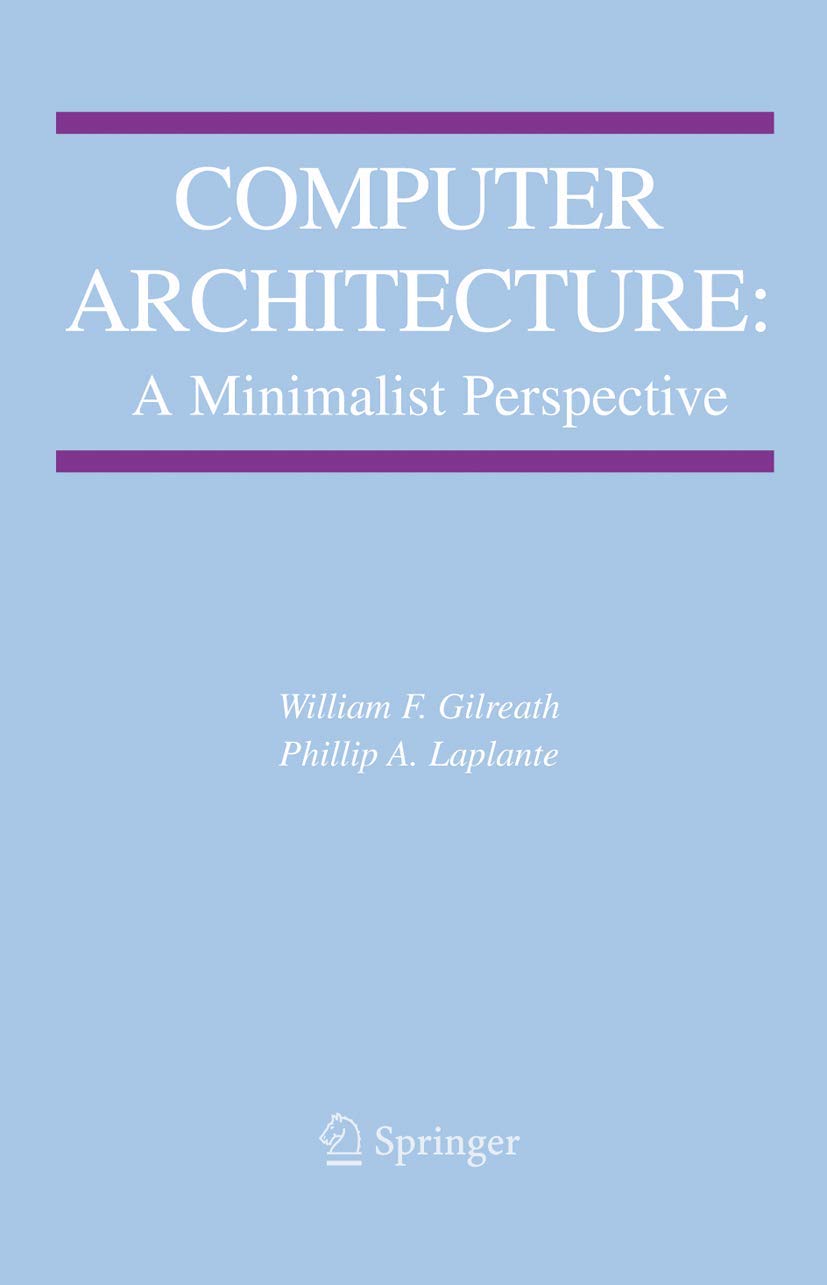
Computer Architecture: A Minimalist Perspective - Unique
Computer Architecture: A Minimalist Perspective - Unique
Price subject to change. Tap below for current.
Couldn't load pickup availability
In this review of Computer Architecture: A Minimalist Perspective, the bottom line is straightforward: this is a thoughtful, unconventional textbook for readers who want to rethink fundamentals. The book frames computer architecture through a minimalist computing lens where the instruction set reduces to a single instruction, and that single idea drives explorations of computability, design trade-offs, and historical context. Researchers, hardware and software engineers, and advanced students will find the book valuable for its fresh perspective and rigorous treatment rather than as a survey of mainstream architectures.
Key Features
- Single-instruction framework: Presents a unified approach that clarifies how much of computation can be expressed with a minimal instruction set, making conceptual trade-offs easier to analyze.
- Computability emphasis: Connects computer architecture to computability theory so readers understand the theoretical limits and capabilities behind design choices.
- Historical context: Traces the history of computing to show how minimalist ideas contrast with conventional architectures and why that contrast matters.
- Audience-focused organization: Structured for researchers and upper-division undergraduates so chapters progress from theory to practical implications useful in courses and special topics seminars.
- Interdisciplinary reach: Bridges hardware, software, and systems engineering perspectives, aiding engineers who design across stack boundaries.
Who It's For
This book is best for researchers and engineers in computer hardware, systems, and software who want a compact theoretical toolkit for evaluating nonstandard instruction sets and minimal designs. It also suits upper-division undergraduates and early graduate students enrolled in special topics courses in computer architecture or organization.
It is less suitable for beginners seeking a broad survey of contemporary commercial processors or for readers expecting extensive lab exercises and implementation guides; instructors looking for a standard classroom textbook may prefer more conventional architecture texts alongside this one.
Pros & Cons
Pros
- Unique perspective: the minimalist instruction-set approach provokes new ways to reason about design trade-offs.
- Theory grounded: strong links to computability theory provide rigorous foundations for arguments in the text.
- Interdisciplinary relevance: useful to both hardware and software engineers who must think across layers.
Cons
- Not a general survey: the focused approach means less coverage of mainstream, complex instruction set architectures.
Specifications
| Title | Computer Architecture: A Minimalist Perspective |
| Series | The Springer International Series in Engineering and Computer Science |
| Authors | William F. F. Gilreath, Phillip A. Laplante |
| Focus | Minimalist computing with a single-instruction instruction set |
| Audience | Researchers, engineers, upper-division undergraduates, early graduate students |
| Topics | Computer architecture, computability theory, history of computers |
Our Verdict
This is a distinctive, intellectually rigorous text that rewards readers who want to challenge conventional assumptions in computer architecture. It is good value for researchers and advanced students because it provides a compact, theory-rich framework that stimulates new lines of inquiry, though instructors seeking a conventional course book should supplement it with broader coverage.
Frequently Asked Questions
Is this book suitable for beginners?
It is aimed at upper-division undergraduates and graduate students, so beginners without prior exposure to computer architecture may find parts demanding.
Does it include practical implementation labs?
The text emphasizes theory and perspective over lab exercises; readers looking for step-by-step implementations should pair it with practical resources.
Will this help systems engineers?
Yes. The minimalist viewpoint clarifies trade-offs relevant to systems and embedded design, making it useful for engineers evaluating simple or novel architectures.
Editor's Take
A distinctive, theory-rich book that uses a single-instruction framework to rethink architecture; ideal for researchers and advanced students seeking a rigorous, unconventional perspective.

Recently viewed
Recently viewed products will appear here as customers browse the store.