

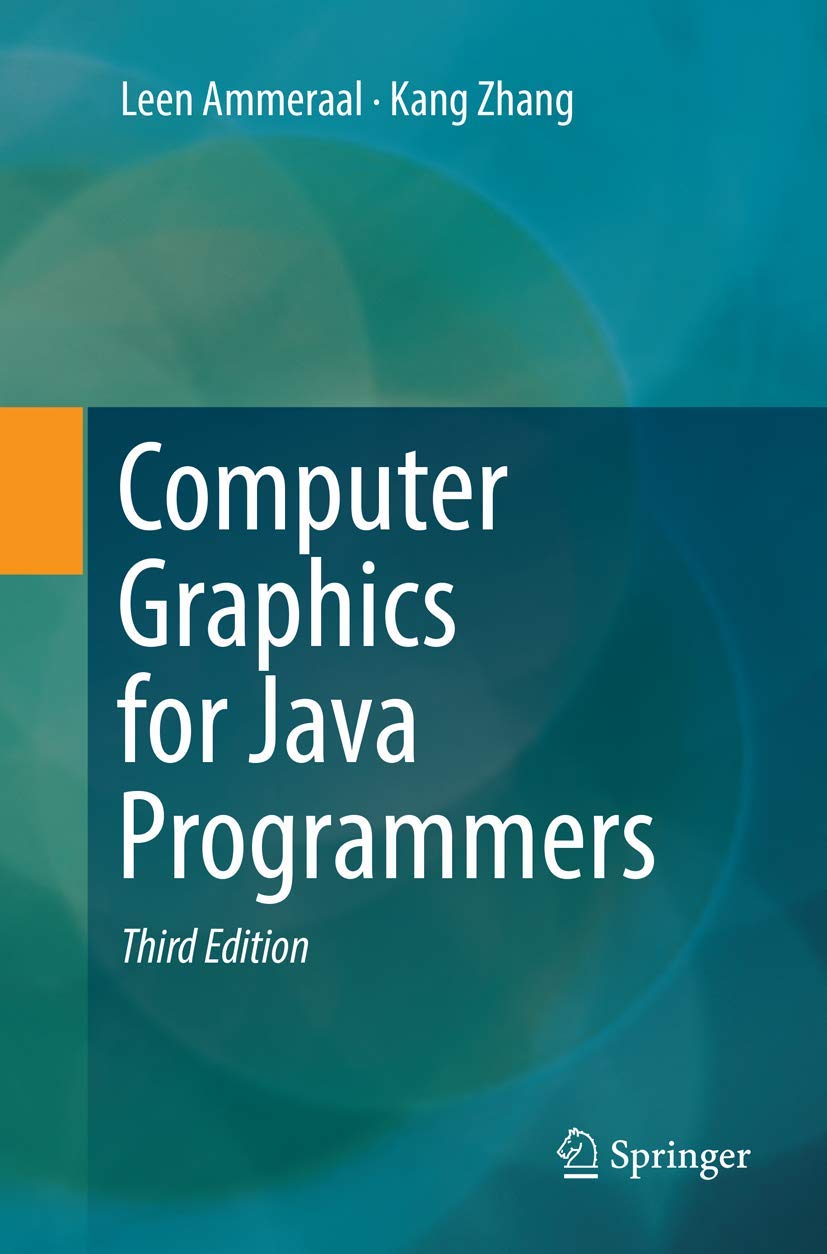
Computer Graphics for Java Programmers - Practical 2D & 3D Graphics
Computer Graphics for Java Programmers - Practical 2D & 3D Graphics
Price subject to change. Tap below for current.
Couldn't load pickup availability
In this review of Computer Graphics for Java Programmers the reviewer finds a textbook aimed squarely at students and self-taught coders who want a practical, code-centered introduction to rendering and geometry. The book's single biggest reason to buy is its combination of clear concept-to-code progression and a large set of ready-to-run Java programs, which make abstract topics like shading and transformations immediately tangible. It reads like a course lecture turned into working examples, and that practical focus is what distinguishes this edition.
Key Features
- Concept-to-code structure: Each topic is presented with the underlying mathematics, algorithms, and step-by-step Java implementations so readers can move from theory to runnable code quickly.
- 2D and 3D coverage: The book covers both planar graphics and three-dimensional modeling, providing a foundation for common tasks such as transformations and projection.
- Algorithm focus: Classic graphics algorithms are explained and optimized, helping readers understand performance trade-offs in real implementations.
- Ready-to-run examples: Numerous Java programs and an open-source algorithm animation/demonstration package let readers test and extend examples without rewriting from scratch.
- Exercises for practice: Exercises and examples throughout make the book suitable for classroom use or disciplined self-study with hands-on reinforcement.
Who It's For
Computer Graphics for Java Programmers is best for undergraduate students, instructors, and self-learners who already know basic Java and want a textbook that ties mathematics and algorithms directly to working code. The emphasis on runnable examples makes it especially useful for courses that include laboratory sessions or for developers prototyping graphics ideas in Java.
Readers who need a pictorial, artist-focused introduction to design, or those seeking an exhaustive industry reference on modern GPU pipelines and APIs, should look elsewhere; this edition concentrates on algorithmic foundations and Java implementations rather than the latest shader pipeline specifics.
Pros & Cons
Pros
- Clear progression from mathematical concepts to Java code makes learning predictable and practical.
- Comprehensive treatment of classic algorithms and optimization techniques useful for real projects.
- Large collection of ready-to-run programs and an open-source animation demo accelerate hands-on learning.
- Well-suited for classroom use with exercises and structured chapters.
Cons
- Not focused on modern graphics APIs and GPU shader toolchains, so advanced real-time engine topics are limited.
- Readers without any Java background will need to acquire basic programming skills first.
Specifications
| Title | Computer Graphics for Java Programmers |
| Edition | Third edition |
| Author | Leen Ammeraal |
| Coverage | 2D and 3D graphics, color and shading models, classic algorithms |
| Includes | Ready-to-run Java programs and an algorithm animation/demonstration open-source package |
| Use cases | Classroom textbook and self-study for Java programmers |
Our Verdict
Computer Graphics for Java Programmers is a strong, practical textbook for anyone who wants to learn graphics by doing, especially undergraduates and self-learners who can run and adapt the included Java examples. It offers good value as a course text because it marries theory, algorithmic insight, and runnable code, though developers seeking cutting-edge GPU pipeline material should pair it with resources focused on modern graphics APIs.
Frequently Asked Questions
Does this book include runnable code?
Yes; the third edition contains a large number of ready-to-run Java programs and an open-source algorithm animation/demonstration package.
Is prior Java experience required?
Some basic Java familiarity is recommended since the book emphasizes implementation of algorithms in Java rather than teaching the language from scratch.
Is it suitable for real-time graphics engine development?
It teaches foundational algorithms and optimization techniques but is not a substitute for modern GPU API and shader programming guides.
Editor's Take
A practical textbook that combines foundational graphics mathematics and algorithms with ready-to-run Java code, ideal for undergraduates and self-learners who want hands-on 2D and 3D graphics instruction.

Recently viewed
Recently viewed products will appear here as customers browse the store.