

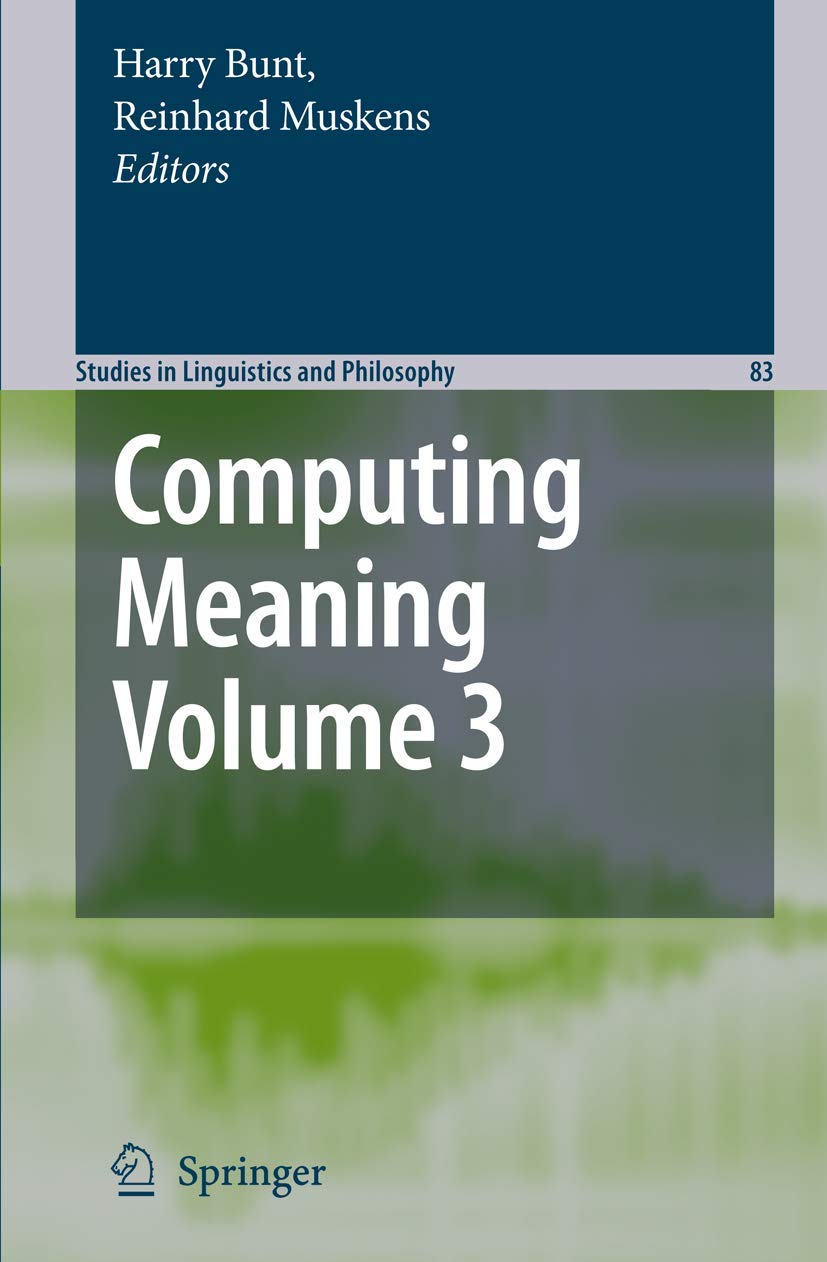
Computing Meaning Volume 3 - Practical Computational Semantics
Computing Meaning Volume 3 - Practical Computational Semantics
Price subject to change. Tap below for current.
Couldn't load pickup availability
In this review of Computing Meaning: Volume 3 the reviewer finds a focused, scholarly examination of current issues in computational semantics that will appeal to specialists. Aimed squarely at linguists, computer scientists and logicians, the book's biggest selling point is its dual focus on underspecified semantic representations and practical approaches to semantic annotation, making it a useful reference for researchers who need a clear account of formal structures and annotation methods rather than a beginner tutorial.
Key Features
- Underspecified representations: Explains formal structures that capture partial meaning while leaving scope or attachment unresolved, helping readers model ambiguity without premature commitments.
- Semantic annotation: Surveys annotation practices and explains how annotated corpora serve as essential resources for linguistic analysis and machine learning development.
- Interdisciplinary focus: Bridges linguistics, computer science and logic so readers from each discipline can find practical discussions relevant to computational semantics.
- Research-oriented presentation: Prioritizes recent research problems and approaches, making it useful for readers seeking current debates and solutions rather than introductory overviews.
- Use with machine learning: Describes how annotations combine with machine learning methods, guiding developers and researchers who apply statistical models to semantic tasks.
Who It's For
The book is best for graduate students and established researchers in computational semantics, especially those working on formal representation of meaning or developing annotated corpora for empirical work. It is also suitable for computer scientists and logicians who need a rigorous account of how meaning can be represented and partially specified in formal systems.
Readers looking for an introductory textbook, hands-on coding tutorials, or a general survey for nontechnical audiences should look elsewhere; this volume assumes familiarity with formal semantics and research methods in annotation and does not act as a step-by-step programming guide.
Pros & Cons
Pros
- Concentrated coverage of underspecified semantic representations offers useful conceptual tools for modeling linguistic ambiguity.
- Clear discussion of semantic annotation and its role in corpus-based research makes the book practically relevant for annotation projects.
- Interdisciplinary perspective helps readers connect formal logical accounts with computational and empirical methods.
Cons
- Not intended as an introductory or beginner-friendly text; prior background in semantics and formal methods is expected.
Specifications
| Title | Computing Meaning: Volume 3 (Studies in Linguistics and Philosophy, 83) |
| Author / Editor | Reinhard Muskens |
| Primary topics | Underspecified semantic representations; semantic annotation |
| Audience | Linguists, computer scientists, logicians |
| Use cases | Research reference; annotated corpora and machine learning applications |
| Series | Studies in Linguistics and Philosophy |
Our Verdict
Computing Meaning Volume 3 is a solid, research-focused resource for specialists who need an in-depth look at underspecified formalisms and annotation practice. It is good value for graduate students and researchers who require rigorous, up-to-date discussions of computational semantics, though those seeking practical coding tutorials or a gentle introduction should consider more elementary texts.
Frequently Asked Questions
Does this volume cover annotation methods for machine learning?
Yes, the book discusses semantic annotation and how annotated corpora are used alongside machine learning methods for language and speech technology.
Is this suitable for beginners?
No, the volume assumes background in formal semantics and related research; it is aimed at graduate-level readers and professionals.
Who is the author or editor?
The work is associated with Reinhard Muskens and appears in the Studies in Linguistics and Philosophy series.
Editor's Take
Computing Meaning Volume 3 is a focused, research-level resource on underspecified semantic representations and semantic annotation, valuable for graduate students and researchers who need rigorous, up-to-date discussions rather than introductory tutorials.

Recently viewed
Recently viewed products will appear here as customers browse the store.