

Confabulation Theory: The Mechanism of Thought - In-depth
Confabulation Theory: The Mechanism of Thought - In-depth
Price subject to change. Tap below for current.
Couldn't load pickup availability
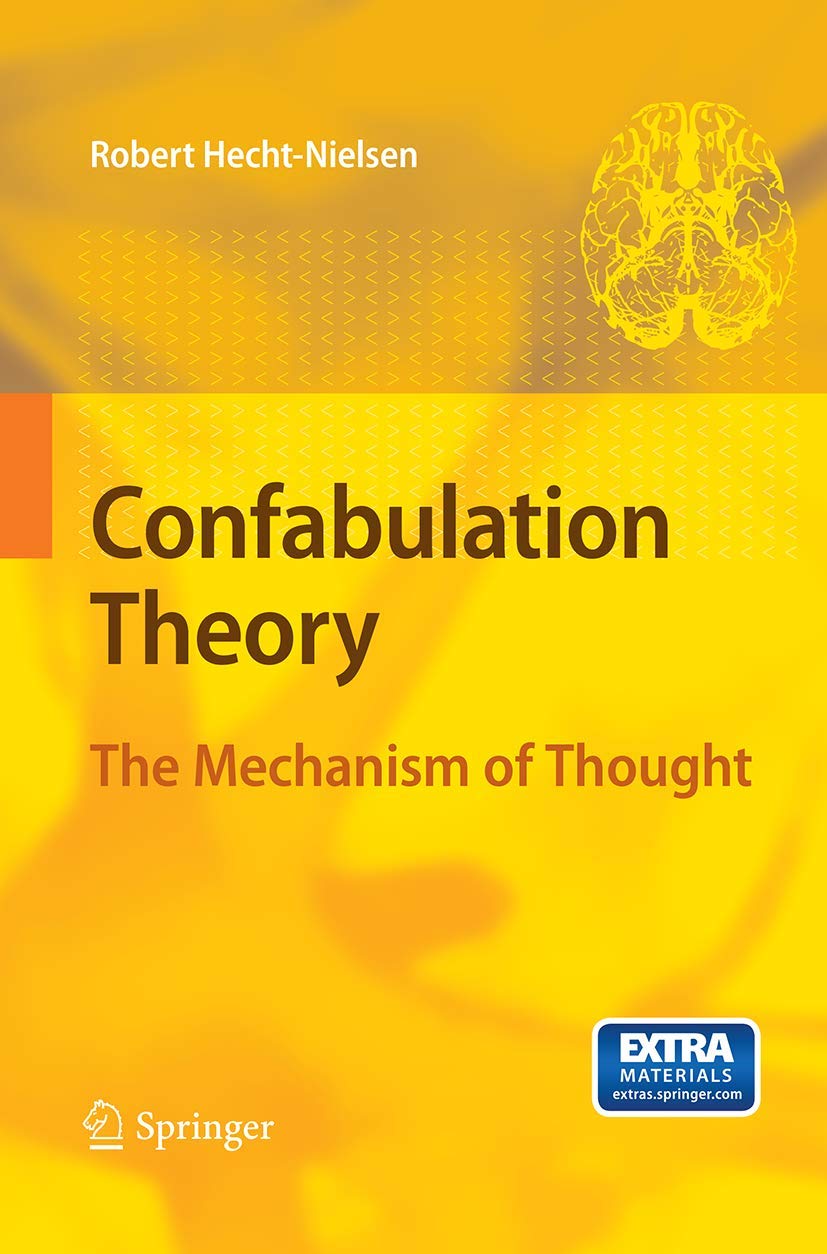
In this review of Confabulation Theory: The Mechanism of Thought, the bottom line is clear: this is a focused, intellectually demanding exploration of how cognition might be implemented in neural tissue, and it will appeal to readers seeking a rigorous, unconventional model of thinking. The book proposes a complete, specific hypothesis for neuronal implementation of cognition and examines the mathematics and applications of that mechanism. While speculative and acknowledged by the author as probably not yet scientifically testable, the work stands out for its ambition and for treating thinking as a distinct information processing capability across enbrained animals.
Key Features
- Complete hypothesis: Presents a full, detailed proposal for the neuronal mechanism behind cognition, offering a unified way to think about thought processes.
- Cross-species framing: Positions human thinking within the broader category of cognition found in bees, octopi, trout and ravens, which broadens comparative perspectives.
- Mathematical grounding: Explores the mathematics and methods required to apply the proposed mechanism, which benefits readers interested in formal models.
- Neuroscience consistency: Argues that the theory is consistent with existing neuroscience facts, making it relevant to researchers and informed readers.
- Technological implications: Suggests the mechanism can be investigated through technological application, encouraging experimental work beyond theoretical claims.
Who It's For
This book is best for neuroscientists, cognitive scientists, computational modelers and technically minded readers who want a deep, principled hypothesis about how cognition might be implemented in brains. Graduate students and researchers looking for a novel framework to test or to inspire experimental designs will find the detail and mathematics useful.
Readers seeking a light popular overview, general audience introductions to brain science, or empirically proven, widely validated models should look elsewhere; the author is explicit that the theory may not yet be scientifically testable and leans toward hypothesis and formal development rather than broad empirical validation.
Pros & Cons
Pros
- Offers a rare, comprehensive hypothesis about neuronal implementation of cognition that stimulates new lines of thought.
- Connects the proposal to formal mathematics and practical methods, useful for modelers and technologists.
- Considers cognition across species, widening the conceptual scope beyond humans.
Cons
- Admits the theory is probably not yet scientifically testable, which limits immediate empirical validation.
Specifications
| Title | Confabulation Theory: The Mechanism of Thought |
| Author | Robert Hecht-Nielsen |
| Subject focus | Neuronal implementation of cognition and the mathematics of its mechanism |
| Scope | Human cognition with cross-species perspective |
| Approach | Theoretical hypothesis and formal mathematical methods |
| Testability note | Presented as probably not yet scientifically testable |
Our Verdict
Confabulation Theory is a provocative, well-structured hypothesis that is worth reading for anyone working at the intersection of neuroscience, cognitive modeling and theoretical computation. Its value lies in offering a concrete, mathematically informed model that can inspire experiments and technological exploration, though readers should be prepared for speculative sections and limited empirical confirmation at present.
Frequently Asked Questions
Is this book empirical or theoretical?
The book is primarily theoretical, offering a detailed hypothesis and mathematical methods with limited current empirical testability.
Who benefits most from the mathematics in the book?
Researchers, computational neuroscientists and modelers will benefit most from the mathematical treatment and methods of application.
Does the author claim the theory applies beyond humans?
Yes; the work frames cognition as an information processing capability across enbrained animals and discusses cross-species implications.
Editor's Take
A provocative, mathematically informed hypothesis about neuronal cognition that will interest neuroscientists and computational modelers; valuable for inspiring experiments despite limited empirical confirmation.

Recently viewed
Recently viewed products will appear here as customers browse the store.