

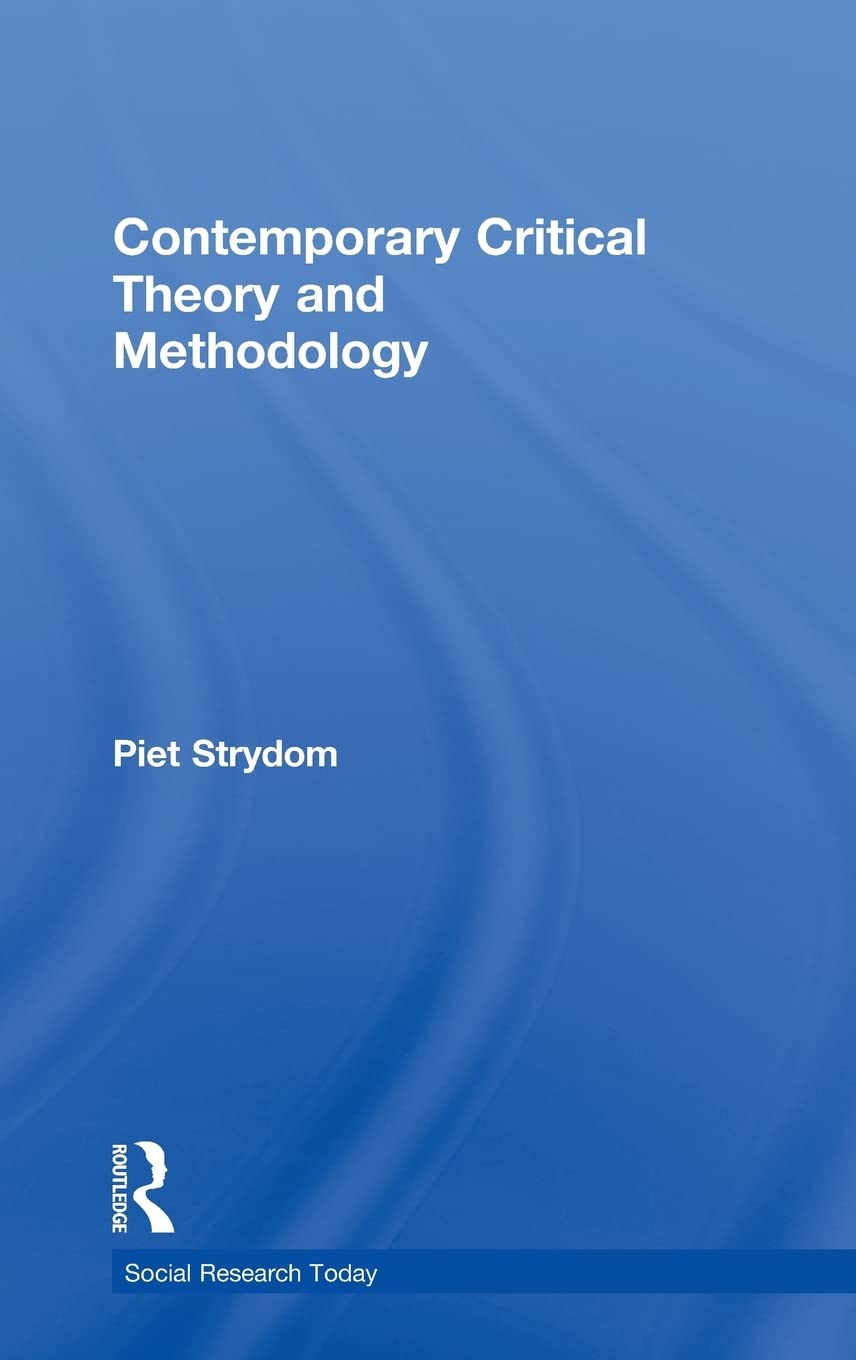
Contemporary Critical Theory and Methodology - In-depth
Contemporary Critical Theory and Methodology - In-depth
Price subject to change. Tap below for current.
Couldn't load pickup availability
In this review of Contemporary Critical Theory and Methodology, Piet Strydom offers a considered restatement of critical theorys methodology that will interest advanced students and scholars of social research. The book's single biggest reason to read is its focused reconstruction of the left-Hegelian tradition and its clear linkage of that tradition to contemporary methodological debates, making it valuable for readers who need a rigorous metatheoretical account rather than a survey. This review highlights what the book contributes to ongoing discussions between critical theory and pragmatism and how it positions methodological choices within wider social criticism.
Key Features
- Methodological reconstruction: Presents a systematic reconstruction of the left-Hegelian tradition to clarify foundations for contemporary critical theory.
- Comparison with pragmatism: Maps the relation between critical theory and pragmatism to show convergences and tensions relevant to social research practice.
- Metatheoretical implications: Explores how different methodological commitments shape approaches to social criticism and the framing of research questions.
- Assessment of existing positions: Critically evaluates extant methodological positions to locate strengths and limits within current debates.
- Exemplary applications: Analyzes leading critical theorists use of methodology to illustrate practical implications for social research.
Who It's For
This book is best for graduate students, researchers, and academics in political theory, social sciences, and methodology who seek a dense, conceptually driven treatment of critical theorys methodological underpinnings. It suits readers prepared for metatheoretical argumentation rather than introductory or how-to research manuals.
Researchers looking for empirical research guides or lightweight introductions to critical theory should look elsewhere, since the emphasis is on reconstruction, comparison, and philosophical grounding rather than step-by-step research techniques or classroom-friendly summaries.
Pros & Cons
Pros
- Offers a thorough reconstruction of the left-Hegelian tradition that clarifies foundational commitments for critical methodology.
- Provides a meaningful comparison between critical theory and pragmatism that helps readers situate methodological choices.
- Carefully assesses existing positions and uses exemplary applications to show how theory informs critique in practice.
Cons
- The book is conceptually dense and focused on metatheory, which may limit accessibility for readers seeking practical research instruction.
Specifications
| Title | Contemporary Critical Theory and Methodology |
| Series | Social Research Today |
| Author | Piet Strydom |
| Focus | Critical theory methodology and left-Hegelian reconstruction |
| Theoretical comparison | Relation between critical theory and pragmatism |
| Approach | Metatheoretical assessment and exemplary applications |
Our Verdict
Contemporary Critical Theory and Methodology is a thoughtful, rigorous contribution for scholars who need a principled account of critical theorys methodological options and their metatheoretical consequences. Its value lies in clarifying conceptual foundations and illuminating how different approaches to critique operate, making it good value for advanced readers seeking depth rather than a practical methods primer.
Frequently Asked Questions
Does this book cover empirical research methods?
No. The book focuses on metatheory and methodological foundations rather than step-by-step empirical techniques.
Is prior knowledge of Hegelian thought required?
Some familiarity with the left-Hegelian tradition helps, as the reconstruction assumes engagement with those philosophical roots.
Who benefits most from the comparison with pragmatism?
Readers interested in theory-building and the epistemic grounds of social criticism will find the comparison especially useful.
Editor's Take
A rigorous, conceptually driven treatment of critical theorys methodology that clarifies foundational commitments and compares critical theory with pragmatism; best for advanced students and scholars seeking depth rather than practical methods.

Recently viewed
Recently viewed products will appear here as customers browse the store.