

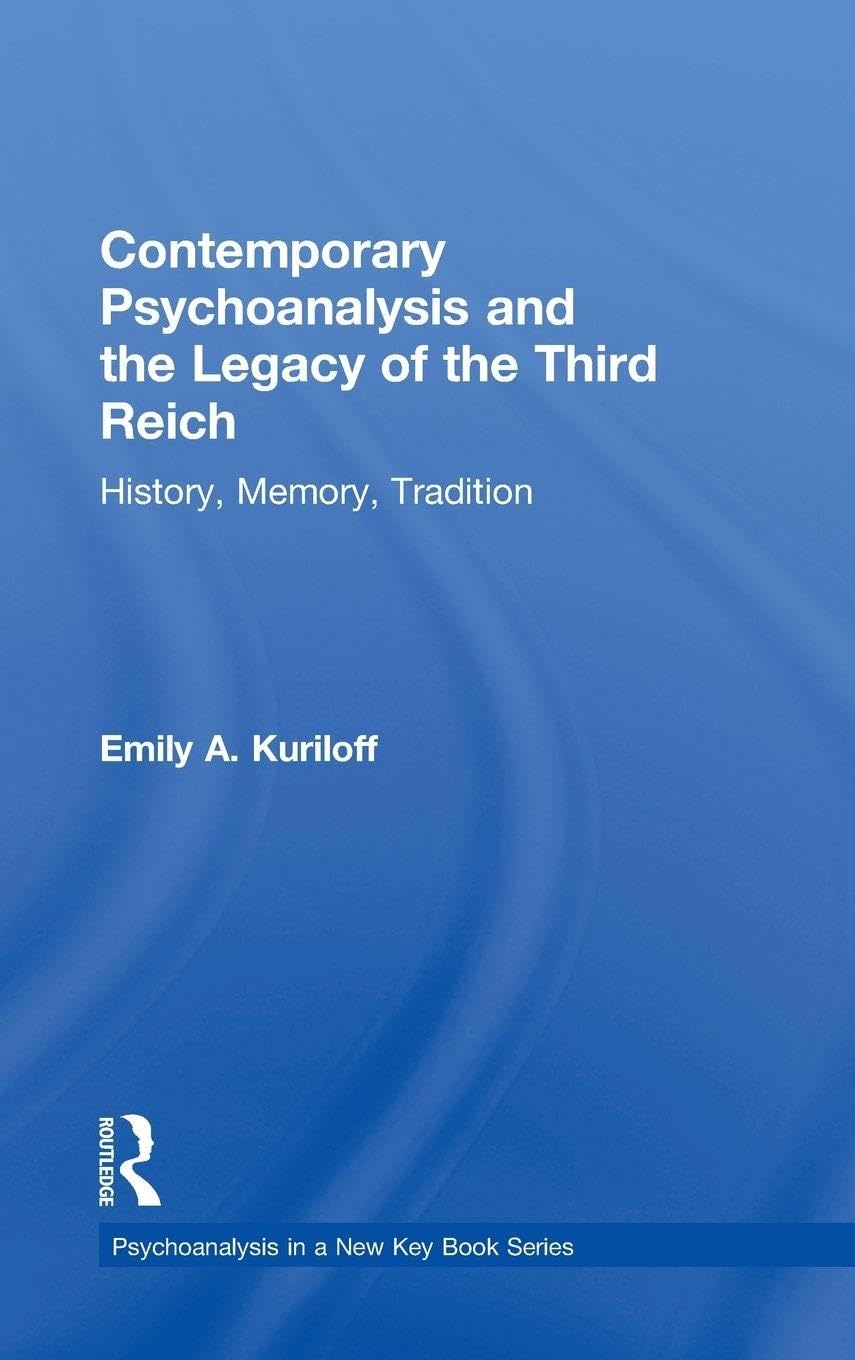
Contemporary Psychoanalysis and the Legacy of the Third Reich
Contemporary Psychoanalysis and the Legacy of the Third Reich
Price subject to change. Tap below for current.
Couldn't load pickup availability
In this review of Contemporary Psychoanalysis and the Legacy of the Third Reich, the reader will find a disciplined, archival-driven study that is best suited for scholars, clinicians and advanced students interested in the intersection of history and psychoanalytic thought. Emily Kuriloff's book stands out because it traces how prewar and wartime persecution shaped a dominant strand of western psychoanalysis, using unpublished source material and interviews to reveal connections that were often suppressed. The book is careful, evidence-based and quietly challenging to prevailing narratives.
Key Features
- Original source material: Kuriloff incorporates unpublished archival documents that illuminate previously overlooked personal histories and professional decisions.
- Firsthand interviews: The author supplements archives with interviews of emigre and survivor analysts, adding lived testimony to historical analysis.
- Focus on legacy: The book explicitly links persecution, expulsion and displacement to the shaping of psychoanalytic theory and practice in the west.
- Analytic depth: Readers encounter close readings of how silence about trauma influenced the relational quality between analysts and patients.
- Cross-disciplinary relevance: The book will interest historians, psychoanalysts and scholars of Jewish studies by connecting intellectual history with personal experience.
- Careful argumentation: Kuriloff builds claims step by step, allowing the documentary record and interviews to support broader conclusions.
Who It's For
This book is for academic readers, clinicians with an interest in psychoanalytic history, and advanced students in psychology, social sciences or Jewish studies who want a nuanced account of how political persecution affected theoretical developments. It serves well as a seminar text or a companion for research on emigre intellectuals.
Readers looking for a popular, emotive narrative or a concise introduction to psychoanalysis should look elsewhere; the work assumes familiarity with historical context and theoretical terms and favors documentary evidence over storytelling.
Pros & Cons
Pros
- Rich archival evidence supports fresh interpretations of psychoanalytic history.
- Interviews with emigre and survivor analysts add human perspective to scholarly claims.
- Clear linkage between personal trauma and institutional developments makes a compelling case for re-evaluating received histories.
Cons
- The dense, scholarly style may limit accessibility for general readers outside academic or clinical fields.
Specifications
| Title | Contemporary Psychoanalysis and the Legacy of the Third Reich |
| Series | Psychoanalysis in a New Key Book Series |
| Author | Emily A. Kuriloff |
| Subject areas | Psychoanalytic history; Jewish studies; intellectual history |
| Source material | Unpublished archives and personal interviews with emigre/survivor analysts |
| Intended audience | Scholars, clinicians, advanced students |
Our Verdict
Contemporary Psychoanalysis and the Legacy of the Third Reich is a valuable, evidence-rich contribution for specialists who want to understand how persecution and displacement shaped psychoanalytic theory. Its archival depth and interview material make it good value for academic libraries and clinicians engaged with history, though casual readers may find the style demanding.
Frequently Asked Questions
Does the book use original archival material?
Yes, the author draws on unpublished original sources to support the historical claims.
Are there firsthand interviews included?
Yes, Kuriloff conducted interviews with emigre and survivor analysts as part of her research.
Is this book suitable for a general audience?
It is primarily aimed at scholars and clinicians; general readers may find the scholarly approach dense.
Editor's Take
A rigorous, archival-rich study that connects persecution and displacement to the development of western psychoanalysis; highly recommended for scholars and clinicians, though dense for general readers.

Recently viewed
Recently viewed products will appear here as customers browse the store.