

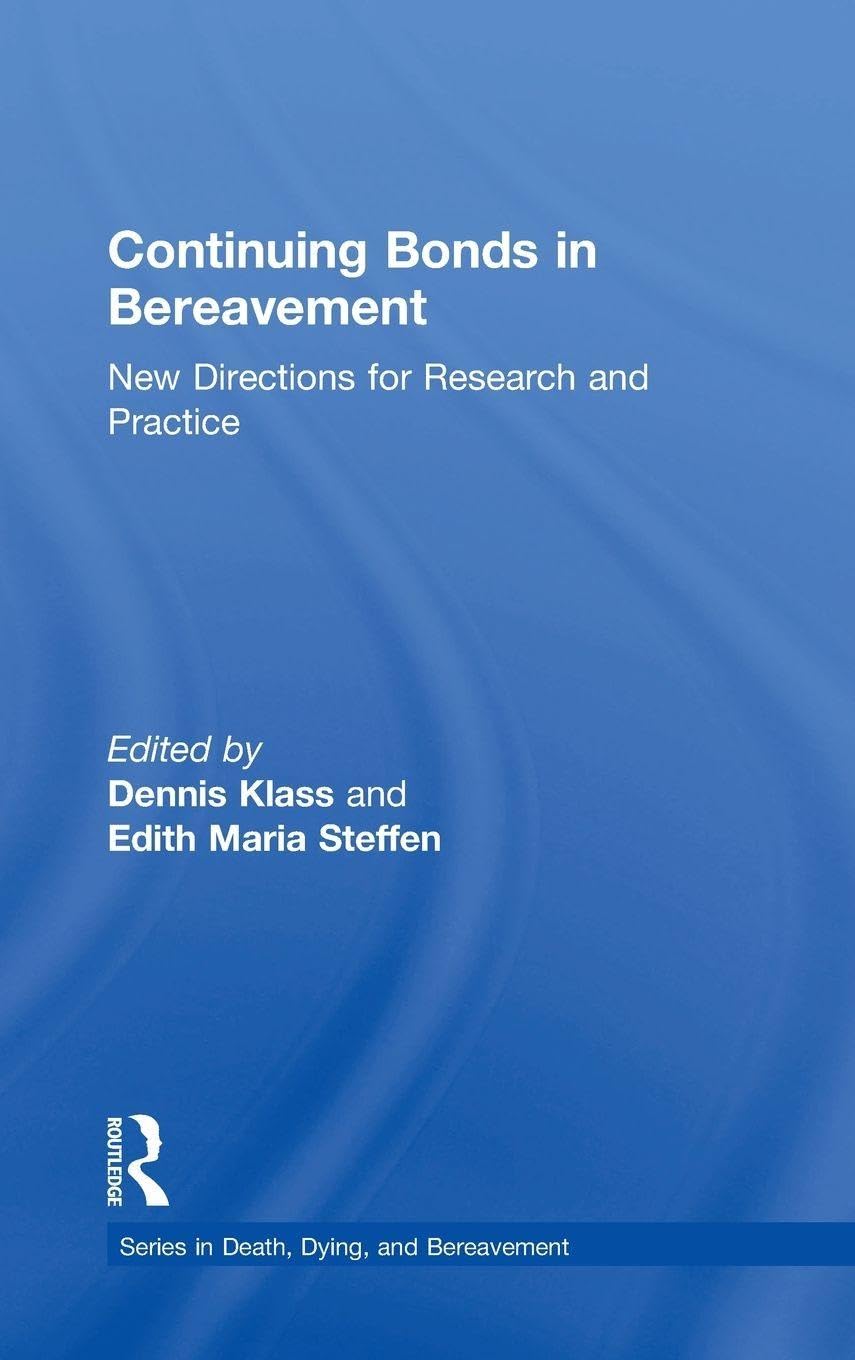
Continuing Bonds in Bereavement - Comprehensive for Practitioners
Continuing Bonds in Bereavement - Comprehensive for Practitioners
Price subject to change. Tap below for current.
Couldn't load pickup availability
In this review of Continuing Bonds in Bereavement, the bottom line is clear: this anthology is essential for clinicians, researchers, and advanced students who want a modern, nuanced synthesis of the continuing bonds model. The book gathers theoretical, empirical, and clinical perspectives that together update how professionals understand relationships with the dead. Its breadth and multi-perspectival approach make it the single best volume to consult when seeking both practical guidance and current scholarship about grief across cultures and new media contexts.
Key Features
- Comprehensive anthology: Brings together recent developments in the continuing bonds model so readers can access a wide span of scholarship in one volume.
- Multi-perspectival coverage: Includes theoretical, empirical, and clinical angles to help practitioners translate research into practice.
- Cultural breadth: Traces grief in different cultural settings, offering comparative insight useful for culturally sensitive care.
- Contemporary relevance: Addresses how social media and other modern developments change relationships with the dead, helping clinicians understand present-day phenomena.
- Forward-looking analysis: Presents nuanced questions about authenticity and truth in interactions with the dead to stimulate further research and reflective practice.
- Practical orientation: Combines innovations in clinical practice with scholarship to support applied use in bereavement work.
Who It's For
This book is best for licensed clinicians, grief counselors, doctoral students, and academic researchers who need a state-of-the-art synthesis of the continuing bonds perspective and practical ideas they can apply in assessment and therapy. The collection is also valuable for interdisciplinary scholars working at the intersection of culture, media, and bereavement.
Readers seeking a brief primer or a how-to workbook for nonprofessionals should look elsewhere; the anthology assumes familiarity with grief literature and is written at a professional, academic level rather than as an introductory self-help guide.
Pros & Cons
Pros
- Wide-ranging essays give a consolidated view of developments in the continuing bonds model useful for research and practice.
- Integration of cultural and social media perspectives helps clinicians understand contemporary client experiences.
- Mix of theory and clinical innovation supports translation from scholarship to applied work.
Cons
- The anthology format can feel dense and is not designed as a quick how-to manual for lay readers.
Specifications
| Title | Continuing Bonds in Bereavement (Series in Death, Dying, and Bereavement) |
| Editors/Authors | Julie Beischel PhD, Callum E. Cooper, Jack Hunter |
| Scope | Theoretical, empirical, and clinical perspectives on continuing bonds |
| Coverage | Grief across cultures and effects of social media on relationships with the dead |
| Approach | Multi-perspectival anthology combining research and clinical innovation |
| Intended audience | Clinicians, researchers, and advanced students in bereavement studies |
Our Verdict
Continuing Bonds in Bereavement is a rich, well-curated anthology that rewards readers who need depth and contemporary context in grief studies. Practitioners and scholars will find it good value because it consolidates recent theoretical advances, empirical findings, and clinical innovations in one place, making it an essential reference for informed bereavement work.
Frequently Asked Questions
Does this book focus on practical clinical techniques?
Answer. Yes, it includes clinical innovations alongside theory, but content is presented at a professional level rather than as a step-by-step workbook.
Is cultural diversity addressed?
Answer. Yes, the text traces grief in different cultural settings and discusses implications for culturally sensitive practice.
Does it discuss modern influences like social media?
Answer. Yes, several chapters examine how social media and contemporary culture change ways people relate to those who have died.
Editor's Take
A well-curated, in-depth anthology that consolidates recent theory, research, and clinical innovations on the continuing bonds model, ideal for clinicians and scholars seeking contemporary, applied insight.

Recently viewed
Recently viewed products will appear here as customers browse the store.