

Coral M.2 Accelerator A+E Key - Edge TPU ML Inferencing
Coral M.2 Accelerator A+E Key - Edge TPU ML Inferencing
Price subject to change. Tap below for current.
Couldn't load pickup availability
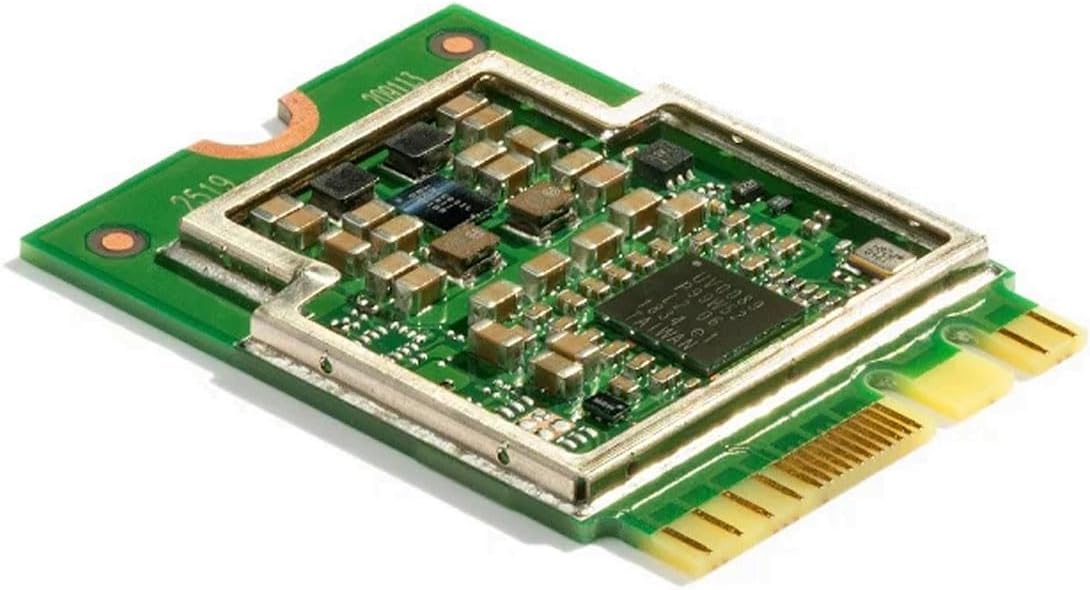
In this review of the Coral M.2 Accelerator A+E Key, the bottom line is simple: this M.2 module is for developers and integrators who need fast, power-efficient on-device machine learning. The reviewer found it stands out for bringing a dedicated Edge TPU coprocessor into systems that support an M.2 A+E or B+M slot, enabling low-latency inferencing and reduced CPU load. For anyone running vision models or deploying TensorFlow Lite and AutoML Vision Edge workflows on Debian-based systems, this module delivers measurable performance and energy savings.
Key Features
- Edge TPU coprocessor: Performs high-speed ML inferencing at up to 4 TOPS so models run locally with low latency.
- Power efficiency: Operates at roughly 0.5 watts per TOPS, helping reduce overall system power draw during continuous inferencing.
- High frame-rate vision: Can execute mobile vision models such as MobileNet v2 at nearly 400 FPS, making it suitable for real-time camera analytics.
- Debian compatibility: Integrates with Debian-based Linux systems and common card module slots for straightforward system integration.
- TensorFlow Lite support: Runs TensorFlow Lite models compiled for the Edge TPU, removing the need to rebuild models from scratch.
- AutoML Vision Edge: Supports deployment of custom image classification models created with AutoML Vision Edge for quick model iteration.
Who It's For
The Coral M.2 Accelerator is aimed at embedded developers, hobbyists using single-board computers, and system integrators who need accelerated inferencing without adding large power-hungry hardware. It is particularly useful when you want to offload vision models from the host CPU to improve throughput and reduce latency.
It is less appropriate for users who do not have a compatible M.2 A+E or B+M slot, or those who need a full development kit with USB or PCIe adapters included. Users seeking an all-in-one board with onboard general-purpose GPUs should look elsewhere.
Pros & Cons
Pros
- Dedicated Edge TPU delivers high inferencing throughput while keeping CPU usage low.
- Very power efficient, providing strong performance per watt for continuous edge workloads.
- Works with TensorFlow Lite and AutoML Vision Edge for easy deployment of trained models.
- Fits standard M.2 A+E or B+M slots for compact system integration.
Cons
- Requires a compatible M.2 slot and Debian-based software support, so additional adapters or configuration may be needed for some hosts.
Specifications
| Form factor | M.2 module (A+E or B+M key) |
| Accelerator | Edge TPU coprocessor |
| Performance | Up to 4 TOPS |
| Power efficiency | Approximately 0.5 watts per TOPS (2 TOPS per watt) |
| Model support | TensorFlow Lite, AutoML Vision Edge |
| OS compatibility | Debian-based Linux systems |
Our Verdict
The Coral M.2 Accelerator A+E Key is a strong value for developers who need compact, low-power ML acceleration. It brings the Edge TPU into compatible systems with minimal integration effort, significantly improving real-time vision workloads while lowering CPU and power demands.
Frequently Asked Questions
Will this work with my Raspberry Pi or single-board computer?
It will if your board provides a compatible M.2 A+E or B+M slot or you use an appropriate adapter; customers report good functionality with single-board computer setups.
What frameworks are supported?
The module runs TensorFlow Lite models compiled for the Edge TPU and supports models from AutoML Vision Edge.
Does it reduce CPU usage?
Yes - customers note it saves CPU power by offloading inferencing to the dedicated coprocessor.
Editor's Take
The Coral M.2 Accelerator A+E Key delivers compact, power-efficient Edge TPU inferencing for developers and integrators, improving real-time vision performance and lowering CPU load in compatible M.2 systems.

Recently viewed
Recently viewed products will appear here as customers browse the store.