

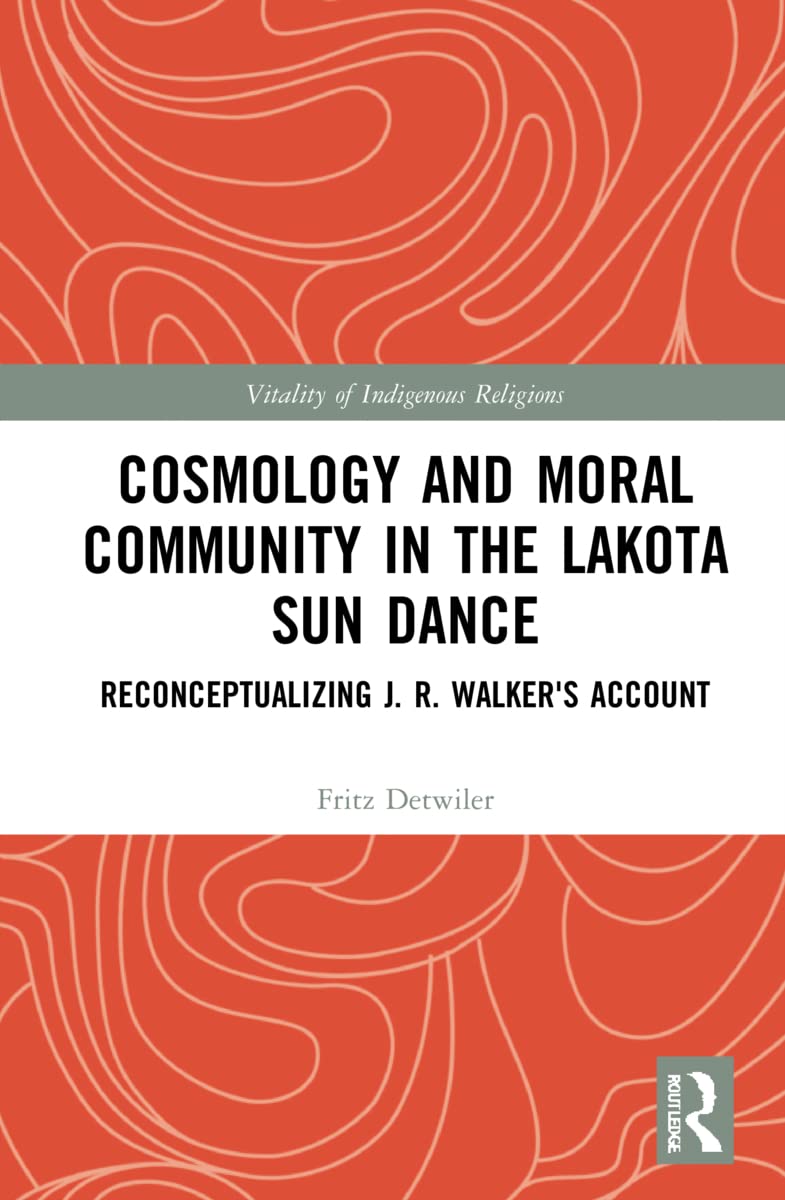
Cosmology and Moral Community in the Lakota Sun Dance - Scholarly
Cosmology and Moral Community in the Lakota Sun Dance - Scholarly
Price subject to change. Tap below for current.
Couldn't load pickup availability
In this review of Cosmology and Moral Community in the Lakota Sun Dance the reviewer finds a focused, academically rigorous study best suited to readers interested in Indigenous religion, Lakota worldview, and ritual ethics. Fritz Detwiler uses James R. Walker's 1917 monograph as a primary source to produce a close reading that illuminates how the Sun Dance functions as a moral and cosmological framework. The book's strongest reason to buy is its careful application of Indigenous methodologies and contemporary animist theory to explain the Sun Dance as a communal ethical drama.
Key Features
- Primary-source analysis: The book builds its argument on a detailed reading of James R. Walker's 1917 monograph, grounding interpretation in a historic text.
- Indigenous methodologies: Detwiler foregrounds Indigenous approaches to interpretation, which offers readers a perspective aligned with Lakota epistemologies.
- Cosmology and ethics: The text links Lakota metaphysics and cosmology to ethical practice, clarifying how ritual creates moral community.
- Animist and perspectivist framing: Contemporary animist theory and perspectivism are used to show reciprocal relations between human and nonhuman persons.
- Historical context: Readings situate the Sun Dance in its nineteenth-century milieu, helping readers understand ceremony within its social and temporal setting.
Who It's For
This work is primarily for scholars, graduate students, and informed general readers who seek a careful, text-based account of Lakota ritual and cosmology. Those researching Indigenous religions, ethics in ritual, or the Sun Dance specifically will find the book a valuable contribution to scholarly discussion.
Readers expecting a broad survey, an introductory textbook, or a richly illustrated popular history should look elsewhere; the book is narrowly focused on close reading and theoretical interpretation rather than wide-ranging ethnography or visual documentation.
Pros & Cons
Pros
- Provides a rigorous, primary-source centered analysis that deepens understanding of the Sun Dance.
- Uses Indigenous methodologies, offering a respectful and context-sensitive interpretive stance.
- Connects cosmology to moral life through clear theoretical framing in animist and perspectivist terms.
Cons
- Focused academic tone and close textual method may feel dense for casual readers seeking a general introduction.
Specifications
| Title | Cosmology and Moral Community in the Lakota Sun Dance |
| Author / Brand | Fritz Detwiler |
| Primary source used | James R. Walker's 1917 monograph |
| Focus | Sun Dance ritual, Lakota cosmology, ethics |
| Methodological approach | Indigenous methodologies, animist theory, perspectivism |
| Historical lens | Nineteenth-century context |
Our Verdict
Detwiler's study is a valuable, well-argued scholarly work for those who want a deep, text-driven understanding of how the Lakota Sun Dance constructs moral community. It is good value for researchers and students seeking theoretically informed readings grounded in historic primary material.
Frequently Asked Questions
Does this book use primary sources?
Yes. The analysis centers on James R. Walker's 1917 monograph as the primary source for interpreting the Sun Dance.
Is this an introductory overview of Lakota religion?
No. The book is a focused scholarly reading rather than a general introduction; readers new to the topic may prefer more general surveys first.
What theoretical approaches are used?
The author applies Indigenous methodologies alongside contemporary animist theory and a perspectivist approach to explain ritual reciprocity.
Editor's Take
Detwiler's study offers a focused, text-driven analysis showing how the Lakota Sun Dance creates moral community; it is especially valuable for scholars and students of Indigenous religion.

Recently viewed
Recently viewed products will appear here as customers browse the store.