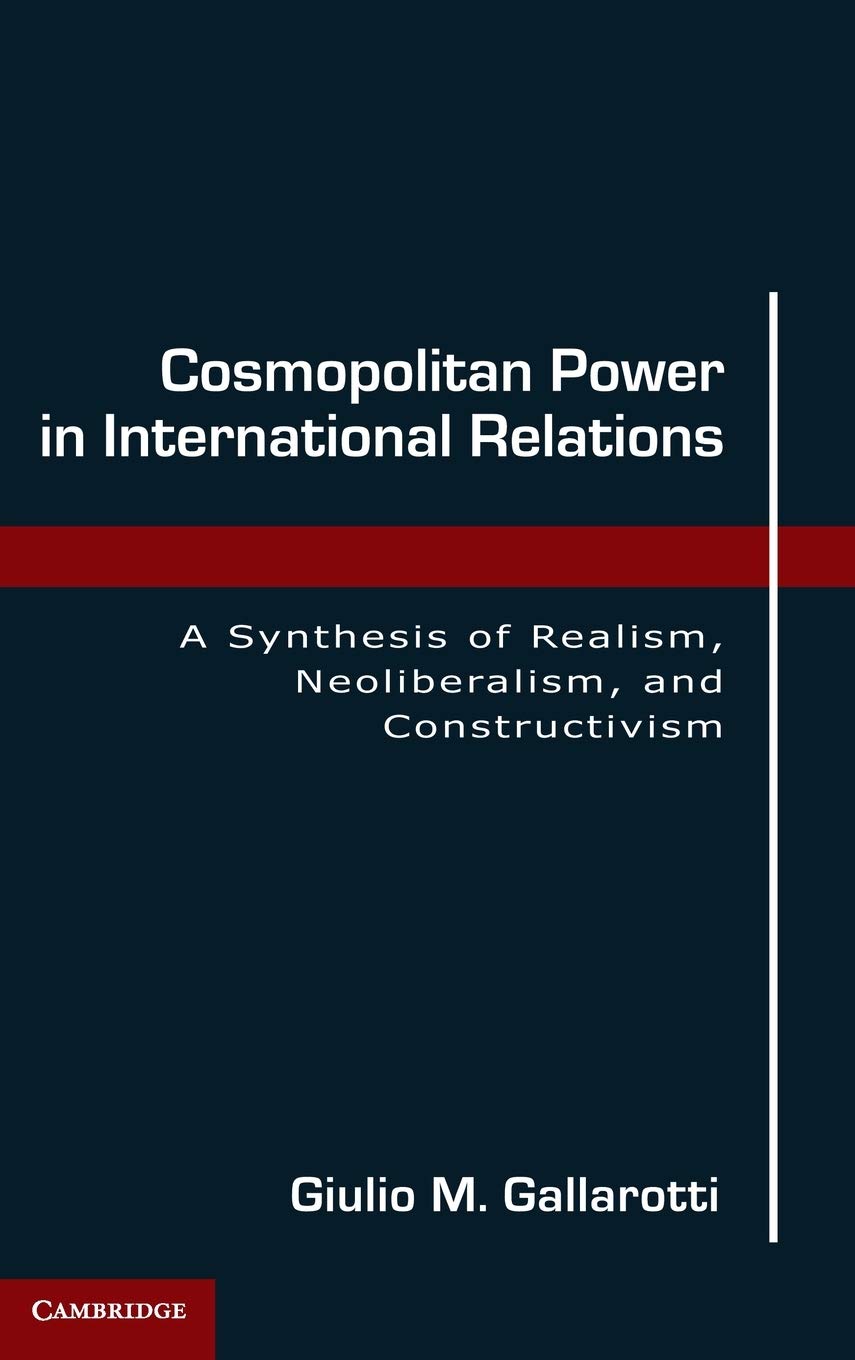
Cosmopolitan Power in International Relations: A Deep Dive
Cosmopolitan Power in International Relations: A Deep Dive
Price subject to change. Tap below for current.
Couldn't load pickup availability
In the realm of international relations, Cosmopolitan Power emerges as a pivotal concept that intertwines various theoretical frameworks. This book, authored by Giulio M. Gallarotti, offers a comprehensive synthesis of realism, neoliberalism, and constructivism, making it essential reading for scholars and practitioners alike.
One of the standout features of this work is its ability to bridge the gap between realism and neoliberalism. Gallarotti meticulously examines how these two dominant theories can coexist and inform our understanding of global politics. By addressing the strengths and weaknesses of each perspective, the author provides a nuanced view that challenges traditional dichotomies.
Furthermore, the integration of constructivism into the discussion adds depth to the analysis. Gallarotti argues that social constructs and identities play a crucial role in shaping international relations, thus enriching the reader's comprehension of global dynamics. This synthesis not only enhances theoretical discourse but also offers practical insights for policymakers.
The book is structured in a way that facilitates understanding, with clear headings and subheadings that guide the reader through complex ideas. Each chapter builds upon the last, creating a cohesive narrative that is both engaging and informative. The inclusion of case studies further illustrates the application of these theories in real-world scenarios, making the content relatable and applicable.
Another notable aspect of Cosmopolitan Power is its accessibility. While it delves into intricate theoretical discussions, Gallarotti's writing style remains approachable, ensuring that readers from various backgrounds can grasp the concepts presented. This makes it an ideal resource for students, educators, and anyone interested in the field of international relations.
In addition to its theoretical contributions, the book also addresses contemporary issues in global politics. By applying the synthesized theories to current events, Gallarotti demonstrates the relevance of his arguments in understanding today's challenges. This forward-thinking approach positions the book as not just a historical analysis but a relevant commentary on ongoing international issues.
Overall, Cosmopolitan Power in International Relations is a significant contribution to the field. It invites readers to reconsider established theories and encourages a more integrated approach to understanding global politics. Whether you are a seasoned scholar or a newcomer to the discipline, this book will undoubtedly enhance your perspective on the complexities of international relations.
Share