

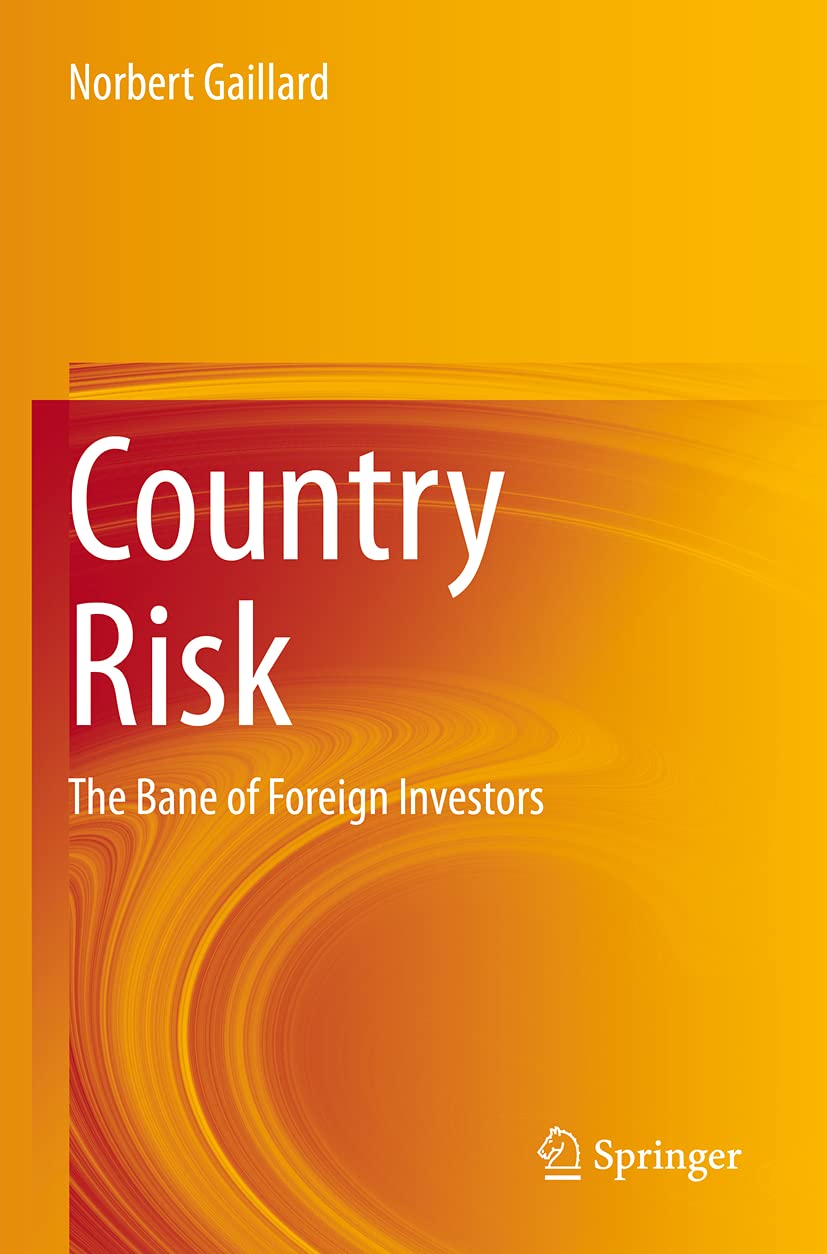
Country Risk: The Bane of Foreign Investors - Essential
Country Risk: The Bane of Foreign Investors - Essential
Price subject to change. Tap below for current.
Couldn't load pickup availability
In this review of Country Risk: The Bane of Foreign Investors, the bottom line is clear: this book is a focused, historically grounded guide for professionals who must assess the full spectrum of risks when investing abroad. Norbert Gaillard frames country risk as a broad, multidisciplinary concept and the book's greatest value is its systematic mapping of risks that can turn an opportunity into a loss. For readers who need a rigorous primer on how political, institutional, and climatic factors interact with investment decisions, this review recommends the book for its analytical clarity and historical perspective.
Key Features
- Comprehensive definition: Gaillard defines country risk to include macroeconomic, microeconomic, financial, social, political, institutional, judiciary, climatic, technological, and sanitary factors, giving readers a single framework to evaluate diverse threats.
- Risk outcomes explained: The book details how country risk can produce financial losses, threaten personnel safety, damage reputation, or cut off markets or suppliers, helping investors anticipate practical consequences.
- Historical perspective: Chapter 2 traces the evolution of country risk since 1816, offering context that connects modern risks to long-term international political and economic shifts.
- Structured introduction: Chapter 1 lays out the key concepts clearly, making the book useful as a reference for analysts and students who need a concise conceptual foundation.
- Focus on obstacles to investment: The narrative identifies main obstacles to foreign investment, enabling decision makers to prioritize mitigation and due diligence.
Who It's For
This book is best for investors, risk analysts, policy advisors, and graduate students in political economy who require a broad, structured view of how nonfinancial factors affect overseas investment. Its legal, climatic, and institutional lens makes it especially useful for businesses planning entry into politically or institutionally unstable markets.
Readers seeking step-by-step investment strategies, portfolio selection tools, or granular financial models should look elsewhere; this book is primarily conceptual and historical rather than a hands-on trading manual.
Pros & Cons
Pros
- Provides a unified, multidisciplinary definition of country risk that aids comprehensive assessment.
- Historical treatment since the Pax Britannica gives long-term context for modern risk patterns.
- Clearly lists types of damage from country risk, which helps practical risk planning and corporate policy.
Cons
- The book is conceptual and historical; it does not offer detailed quantitative models or step-by-step investment tools.
Specifications
| Title | Country Risk: The Bane of Foreign Investors |
| Author | Norbert Gaillard |
| Scope | Macroeconomic to sanitary risks affecting foreign investment |
| Historical range | Since the Pax Britannica (from 1816) |
| Core focus | Obstacles to foreign investment and risk outcomes |
| Structure | Introductory concepts and historical analysis (Chapters 1-3 shown) |
Our Verdict
Country Risk: The Bane of Foreign Investors is a valuable, well-organized reference for professionals who need a broad, multidisciplinary understanding of risks that threaten overseas investments. Its historical framing and clear definition of risk outcomes make it good value for analysts and policy makers, though readers seeking quantitative toolkits should supplement it with technical resources.
Frequently Asked Questions
Does the book define what counts as country risk?
Yes; Gaillard defines country risk to include economic, political, institutional, climatic, technological, sanitary, and other factors that can affect foreign investors.
Is there historical analysis of country risk in the book?
Yes; Chapter 2 traces how country risk has evolved since the Pax Britannica and links historical trends to modern investment obstacles.
Is this a practical handbook with models for investors?
The book is primarily conceptual and historical, so readers needing quantitative models should use it alongside technical investment guides.
Editor's Take
Gaillard's Country Risk: The Bane of Foreign Investors offers a clear, multidisciplinary framework and historical context valuable to analysts and policy makers, though it is conceptual rather than a source of quantitative investment models.

Recently viewed
Recently viewed products will appear here as customers browse the store.