

Courts and Congress: America's Unwritten Constitution - of Democratic
Courts and Congress: America's Unwritten Constitution - of Democratic
Price subject to change. Tap below for current.
Couldn't load pickup availability
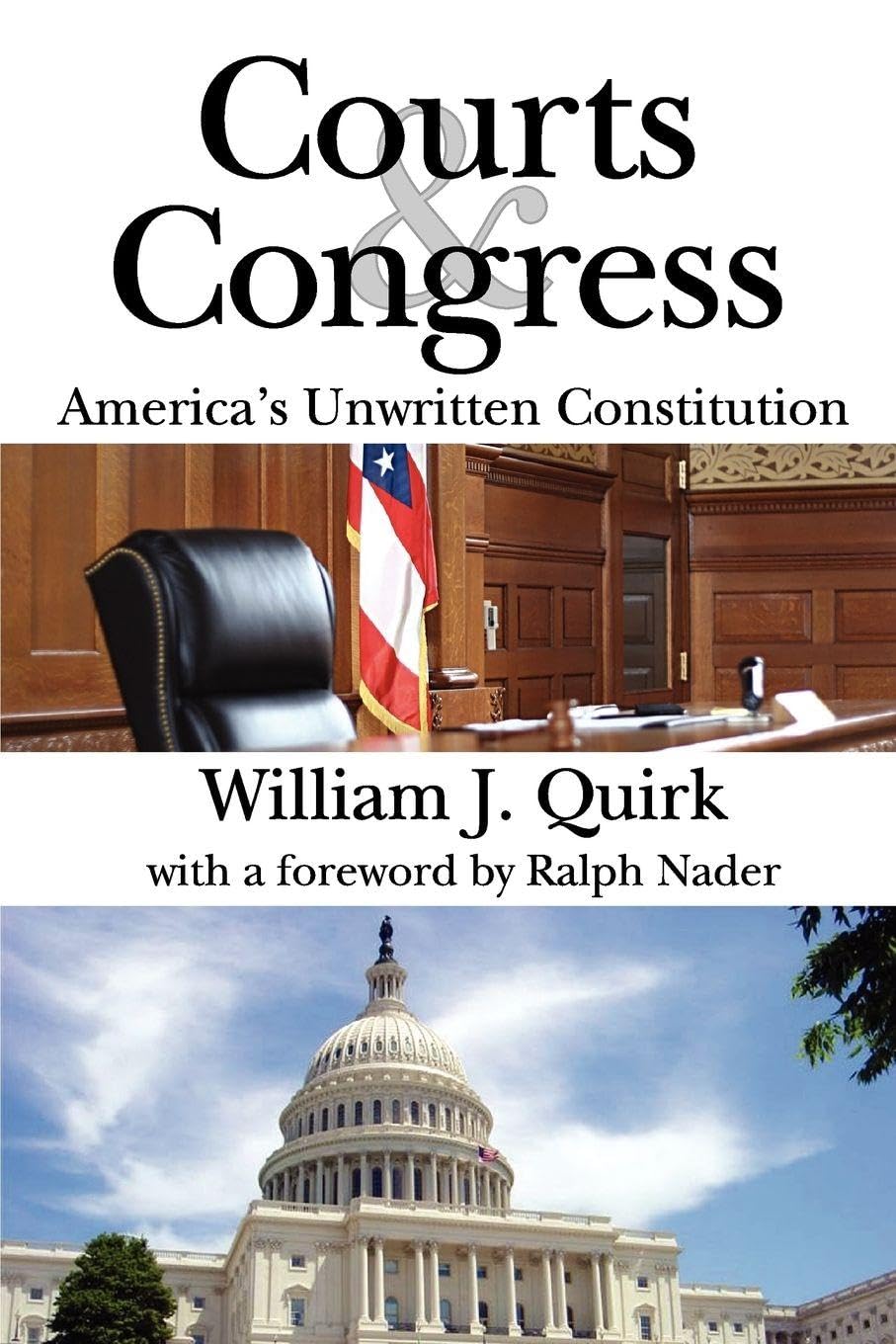
Our review of Courts and Congress: America's Unwritten Constitution finds it a focused read for anyone concerned with democratic institutions; William J. Quirk argues that the real shift in American governance is not public distrust but an institutional transfer of authority from elected legislatures to unelected judges. This book will appeal to readers who want a compact, argument-driven analysis of how informal conventions - what Quirk calls the Happy Convention - reassign responsibility and shield politicians from accountability. The bottom line: this is a thought-provoking treatise on democratic practice rather than a broad history or legal textbook.
Key Features
- Central thesis: Explains how power has been gradually shifted from Congress to the courts and why that matters for democratic accountability.
- Concept of the Happy Convention: Introduces an informal, unwritten mechanism that reallocates decision-making to avoid public blame and manage approval ratings.
- Focused argumentation: Concentrates on contemporary institutional behavior rather than exhaustive legal doctrine, making the main points accessible to non-specialists.
- Democratic perspective: Frames the issue around elections and representation, emphasizing why unelected decision-makers pose a problem for a democracy grounded in electoral choice.
- Provocative examples: Uses concrete political dynamics to illustrate when power moves away from Congress, clarifying the real-world implications of the thesis.
Who It's For
This book is best suited for politically engaged readers, students of political science, and civic-minded citizens who want a concise, normative analysis of institutional shifts in American government. It is particularly useful for those interested in the relationship between elections, accountability, and judicial decision making.
Those seeking a detailed legal treatise, a comprehensive constitutional history, or a prescriptive policy manual should look elsewhere; Quirk's work is argumentative and conceptual rather than an exhaustive academic textbook or a step-by-step reform guide.
Pros & Cons
Pros
- Clear, focused argument that highlights a significant issue in modern governance.
- The concept of the Happy Convention provides a memorable lens for understanding informal power shifts.
- Accessible writing that makes the institutional critique readable for non-specialists.
- Useful for classroom discussion or as a springboard for further research on democratic accountability.
Cons
- Not a comprehensive legal analysis, so readers seeking deep doctrinal detail may find the treatment brief.
- Limited empirical data presented in the description, which means readers may want supplemental sources for extensive evidence.
Specifications
| Title | Courts and Congress: America's Unwritten Constitution |
| Author | William J. Quirk |
| Subject | Democratic institutions and constitutional practice |
| Primary focus | Shift of decision-making from Congress to courts |
| Key concept | The Happy Convention (unwritten reassignment of power) |
| Intended audience | Students, civic readers, political science enthusiasts |
Our Verdict
Courts and Congress succeeds as a concise, persuasive critique of contemporary American governance: it identifies a worrying pattern where unelected actors make consequential decisions and offers the democratic accountability lens needed to evaluate that trend. Buy it if you want a clear conceptual framework to discuss power shifts; pair it with empirical studies if you need deeper legal or historical detail.
Frequently Asked Questions
What is the Happy Convention?
The Happy Convention is Quirk's term for an informal, unwritten practice where decision-making responsibility is shifted away from elected officials to avoid blame and protect approval ratings.
Is this a legal textbook?
No, the book is an argumentative political analysis focused on institutional behavior rather than a detailed doctrinal legal textbook.
Who benefits from reading it?
Readers interested in democratic theory, political science courses, and civic debate will gain a compact, thought-provoking framework to understand shifts in institutional power.
Editor's Take
Courts and Congress offers a concise, persuasive critique of how decision-making has shifted from elected legislatures to the courts; readers get a clear framework to assess democratic accountability and institutional change.

Recently viewed
Recently viewed products will appear here as customers browse the store.