

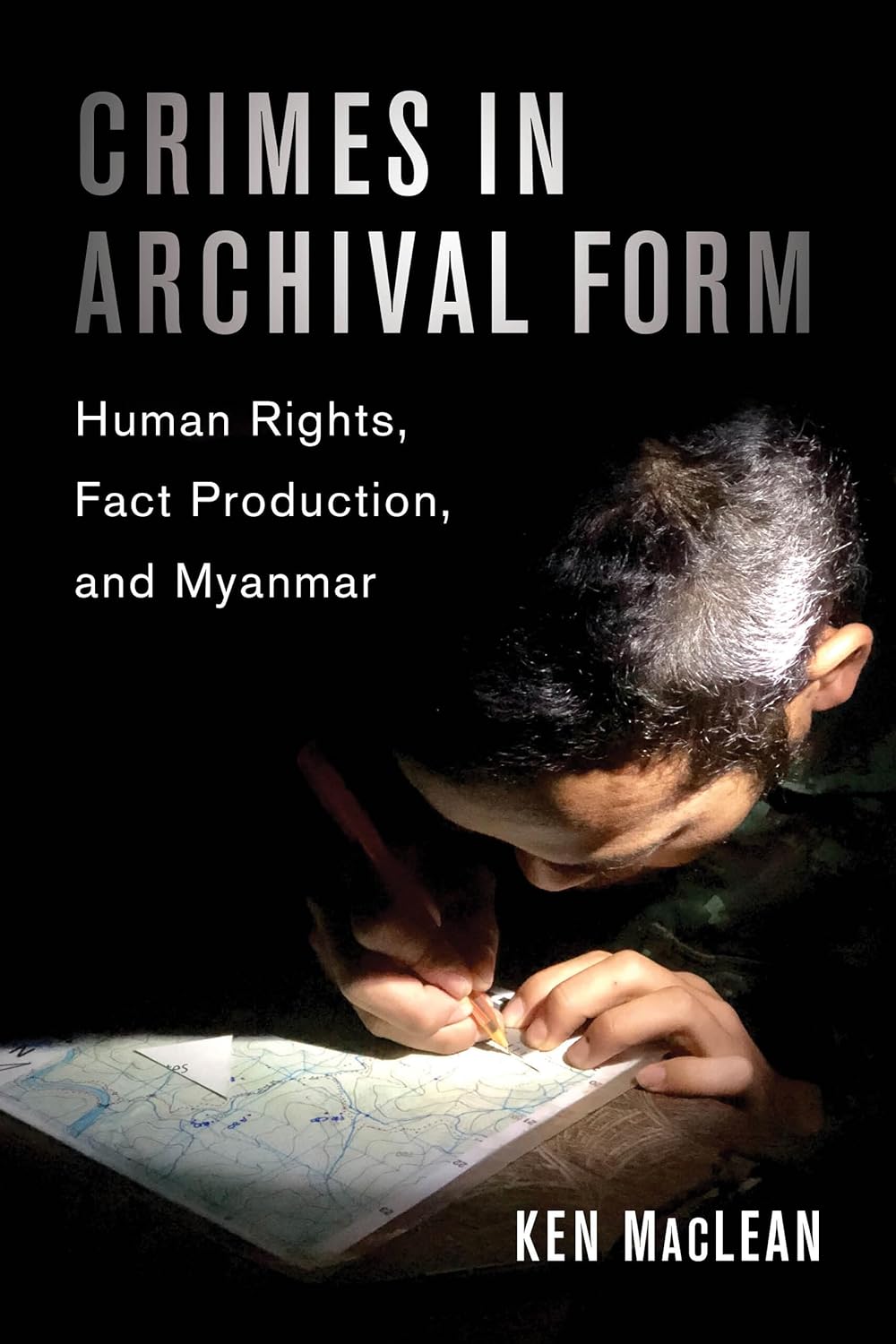
Crimes in Archival Form: Human Rights, Fact Production, and Myanmar
Crimes in Archival Form: Human Rights, Fact Production, and Myanmar
Price subject to change. Tap below for current.
Couldn't load pickup availability
In this review of Crimes in Archival Form, Ken MacLean offers a rigorous examination of how human rights "facts" are produced, not merely discovered. The book is for scholars, practitioners, and activists who want a careful, methodical look at documentation practices in conflict settings; its single biggest reason to read is the sustained focus on the processes and institutions that construct claims about abuses, using Myanmar as a clear, grounded case study. MacLean frames truth-seeking as contested work, and this review highlights how the book helps readers judge when documentation strengthens accountability and when it risks reproducing error.
Key Features
- Case study focus: The Myanmar-centered investigation gives readers a sustained empirical example of how different organizations produce facts about abuses.
- Institutional comparison: By examining a human rights group, cross-border humanitarian agencies, an international law clinic, and a global campaign, the book clarifies contrasting methods and institutional incentives.
- Critical yet constructive tone: MacLean does not simply dismiss documentation efforts but prompts discussion about improving reliability and accountability in fact production.
- Timely relevance: The analysis directly addresses modern threats to truth, including misinformation and disinformation tactics used by perpetrators.
- Focus on evidentiary practice: Readers learn about the specific practices and decisions that produce public claims about human rights abuses.
Who It's For
This book is best for academic readers in human rights, social science researchers studying documentation and evidence, legal clinics, and NGO staff responsible for fact-finding or advocacy who need a sober account of how facts are constructed. Practitioners involved in documentation will find the comparative institutional lens especially useful for reflecting on their own methods.
Readers seeking a general history of Myanmar, a policy handbook with checklists, or a light overview of the conflict will want a different volume; MacLean's work is analytical and methodological rather than a broad primer or quick-reference field guide.
Pros & Cons
Pros
- Careful empirical grounding in Myanmar gives concrete examples of how documentation decisions play out in practice.
- Comparative look across organizations helps readers see institutional tradeoffs and incentives.
- Engages current challenges like misinformation, making the book relevant for contemporary debates about credibility and falsehoods.
Cons
- The book is analytical and assumes some familiarity with human rights documentation, so it may be dense for casual readers.
Specifications
| Title | Crimes in Archival Form: Human Rights, Fact Production, and Myanmar |
| Author | Ken MacLean |
| Subject focus | Human rights documentation and fact production |
| Case study | Myanmar |
| Institutions examined | Human rights group; cross-border humanitarian agencies; international law clinic; global NGO-led campaign |
| Central themes | Fact-finding practices, truth-seeking, misinformation |
Our Verdict
Crimes in Archival Form is a valuable, thought-provoking contribution for specialists and practitioners who need a deeper understanding of how human rights claims are produced. Its grounded Myanmar case study and institutional comparisons make it good value for anyone seeking to improve documentation practices or to critically evaluate evidence and advocacy in contested settings.
Frequently Asked Questions
Does the book offer practical field checklists?
Answer. The book is analytical and focused on processes; it offers conceptual guidance rather than step-by-step field checklists.
Which organizations does MacLean study?
Answer. He examines a human rights group, two cross-border humanitarian agencies, an international law clinic, and a global NGO-led campaign in the context of Myanmar.
Is the book accessible to nonacademic readers?
Answer. It is best suited to readers with some background or interest in human rights documentation, though motivated nonacademics will find the case study illuminating.
Editor's Take
Crimes in Archival Form is a thought-provoking, empirically grounded study of how human rights facts are produced, essential for scholars and practitioners seeking to improve documentation and evaluate evidence in contested settings.

Recently viewed
Recently viewed products will appear here as customers browse the store.