

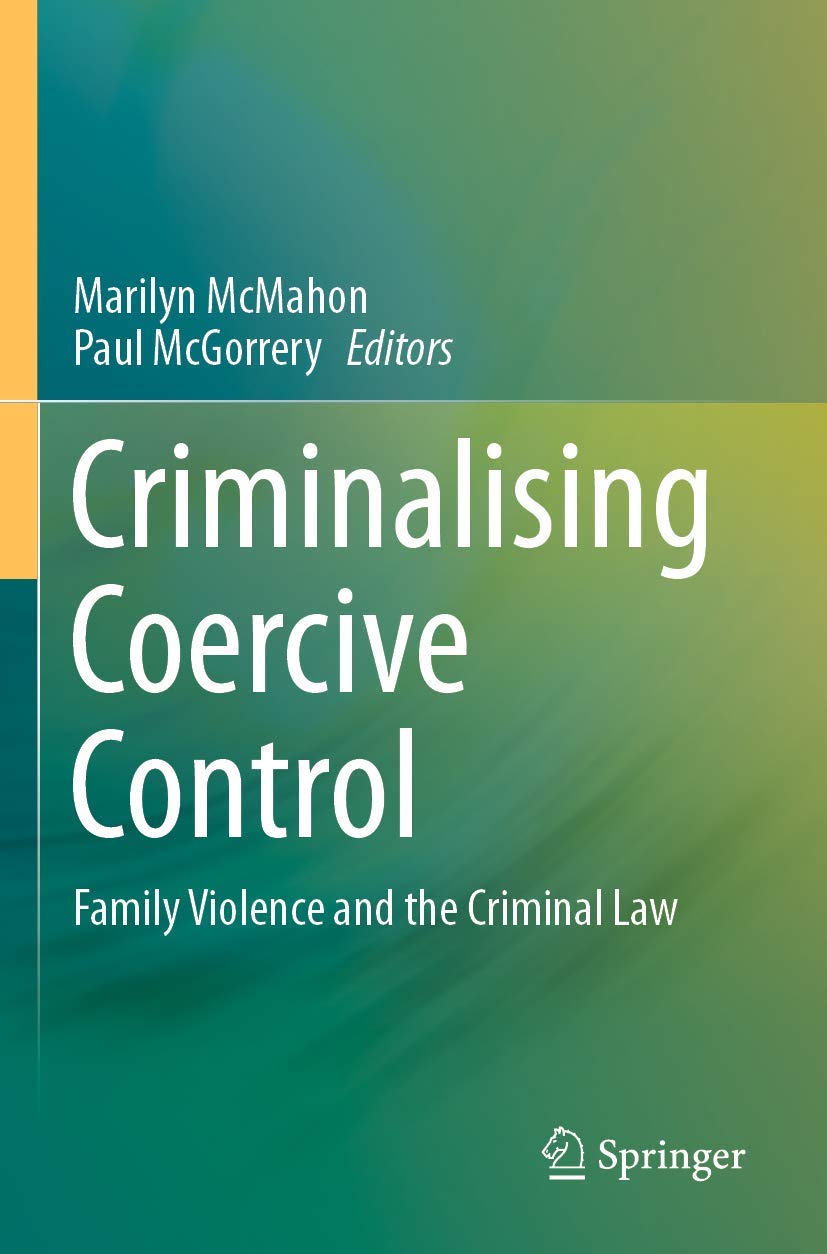
Criminalising Coercive Control: Family Violence and the Criminal Law
Criminalising Coercive Control: Family Violence and the Criminal Law
Price subject to change. Tap below for current.
Couldn't load pickup availability
In this review of Criminalising Coercive Control: Family Violence and the Criminal Law, the authors examine whether non-physical forms of family violence should be brought within the criminal law. This book is for readers who want rigorous legal and policy analysis of coercive control and its place in modern criminal justice: lawyers, policy makers, academics and advanced students. The single biggest reason to buy is the careful comparative study of recent statutory changes across the UK and Ireland that situates debate in concrete legal reform.
Key Features
- Theoretical reframing: Explains why traditional definitions of family violence are limited and why a power-based account of abuse matters for law and policy.
- Comparative legal review: Surveys new offences introduced in England and Wales, Ireland and Scotland, giving readers clear examples of how jurisdictions have responded.
- Focus on harms: Details psychological, physical and economic harms linked to controlling behaviour to justify legal intervention.
- Policy implications: Analyses practical consequences for prosecution, victim protection and human rights when coercive control is criminalised.
- Accessible scholarship: Balances academic rigour with clear explanation so that non-specialists working in social services or advocacy can follow the argument.
Who It's For
The book best serves legal practitioners, policy makers, researchers in criminal law and gender studies, and victim advocates who need a comparative and normative discussion of controlling behaviour as a criminal concern. It provides useful material for classroom debates and law reform committees seeking examples of statutory approaches.
Readers looking for a step-by-step legal practice guide, survivor memoirs or light introductory overviews of domestic abuse may find the tone and detail too academic; those audiences should seek more practice-focused or narrative accounts instead.
Pros & Cons
Pros
- Thorough comparative analysis of recent statutes that clarifies differences between jurisdictions.
- Strong argument for treating power-based psychological abuse as a serious legal issue.
- Useful for informing policy debate and legal reform with attention to human rights implications.
Cons
- The book is scholarly in tone and may read as dense for general readers seeking a quick practical handbook.
Specifications
| Title | Criminalising Coercive Control: Family Violence and the Criminal Law |
| Authors | Marilyn McMahon, Paul McGorrery |
| Subject | Family violence, coercive control, criminal law |
| Geographic focus | England and Wales, Ireland, Scotland |
| Approach | Comparative legal and policy analysis |
| Key themes | Power-based control, psychological and economic harms |
Our Verdict
This book is a valuable, well-researched resource for anyone engaged in law reform, legal practice or policy on domestic abuse. Its comparative approach and attention to harms make it a compelling case for recognising coercive control in criminal law, though its academic tone means it is best suited to professionals and students rather than casual readers.
Frequently Asked Questions
Does the book compare actual statutes?
Yes, it reviews new offences and legislative approaches in England and Wales, Ireland and Scotland to show how coercive control has been addressed.
Is the content accessible to non-lawyers?
While written with scholarly rigour, the book explains concepts clearly enough for policy makers and advocates without specialist legal training.
Does it argue for criminalisation?
The authors present the case that power-based controlling behaviour can justify criminal law responses, while also examining practical and rights-based implications.
Editor's Take
A rigorous comparative study arguing that power-based coercive control merits legal attention; best for legal professionals, policy makers and researchers due to its academic depth.

Recently viewed
Recently viewed products will appear here as customers browse the store.