

Critical Thinking Illustrated. Decode Logical Fallacies & Biases
Critical Thinking Illustrated. Decode Logical Fallacies & Biases
Price subject to change. Tap below for current.
Couldn't load pickup availability
In this review of Critical Thinking Illustrated, the author Roberto Russo offers a compact, visual guide for anyone who wants to spot manipulation and sharpen everyday reasoning. The book's strongest appeal is its blend of clear explanations and bold illustrations that make abstract ideas tangible, so students, educators, and curious readers can quickly identify common logical fallacies and cognitive biases. For readers who prefer step-by-step exercises, this is a conceptual primer rather than a workbook, but its illustrated approach makes essential critical thinking tools easy to recognize and apply.
Key Features
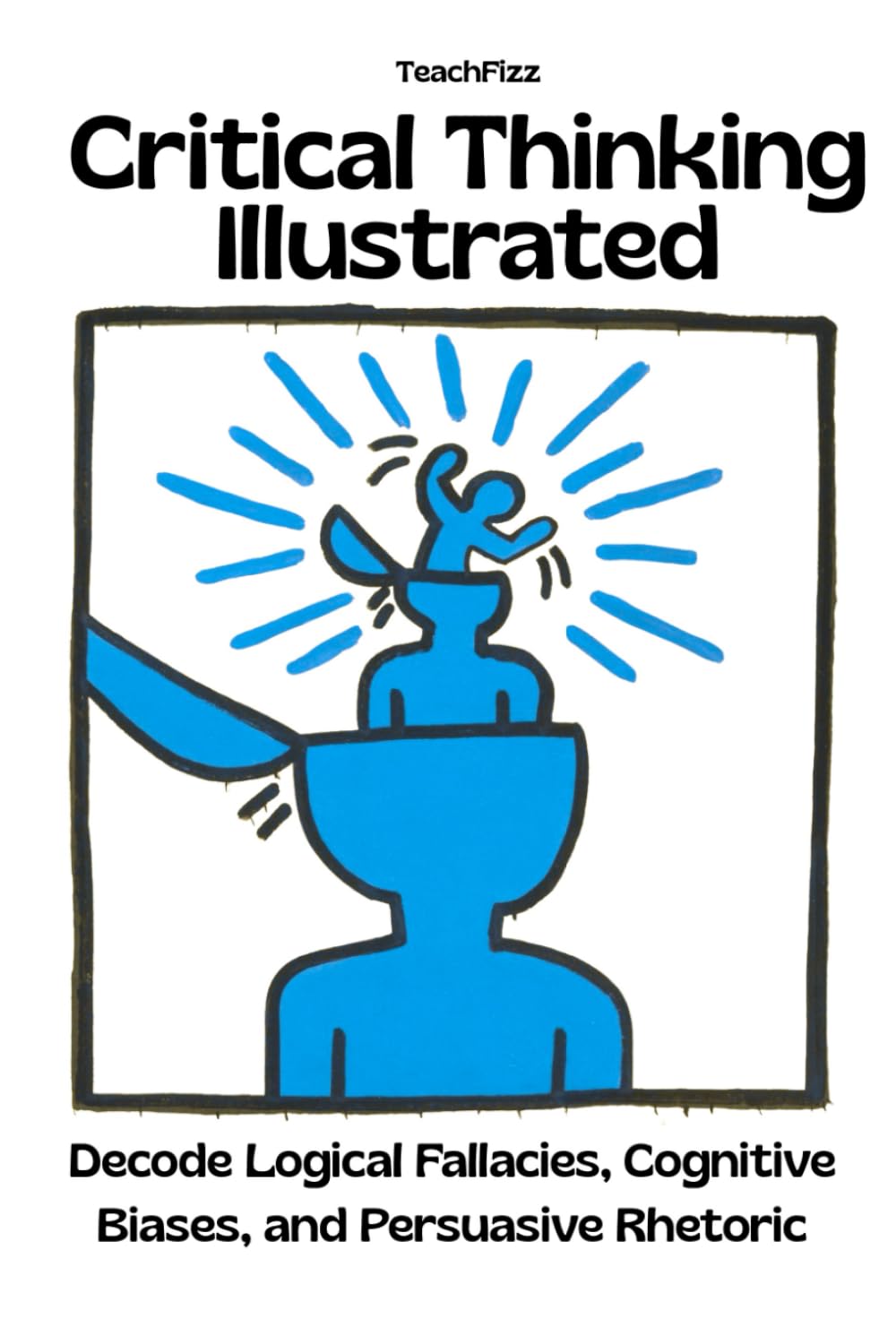
- Illustrated explanations: Bold, Keith Haring-inspired visuals translate complex ideas into memorable images that help readers recall fallacies and biases more easily.
- Clear definitions: Concise, approachable descriptions of common logical fallacies and cognitive biases make the material accessible without prior training.
- Real-world examples: Case examples drawn from media, politics, advertising, and daily conversation show how these errors appear in ordinary contexts.
- Teacher-friendly format: The presentation suits classroom discussion and group analysis, making it useful for educators and workshop leaders.
- Practical detection skills: Readers learn straightforward signs to look for when evaluating arguments, improving everyday decision-making.
Who It's For
The book is best for high-school and college students, teachers, and curious adults who want a visually driven introduction to critical thinking. Its short, illustrated chapters work well for classroom use, lesson prompts, or quick self-study sessions where examples from media and politics are discussed.
Readers seeking exhaustive academic treatment or extensive exercises to practice reasoning should look elsewhere; this volume is primarily an illustrated primer that emphasizes recognition and awareness over deep technical instruction or rigorous practice problems.
Pros & Cons
Pros
- Illustrations that make abstract concepts memorable and engaging for visual learners.
- Clear, succinct explanations that demystify common fallacies and biases without jargon.
- Relevant, real-world examples that connect theory to everyday media and conversations.
Cons
- Not a step-by-step workbook; readers wanting extensive practice problems may find the format limited.
Specifications
| Title | Critical Thinking Illustrated. Decode Logical Fallacies, Cognitive Biases, and Persuasive Rhetoric |
| Author | Roberto Russo |
| Format | Illustrated explanatory book |
| Audience | Students, educators, curious adults |
| Content focus | Logical fallacies, cognitive biases, persuasive rhetoric |
| Style | Bold visuals inspired by Keith Haring; accessible prose |
Our Verdict
Critical Thinking Illustrated is an effective, well-paced primer for anyone who wants to become better at spotting flawed arguments and manipulative rhetoric. It offers strong visual cues and practical examples that make reasoning skills easier to grasp, and it represents good value for students and teachers who need a compact classroom resource rather than a technical textbook.
Frequently Asked Questions
Is this book suitable for classroom use?
Yes. The illustrated format and real-world examples make it suitable for lessons, discussions, and quick introduction to critical thinking concepts.
Does it include exercises or practice problems?
The book focuses on explanation and recognition; it contains examples but is not a rigorous workbook of practice exercises.
Who is the intended audience?
Students, educators, and curious adults who want an accessible visual guide to logical fallacies and cognitive biases.
Editor's Take
Critical Thinking Illustrated is a visual, accessible primer that uses bold illustrations and clear examples to help students and teachers spot logical fallacies and cognitive biases; it is excellent for recognition and classroom use but not a workbook of practice exercises.

Recently viewed
Recently viewed products will appear here as customers browse the store.