

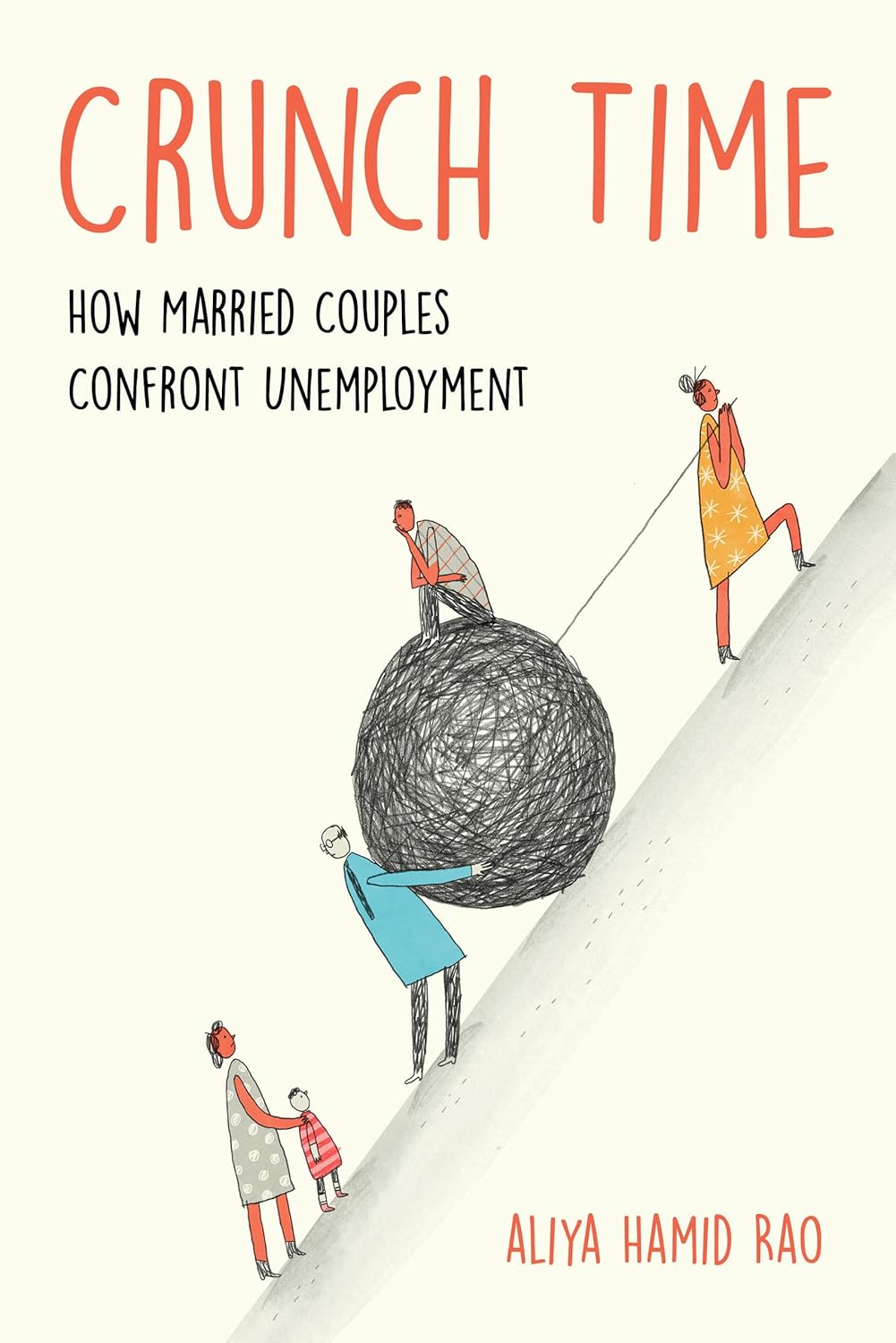
Crunch Time: How Married Couples Confront Unemployment
Crunch Time: How Married Couples Confront Unemployment
Price subject to change. Tap below for current.
Couldn't load pickup availability
In this review of Crunch Time, Aliya Hamid Rao offers a close, qualitative look at how college-educated spouses experience unemployment differently by gender. The book is best for readers who want a rigorous, readable example of contemporary ethnography and anyone curious about the intersection of marriage, work, and gender norms; its single biggest reason to buy is the book's clear demonstration of how everyday marital interactions reproduce or challenge social expectations during job loss. The writing is accessible and the cases stay focused, making the book a strong study rather than a self-help manual.
Key Features
- Ethnographic depth: Rao uses intimate interviews and observation to reveal the small interactions that shape how couples interpret unemployment, helping readers see the lived mechanics of gender in households.
- Gendered contrast: The book shows how comparable men and women face starkly different social meanings of joblessness, clarifying why men's unemployment is often treated as urgent while women's is minimized.
- Marriage-focused lens: By centering spouses, the study explains how marital roles and negotiations actively reproduce or resist traditional gender assumptions during a crisis.
- Readable analysis: The prose is approachable for non-specialists, making complex sociological ideas available to a broader audience interested in relationships and work.
- Concrete case studies: Specific couple narratives illustrate broader patterns, giving readers immediate examples to relate theory to everyday behavior.
Who It's For
This book is ideal for sociology students, relationship counselors, and thoughtful readers who want a strong qualitative account of how gender shapes responses to unemployment. It serves as a compact exemplar for anyone studying family dynamics, labor, or gender in contemporary society.
Readers looking for prescriptive job-hunting advice, step-by-step couple therapy exercises, or a broad statistical survey should look elsewhere; the focus is qualitative and interpretive rather than a how-to manual or quantitative labor market analysis.
Pros & Cons
Pros
- Insightful case studies that make abstract gender concepts tangible and relatable.
- Clear, readable writing that invites nonacademic readers into ethnographic work.
- Focus on married couples highlights how domestic life mediates wider labor issues.
Cons
- The book is interpretive and qualitative, so readers seeking prescriptive solutions or large-scale statistics may find its scope limited.
Specifications
| Title | Crunch Time: How Married Couples Confront Unemployment |
| Author | Aliya Hamid Rao |
| Focus | Gendered experiences of unemployment in marriages |
| Approach | Qualitative ethnography and case studies |
| Audience | Students, researchers, readers of sociology and relationships |
| Tone | Analytic and readable |
Our Verdict
Crunch Time is a thoughtful, well-written ethnographic study that is worth buying for readers who want to understand how gender operates in the intimate context of marriage during unemployment. Its value lies in detailed narratives and clear analysis rather than policy prescriptions, making it a good investment for those seeking insight into family dynamics and gendered labor experiences.
Frequently Asked Questions
Is this book academic or popular in tone?
Answer. The book blends academic ethnography with accessible prose, making it readable for non-specialists while remaining rigorous.
Does it offer advice for couples facing unemployment?
Answer. The focus is descriptive and analytic rather than prescriptive, so it offers insight rather than step-by-step counseling guidance.
Who is the typical case subject in the book?
Answer. Rao examines college-educated men and women and their spouses to compare how gender shapes responses to job loss.
Editor's Take
Crunch Time is a thoughtful ethnographic study that reveals how gender shapes married couples' responses to unemployment; it's a valuable, readable resource for students and practitioners seeking insight rather than prescriptive advice.

Recently viewed
Recently viewed products will appear here as customers browse the store.