

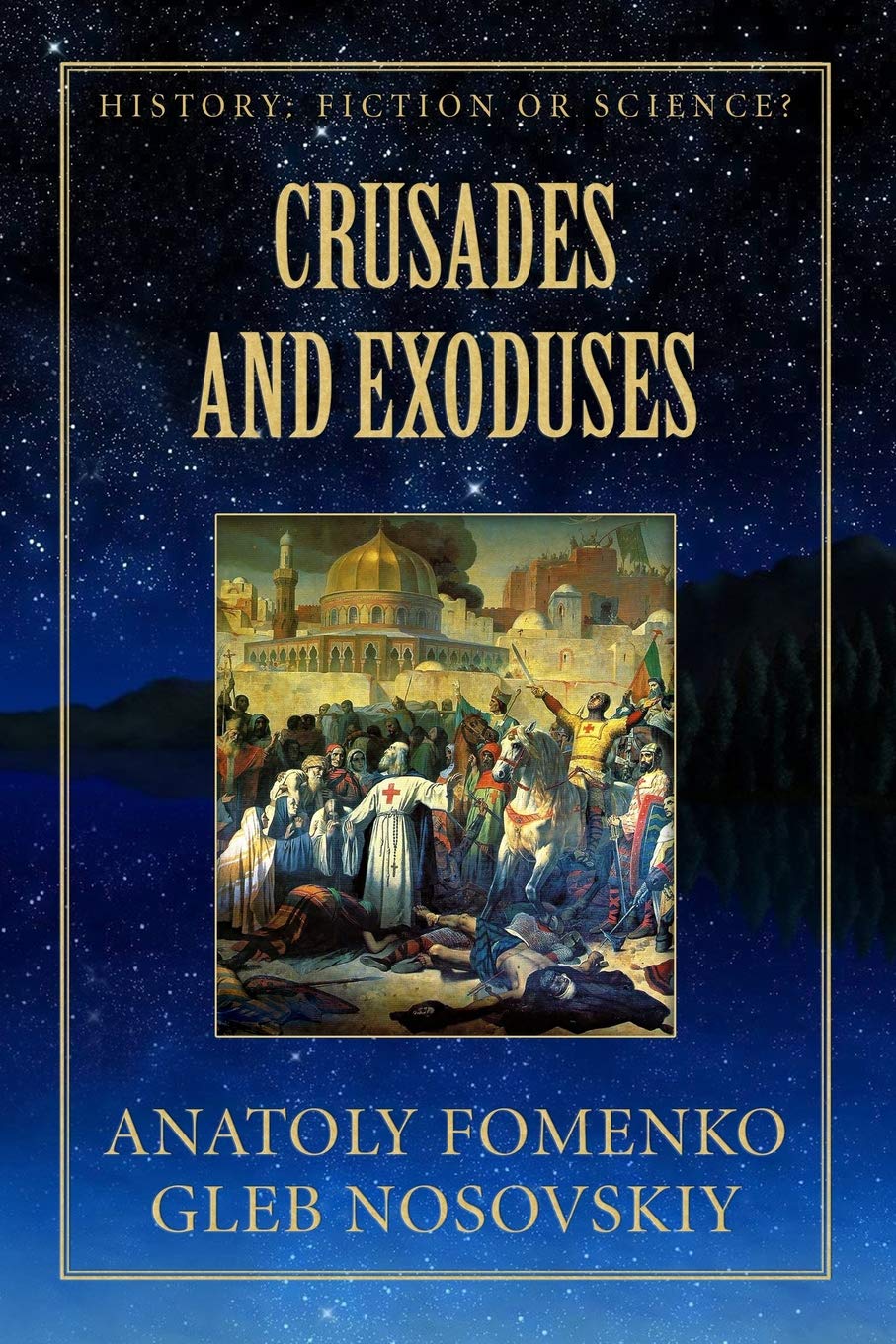
Crusades and Exoduses (History: Fiction or Science?) - Scholarly
Crusades and Exoduses (History: Fiction or Science?) - Scholarly
Price subject to change. Tap below for current.
Couldn't load pickup availability
In this review of Crusades and Exoduses (History: Fiction or Science?), the reviewer assesses a provocative reinterpretation of medieval history that will appeal to readers interested in revisionist narratives and contested chronologies. The book presents a concentrated argument that Christianity as known today emerged in the Byzantine world in the XII century and links the Crusades of 1189-1192 and 1199-1204 AD to internal imperial strife, culminating in the Sack of Constantinople in 1204. For those seeking a challenging alternative view rather than conventional textbooks, this work offers dense theory and bold claims worthy of close reading.
Key Features
- Revisionist thesis: The authors argue Christianity originated in the Byzantine Empire in the XII century, reframing standard timelines and encouraging readers to reconsider accepted chronologies.
- Focused narrative: The book concentrates on the Crusades of 1189-1192 and 1199-1204 AD and connects them directly to the Sack of Constantinople in 1204.
- Interdisciplinary claims: The text links religious splits and mutations into multiple faiths, prompting readers to evaluate broader cultural and religious transformations.
- Concise scope: By zeroing in on specific campaigns and dates, the authors keep the narrative tight and suitable for readers ready to engage with concentrated argumentation.
- Controversial perspective: The book challenges mainstream historiography, making it a conversation starter in study groups and academic debates.
Who It's For
This book suits readers with a strong interest in revisionist history, controversial theories, and the history of religion who are prepared to weigh unconventional evidence. Scholars, students in alternative history courses, and general readers who enjoy provocative reinterpretations will find the book stimulating.
Those seeking a conventional, evidence-by-evidence mainstream account of the Crusades or a balanced textbook overview should look elsewhere; this book's strength is its polemical reconstruction rather than a neutral synthesis of broadly accepted primary sources.
Pros & Cons
Pros
- Offers a clear, concentrated thesis that reframes the timeline of Christianity in a way that provokes further research and debate.
- Connects specific Crusade campaigns directly to imperial conflict, providing a compelling narrative thread to follow.
- Serves as a useful catalyst for discussion in reading groups or courses on historiography and religious history.
Cons
- The work is controversial and departs from mainstream scholarship, so readers may find its claims unsupported by conventional evidentiary standards.
Specifications
| Title | Crusades and Exoduses (History: Fiction or Science?) |
| Authors / Brand | Anatoly Fomenko, Gleb Nosovskiy, Mike Yagupov |
| Subject focus | Revisionist history of Christianity and the Crusades |
| Key events covered | Crusades of 1189-1192 and 1199-1204 AD; Sack of Constantinople 1204 |
| Central claim | Christianity originated in the Byzantine Empire in the XII century |
| Intended audience | Readers of controversial history and historiography |
Our Verdict
Crusades and Exoduses is a provocative, tightly argued book that will reward readers who enjoy challenging mainstream chronologies and debating the foundations of religious history. It is good value for those seeking a stimulating alternate narrative and willing to engage critically with controversial claims; readers expecting orthodox scholarship should be cautious.
Frequently Asked Questions
Does the book follow mainstream historical consensus?
No, the authors present a revisionist reconstruction that departs from conventional timelines and scholarly consensus.
Which events does the book focus on?
The narrative centers on the Crusades of 1189-1192 and 1199-1204 AD and the Sack of Constantinople in 1204.
Who wrote the book?
The work is attributed to Anatoly Fomenko, Gleb Nosovskiy, and Mike Yagupov, who advance the book's central thesis.
Editor's Take
Crusades and Exoduses is a provocative, tightly argued revisionist work that rewards readers who enjoy challenging mainstream chronologies; it is valuable for debate but departs from conventional scholarship.

Recently viewed
Recently viewed products will appear here as customers browse the store.