

Darwin and the Memory of the Human - Scholarly Cannon
Darwin and the Memory of the Human - Scholarly Cannon
Price subject to change. Tap below for current.
Couldn't load pickup availability
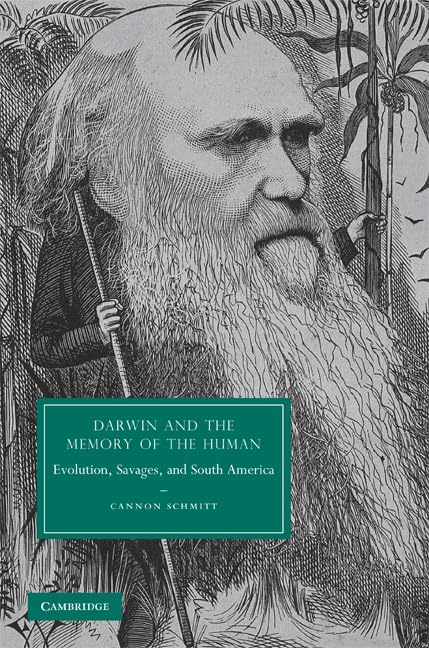
In this review of Darwin and the Memory of the Human, the reviewer finds a tightly argued academic study suited to readers interested in Victorian science, imperial history, and literary criticism. Cannon Schmitt traces how Charles Darwin and his contemporaries transformed encounters with South America and its indigenous peoples into frameworks for human evolution, reshaping ideas about the modern self. This book is best for scholars and informed readers seeking a rigorous, interdisciplinary account rather than a general biography or popular science retelling.
Key Features
- Historical focus: Examines Darwin's 1832 Tierra del Fuego encounter and how that shock shaped later arguments about human origins, providing historical context for scientific ideas.
- Interdisciplinary analysis: Connects natural history, literary culture, and imperial encounters to show how interpretations of savagery influenced Victorian thought.
- Original scholarship: Offers a wide-ranging study that revises prevailing readings of Victorian imperialism by foregrounding encounters in South America.
- Thematic depth: Explores what it means to be human by tracing personal, historical, and ancestral pasts conceived as savage, deepening debates in history and criticism.
- Concise argumentation: Presents a clear throughline from field encounters to theoretical claims, making complex ideas accessible to specialists in related fields.
Who It's For
This book is aimed at academics, graduate students, and intellectually curious readers who study Victorian literature, history of science, or colonial studies; it rewards careful reading and familiarity with scholarly debates. In particular, historians of science will appreciate the attention to how specific field encounters informed broader theoretical claims about evolution and human difference.
Readers seeking a popular biography of Darwin or a general introduction to evolution should look elsewhere, as the text assumes background knowledge and prioritizes critical interpretation over narrative biography or elementary explanations.
Pros & Cons
Pros
- Illuminates a pivotal moment in Darwin's development by focusing on the Tierra del Fuego encounter and its lasting influence.
- Bridges disciplines effectively, offering useful perspectives for both literary critics and historians of science.
- Challenges conventional accounts of Victorian imperialism with original archival and interpretive work.
Cons
- The work is scholarly and dense, so it may be less accessible to casual readers unfamiliar with Victorian studies.
Specifications
| Title | Darwin and the Memory of the Human |
| Subtitle | Evolution, Savages, and South America |
| Series | Cambridge Studies in Nineteenth-Century Literature and Culture, Series Number 66 |
| Author | Cannon Schmitt |
| Geographic focus | South America, Tierra del Fuego |
| Subject areas | Victorian literature; history of science; imperial history |
Our Verdict
Darwin and the Memory of the Human is a persuasive, well-researched study for specialists who want to understand how Darwin's field encounters informed Victorian concepts of humanity. Its interdisciplinary scope and original argument make it good value for scholars in history, literature, and science studies, though general readers may find the material demanding.
Frequently Asked Questions
Does the book focus on Darwin's voyage to Tierra del Fuego?
Yes. The reviewer notes the book foregrounds Darwin's 1832 encounter in Tierra del Fuego as a formative episode for his later thinking.
Is this a general biography of Darwin?
No. The work is a focused academic study exploring how encounters with indigenous peoples shaped Victorian scientific and cultural ideas rather than a life narrative.
Who benefits most from reading this book?
Scholars and advanced students in Victorian studies, history of science, and postcolonial criticism will gain the most from its interdisciplinary arguments.
Editor's Take
A persuasive, well-researched interdisciplinary study showing how Darwin's Tierra del Fuego encounter helped shape Victorian concepts of humanity; recommended for scholars in literature, history, and science studies.

Recently viewed
Recently viewed products will appear here as customers browse the store.