

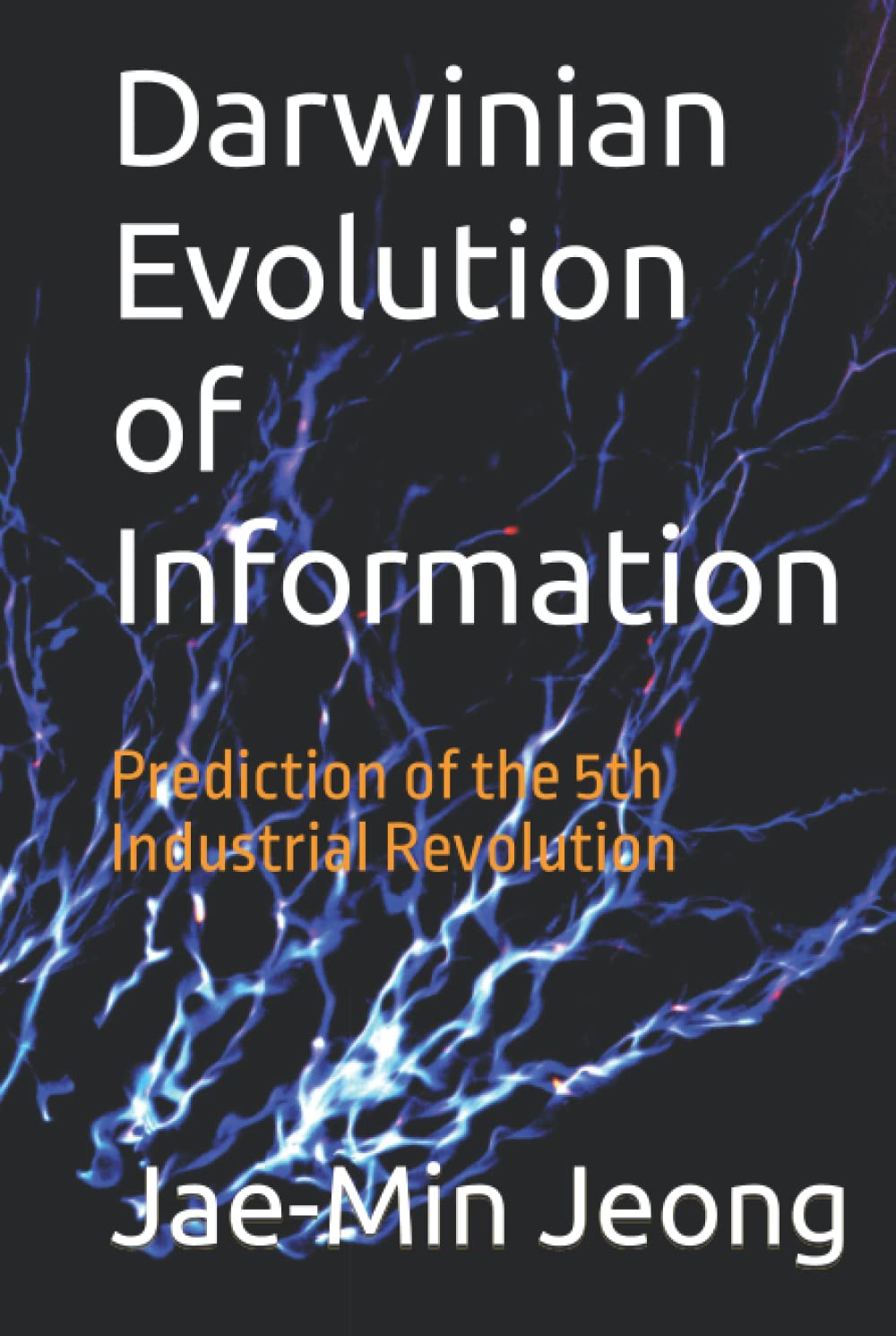
Darwinian Evolution of Information: Prediction of the 5th Industrial
Darwinian Evolution of Information: Prediction of the 5th Industrial
Price subject to change. Tap below for current.
Couldn't load pickup availability
In this review of Darwinian Evolution of Information: Prediction of the 5th Industrial Revolution, the reviewer finds a thought-provoking, academically minded examination of how Darwinian principles might extend beyond biology. This book is for readers curious about the intersection of evolutionary theory and information, and for those who appreciate speculative but reasoned scientific argument. The single biggest reason to buy is its clear, philosophical framing of genotype versus phenotype and a sustained attempt to apply the idea of information replication to inanimate systems.
Key Features
- Conceptual Thesis: Presents a focused argument that information replication can be understood through Darwinian mechanisms, offering readers a new lens on evolution and systems.
- Historical Context: Traces the origin of genetic replication back roughly 4 billion years, helping contextualize how simple molecules evolved into complex information carriers.
- Engagement with Authorities: Discusses influential ideas such as Richard Dawkins' notion of the gene-centric view of life, which grounds the book in familiar scientific debate.
- Interdisciplinary Reach: Bridges biology, information theory, and philosophy to propose extensions of Darwinism into nonliving phenomena, stimulating cross-field thought.
- Speculative Prediction: Connects these ideas to broader societal shifts by framing a prediction about the 5th Industrial Revolution, encouraging readers to consider long-term implications.
Who It's For
This book will appeal to science readers, graduate students, and intellectually curious professionals who enjoy rigorous essays that blend biology, information theory, and philosophical reflection. It suits people who already accept or are willing to engage with the gene-centric perspective and want to explore bold theoretical extensions.
Readers seeking a practical how-to, a textbook with extensive experimental data, or a light popular science read for casual browsing should look elsewhere; this is a concept-driven, reflective work rather than a step-by-step manual or saturated empirical review.
Pros & Cons
Pros
- Clear focus on the idea that genetic information can be more essential than phenotype, which sharpens the book's central argument.
- Thoughtful historical framing of how molecular replication likely began about 4 billion years ago, which grounds speculation in deep time.
- Engages with well-known scientific ideas to build a bridge toward considering inanimate information systems.
Cons
- Not heavily illustrated with empirical data or experiments, so readers looking for extensive evidence may find the argument more theoretical than conclusive.
Specifications
| Title | Darwinian Evolution of Information: Prediction of the 5th Industrial Revolution |
| Author / Brand | Jae-Min Jeong |
| Subject | Evolution, Information Theory, Philosophy of Biology |
| Core Thesis | Extending Darwinism to inanimate information systems |
| Historical Scope | Origins of genetic replication ~4 billion years ago |
| Engaged Authorities | References ideas such as Richard Dawkins' gene-centric view |
Our Verdict
This is a stimulating, concept-driven book for readers who enjoy rigorous thought experiments that connect evolutionary biology and information theory. It is best bought by those who want a philosophical and theoretical treatment that points toward the idea of a 5th Industrial Revolution rather than an empirical handbook; it offers strong value as a catalyst for further reading and debate.
Frequently Asked Questions
Does the book argue that nonliving systems truly evolve?
The author explores the idea that information in nonliving systems can follow Darwinian-like replication and selection, presenting a reasoned theoretical case rather than definitive proof.
Is this a technical textbook?
No, it is a concept-driven examination aimed at readers comfortable with scientific ideas and philosophical argument, not a laboratory manual.
Will this change how I think about evolution?
For readers open to re-framing evolution in terms of information, the book offers provocative perspectives that can broaden how one interprets genotype, phenotype, and long-term technological trends.
Editor's Take
A stimulating, concept-driven examination that extends Darwinian ideas to information systems; best for readers seeking philosophical, theoretical arguments rather than empirical handbooks.

Recently viewed
Recently viewed products will appear here as customers browse the store.