

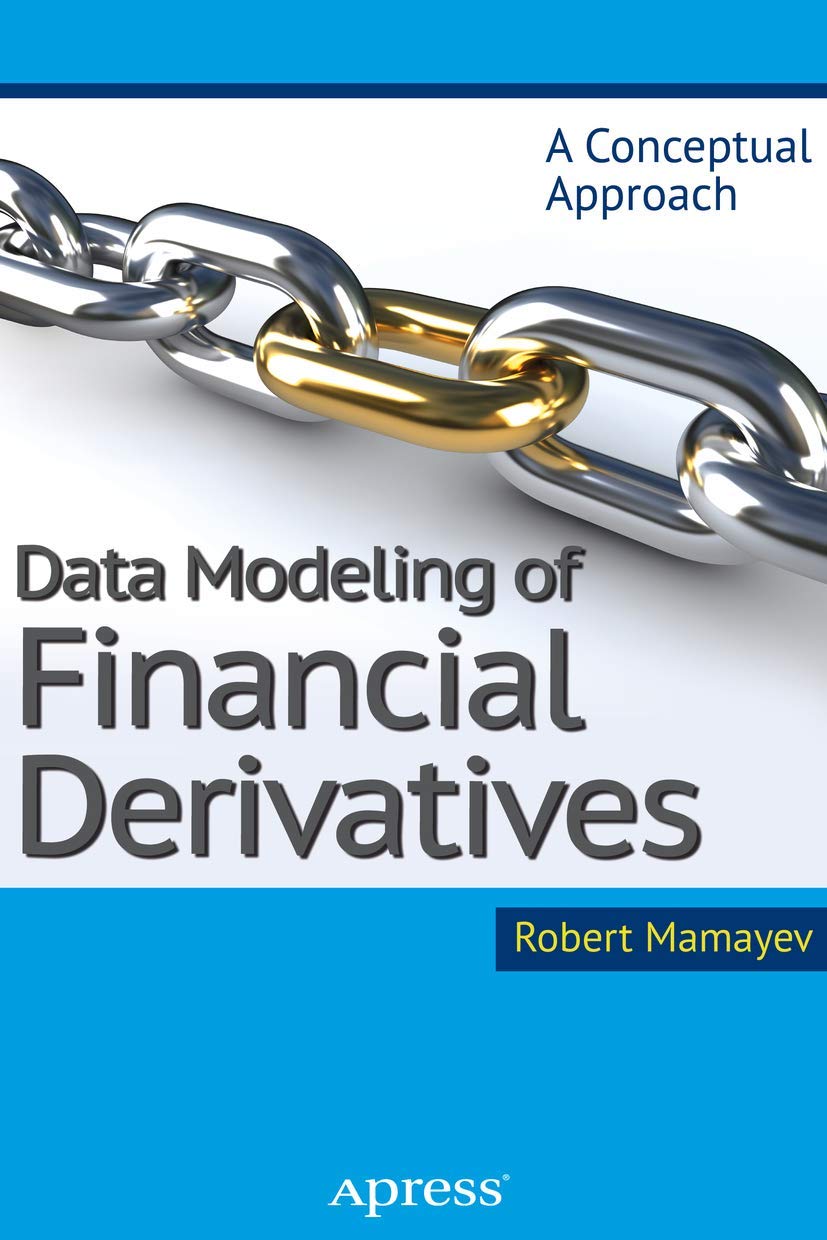
Data Modeling of Financial Derivatives: A Conceptual Approach
Data Modeling of Financial Derivatives: A Conceptual Approach
Price subject to change. Tap below for current.
Couldn't load pickup availability
In this review of Data Modeling of Financial Derivatives: A Conceptual Approach the bottom line is clear: this book is a focused, practical bridge between finance and IT for anyone who must model or exchange data about derivatives. Written in plain English and drawn from client engagements, the book's single biggest reason to buy is its clear walkthroughs of how to structure and describe complex instruments such as futures, options, swaps and forward rate agreements so teams can build data models without guessing at finance concepts.
Key Features
- Plain English explanations: Complex derivative concepts are translated into accessible language so IT and data professionals can learn financial terms without prior specialist training.
- Coverage of major instruments: The book covers futures, forwards, options, swaps and forward rate agreements, offering concrete modeling approaches for each product type.
- Client-based examples: Material is based on successful client engagements, providing realistic scenarios and modeling decisions used in real projects.
- Step-by-step structure guidance: Readers are shown how to structure and describe financial data, which helps create repeatable, maintainable data models.
- Cross-discipline focus: The book helps bridge finance, modeling and IT teams so communication improves and implementation risk is reduced.
Who It's For
This book is best for new and veteran data modelers, financial analysts, and IT professionals who need a conceptual but practical guide to derivative instruments and their data representations. It is particularly useful when a team must convert business knowledge into concrete data structures or when IT needs to understand finance terminology to avoid costly miscommunication.
Readers who want mathematical derivations, exhaustive quantitative pricing models, or advanced academic theory on derivatives should look elsewhere; this is a conceptual and practical modeling guide rather than a technical finance textbook focused on valuation formulas.
Pros & Cons
Pros
- Clear, plain-English explanations reduce the learning curve for IT professionals new to derivatives.
- Practical, client-derived examples show how concepts apply in real modeling projects.
- Broad coverage of common derivative types provides a single reference for modeling approaches.
Cons
- The focus is conceptual and practical; readers seeking deep quantitative or formula-driven content may find it limited.
Specifications
| Title | Data Modeling of Financial Derivatives: A Conceptual Approach |
| Author | Robert Mamayev |
| Scope | Futures, forwards, options, swaps, forward rate agreements |
| Audience | Data modelers, financial analysts, IT professionals |
| Approach | Plain English, client engagement examples, step-by-step modeling guidance |
| Focus | Conceptual data modeling for derivatives |
Our Verdict
For teams that must map derivative business concepts into reliable data models, this book is excellent value: it reduces miscommunication between finance and IT and provides actionable, client-tested modeling patterns. Those seeking heavy mathematical theory should complement it with a specialist quantitative text.
Frequently Asked Questions
Does this book explain pricing formulas?
The book focuses on conceptual data modeling and instrument descriptions rather than detailed pricing formulas.
Is it suitable for programmers building data systems?
Yes, it is written to help IT and data professionals understand financial terms and structure data for implementation.
Which derivative types are covered?
The author covers futures, forwards, options, swaps and forward rate agreements with practical modeling guidance.
Editor's Take
A practical, plain-English guide that helps data modelers and IT professionals map derivative business concepts into reliable data structures; excellent for teams needing clearer finance-to-IT communication.

Recently viewed
Recently viewed products will appear here as customers browse the store.