

Dealing with Deindustrialization - Regional Response
Dealing with Deindustrialization - Regional Response
Price subject to change. Tap below for current.
Couldn't load pickup availability
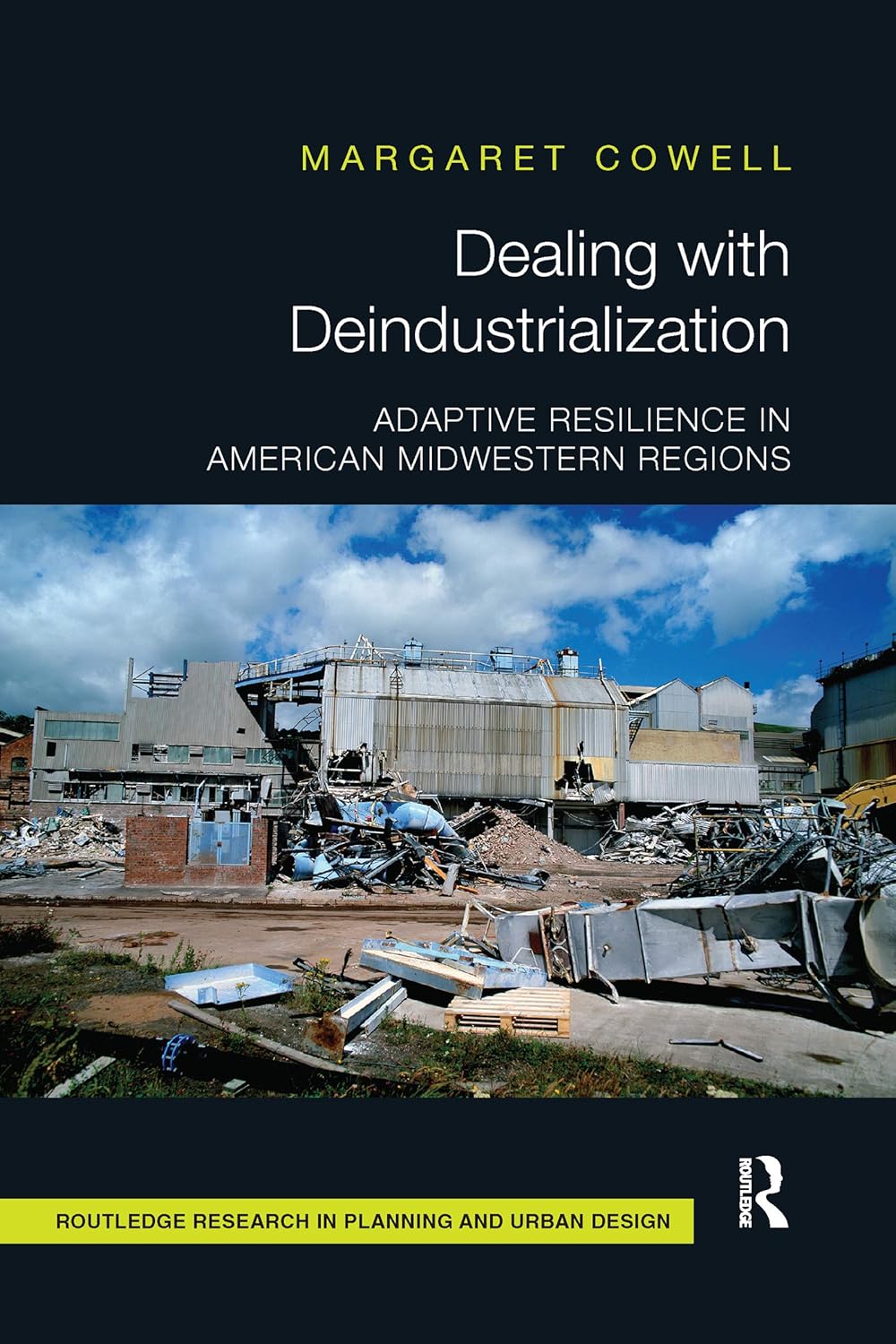
In this review of Dealing with Deindustrialization, Margaret Cowell offers a detailed study for readers who want to understand how Midwestern regions responded to mass factory closures in the late 1970s and 1980s. The book is best for planners, policy analysts, and students seeking an evidence-based explanation of regional adaptive resilience; its biggest strength is the careful comparison of eight metropolitan areas that reveals how differing asset bases, governance modes, and leadership qualities shaped economic development policy responses.
Key Features
- Comparative case studies: Eight metropolitan areas are examined side by side to show how varied regional attributes influenced outcomes.
- Adaptive resilience lens: The book uses adaptive resilience as a conceptual framework to explain why some regions managed deindustrialization better than others.
- Policy focus: Leaders' economic development decisions are analyzed to reveal practical approaches and trade-offs in responding to plant closures.
- Contextual factors: External influences and civic capacity are highlighted so readers can see how nonlocal forces shaped local strategies.
- Historical depth: Concentrating on the late 1970s and 1980s provides a focused historical period that clarifies the sequence of events after mass closures.
Who It's For
Urban planners, policy makers, graduate students will find this book particularly useful as a compact, research-driven account of how economic development policy was used to respond to deindustrialization in the US Midwest. The analysis is practical enough to inform teaching, comparative research, and strategy discussions about regional resilience.
Not for casual readers seeking a broad social history or memoir-style accounts; the book is academic and focused on policy responses rather than oral histories or popular narrative. Readers expecting prescriptive step-by-step recipes may also want a practitioner handbook alongside this volume.
Pros & Cons
Pros
- Provides rigorous comparative evidence that clarifies why regions diverged in their responses to factory closures.
- Uses the adaptive resilience framework to connect policy choices to long-term regional outcomes.
- Highlights the roles of governance and civic capacity, offering concrete lessons for policy design and leadership.
Cons
- The focused academic approach may feel dense to readers looking for narrative history or anecdotes.
Specifications
| Title | Dealing with Deindustrialization |
| Series | Routledge Research in Planning and Urban Design |
| Author | Margaret Cowell |
| Geographic focus | Midwest United States |
| Time period | Late 1970s and 1980s |
| Main theme | Adaptive resilience and economic development policy |
Our Verdict
Dealing with Deindustrialization is a valuable, research-driven study for professionals and scholars who need a comparative, policy-oriented account of how regions coped with industrial decline. Its focus on governance, civic capacity, and adaptive resilience makes it good value for those forming regional strategies, though casual readers may find the material somewhat academic.
Frequently Asked Questions
What regions does the book cover?
The study examines eight metropolitan areas in the Midwest United States to compare responses to deindustrialization.
Does it offer practical policy recommendations?
The book analyzes policy choices and trade-offs using an adaptive resilience lens, providing insights useful for policy design rather than step-by-step prescriptions.
Is this book suitable for undergraduate courses?
Yes, it can be used in upper-level undergraduate or graduate courses on urban planning, public policy, and regional development as a comparative case study resource.
Editor's Take
Dealing with Deindustrialization is a research-driven comparative study showing how governance, civic capacity, and adaptive resilience shaped regional responses to factory closures; it is recommended for planners and policy scholars seeking evidence-based lessons.

Recently viewed
Recently viewed products will appear here as customers browse the store.