

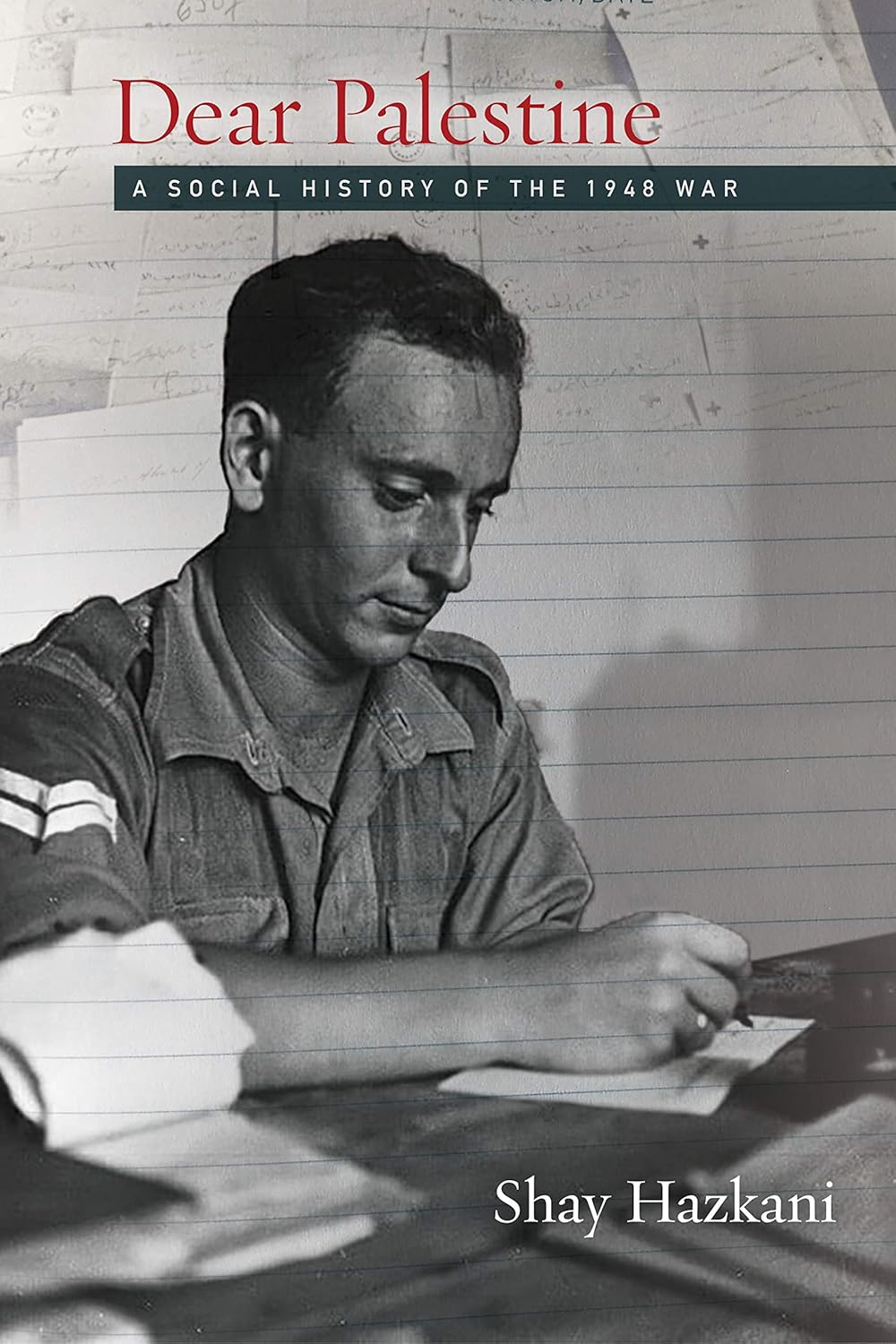
Dear Palestine: A Social History of the 1948 War Shay
Dear Palestine: A Social History of the 1948 War Shay
Price subject to change. Tap below for current.
Couldn't load pickup availability
In this review of Dear Palestine: A Social History of the 1948 War, the book is recommended for readers seeking a human-centered account of the 1948 conflict. Shay Hazkani frames the war through the personal letters of the young men and women who fought, offering readers a vivid, social history perspective that foregrounds daily life, nationalism, and transnational movement. The book's strength is its use of primary correspondence to illuminate how ordinary combatants understood colonialism, race, and the character of their enemies, making it especially valuable for historians and general readers who prefer firsthand voices over purely strategic narratives.
Key Features
- Primary correspondence focus: Letters from soldiers and volunteers bring individual perspectives to the forefront, making abstract political forces feel immediate and personal.
- Social history approach: The book emphasizes daily life and social dynamics, which helps readers understand how ideology and identity shaped participants' experiences.
- Transnational scope: Hazkani traces volunteers and recruits from multiple countries, revealing the wider reverberations of the 1948 War beyond local battlefields.
- Thematic depth: Discussion of nationalism, colonialism, and race gives readers analytical hooks for situating personal accounts in broader historical debates.
- Readable narrative: The author arranges letters and commentary in a way that balances scholarly analysis with engaging storytelling for nonacademic readers.
- Source-driven insight: Using contemporaneous letters allows Hazkani to reconstruct how participants made sense of events as they unfolded, not just in hindsight.
Who It's For
Dear Palestine is best for readers interested in modern Middle Eastern history, social history methodologies, and firsthand wartime testimony. Graduate students and informed general readers will appreciate Hazkani's archival work and the emphasis on letters as primary sources, which illuminate motives, everyday conditions, and ideological formation.
Those seeking a military or operational history focused on strategy and campaign chronology should look elsewhere; this book prioritizes the social and personal dimensions of the 1948 War rather than battle maps or unit movements.
Pros & Cons
Pros
- Compelling use of letters that humanize participants and provide direct historical testimony.
- Clear analysis linking individual accounts to larger themes like nationalism and colonialism.
- Transnational perspective broadens the story beyond a strictly local narrative.
Cons
- The focus on social history means readers seeking detailed military chronology may find the coverage limited.
Specifications
| Title | Dear Palestine: A Social History of the 1948 War |
| Author | Shay Hazkani |
| Series | Stanford Studies in Middle Eastern and Islamic Societies and Cultures |
| Subject | Social history of the 1948 War; letters and personal accounts |
| Approach | Primary correspondence and thematic analysis |
| Scope | Focus on participants, transnational volunteers, and ideological context |
Our Verdict
Dear Palestine is a well-crafted social history that deserves a place on the shelf of anyone studying the 1948 War from the perspective of participants. Its reliance on letters makes it uniquely empathetic and informative, offering strong value for readers who want to understand how ordinary fighters perceived nationalism, colonialism, and identity during the conflict.
Frequently Asked Questions
Does this book use primary sources?
Yes. The narrative is built largely from letters written by soldiers and volunteers, which Hazkani uses to reconstruct personal experiences.
Is this a military history?
No. The book emphasizes social and personal perspectives rather than detailed battlefield strategy or operational chronology.
Who is the author?
Shay Hazkani is the scholar who compiled and analyzed the correspondence to present a social history of the 1948 War.
Editor's Take
Dear Palestine is a source-driven social history that uses soldiers' letters to illuminate everyday experience, nationalism, and transnational dimensions of the 1948 War; it is ideal for readers who want personal perspectives rather than military operational detail.

Recently viewed
Recently viewed products will appear here as customers browse the store.