

Death, Grief and Poverty in Britain 1870-1914 - Social History
Death, Grief and Poverty in Britain 1870-1914 - Social History
Price subject to change. Tap below for current.
Couldn't load pickup availability
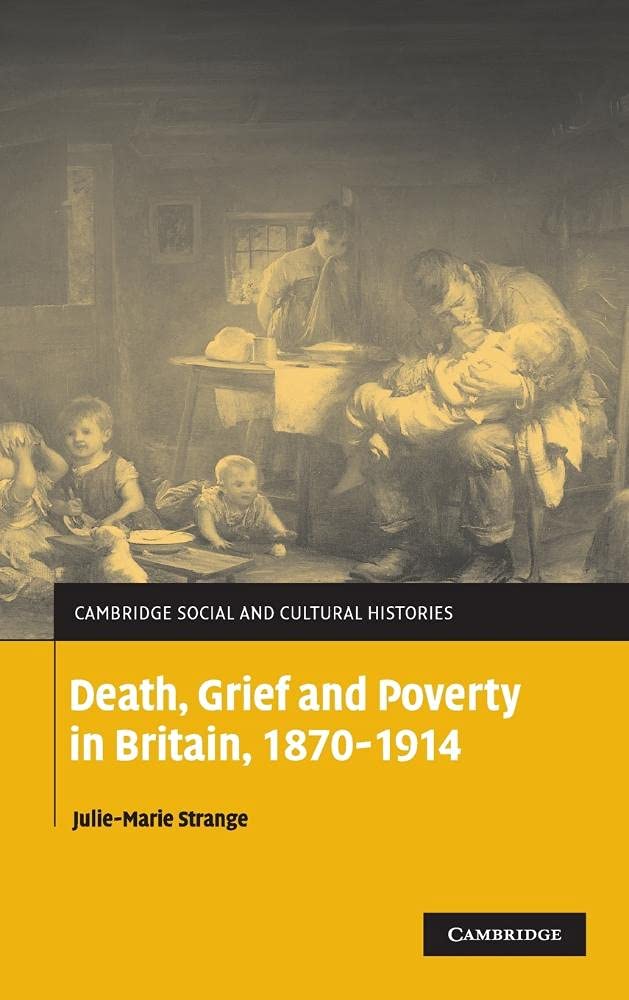
In this review of Death, Grief and Poverty in Britain 1870-1914 the reviewer finds a focused, well-researched study ideal for readers seeking a deeper understanding of working-class mourning in Victorian and Edwardian Britain. Julie-Marie Strange challenges the long-standing assumption that high mortality blunted grief, arguing persuasively that poverty often intensified mourning practices. This book is recommended for historians, social historians, and graduate students who want primary-text grounded analysis rather than popular summaries, and it offers rich examples drawn from fiction, journalism, official reports and personal testimony.
Key Features
- Original argument: The book overturns the idea that the poor did not mourn, showing how poverty increased grief and shaped ritual expression.
- Range of sources: Uses fiction, journalism, official reports and personal testimony to provide multiple perspectives on working-class mourning practices.
- Practical topics: Detailed chapters on care of the corpse, the funeral and the cemetery explain how everyday economic limits affected ritual choices.
- Infant mortality focus: A sustained treatment of high infant mortality rates clarifies how repeated loss shaped family and community commemoration.
- Accessible scholarship: Written for both specialists and informed readers, the prose balances archival detail with interpretive clarity.
Who It's For
This book is best for students, researchers and general readers interested in British social and cultural history, especially those studying death, mourning, class and ritual. The close readings of primary sources make it valuable for seminar teaching and for anyone tracing the everyday impacts of poverty on life-cycle practices.
Readers seeking a broad survey of European funerary customs or a photographic coffee-table book should look elsewhere; this is a focused academic study rooted in textual sources and analysis rather than visual display or pan-European comparison.
Pros & Cons
Pros
- Provides a persuasive reinterpretation of working-class mourning backed by diverse primary sources.
- Chapters on funerary stages give concrete detail useful for research and teaching.
- Clear writing makes complex social argument accessible to non-specialists.
Cons
- Focused academic approach may feel dense to casual readers looking for light narrative.
Specifications
| Title | Death, Grief and Poverty in Britain 1870-1914 |
| Series | Cambridge Social and Cultural Histories, Series Number 6 |
| Author | Julie-Marie Strange |
| Scope | Working-class mourning, funerals, cemeteries and commemoration |
| Sources | Fiction, journalism, official reports, personal testimony |
| Historical period | Victorian and Edwardian Britain, 1870-1914 |
Our Verdict
Death, Grief and Poverty in Britain 1870-1914 is a rigorous and rewarding study for anyone wanting to rethink assumptions about mourning among the poor. Julie-Marie Strange combines archival breadth with clear argumentation, making this a strong purchase for students and researchers of social history who value interpretation grounded in primary materials.
Frequently Asked Questions
Does the book use primary sources?
Yes, it draws on fiction, contemporary journalism, official reports and personal testimony throughout to support its arguments.
Is this suitable for undergraduate courses?
Yes, it is suitable for upper-level undergraduates and postgraduate courses in social and cultural history.
Does it cover all of Britain or specific regions?
The study addresses patterns across Britain in the period 1870-1914 rather than providing a region-by-region atlas.
Editor's Take
A rigorous, archival study that argues poverty intensified working-class grief; ideal for students and researchers of British social and cultural history seeking primary-source grounded interpretation.

Recently viewed
Recently viewed products will appear here as customers browse the store.