

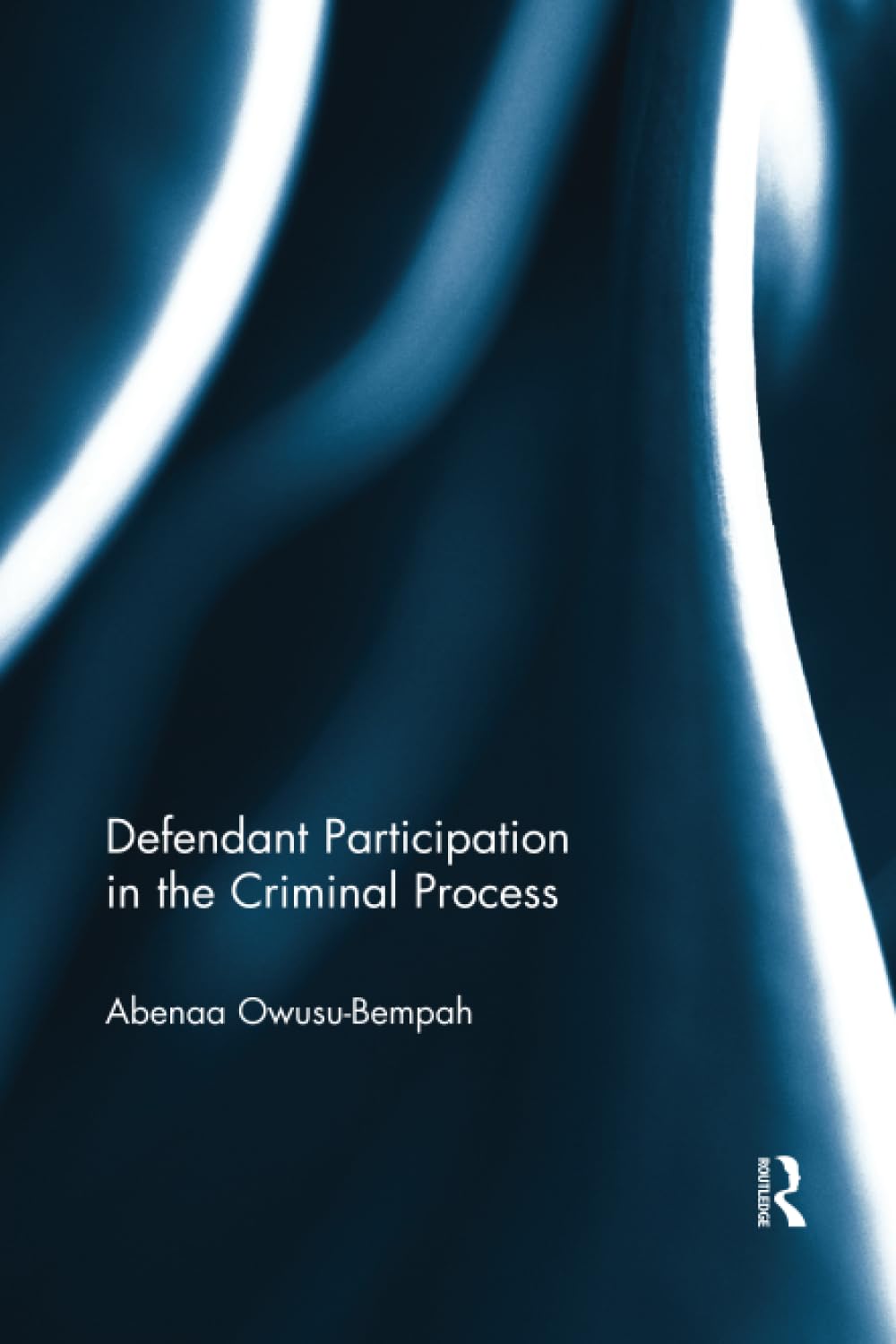
Defendant Participation in the Criminal Process - Analytical
Defendant Participation in the Criminal Process - Analytical
Price subject to change. Tap below for current.
Couldn't load pickup availability
In this review of Defendant Participation in the Criminal Process the reviewer finds a focused, scholarly examination of how English criminal procedure increasingly demands active defendant engagement. The book is best for students, academics and practitioners who want a principled account of the shifting balance between rights and duties in criminal trials; its single biggest reason to read is the clear normative theory that reframes the criminal process as a mechanism for holding the state to account, which helps readers assess the implications of penalising non-cooperation.
Key Features
- Normative theory: The book develops a clear proposal that the criminal process should call the state to account, helping readers rethink procedural roles and burdens.
- Focus on self-incrimination: It examines the limitations placed on the privilege against self-incrimination, clarifying where legal protections have been narrowed.
- Right to silence analysis: The book traces how the curtailment of the right to silence affects evidence use and defendant strategy in practice.
- Duty to cooperate discussion: It explores the defendants duty to disclose and the practical consequences of penalising non-cooperation for trial fairness.
- Implications for adversarial system: The text evaluates how penalising defendant silence alters adversarial dynamics and the role of the prosecution.
Who It's For
This book is primarily aimed at law students, criminal defence practitioners and academic researchers who need a rigorous conceptual framework to assess recent procedural changes in English criminal law. It suits readers who want to connect doctrinal shifts to broader principles about state accountability and individual rights.
Readers seeking a short practitioner's manual, step-by-step litigation tactics, or jurisdiction-specific forms should look elsewhere, as the work is legal theory and doctrinal analysis rather than a how-to guide or a procedural checklist.
Pros & Cons
Pros
- Provides a well-argued normative framework that helps interpret changes to defendant obligations.
- Clarifies the legal limits on the privilege against self-incrimination and the practical effects of narrowing the right to silence.
- Useful synthesis for academics and advanced students studying criminal procedure and criminal justice theory.
Cons
- The book is doctrinal and theoretical, so it may not satisfy readers who need immediate courtroom tactics or forms.
Specifications
| Title | Defendant Participation in the Criminal Process |
| Author | Abenaa Owusu- Bempah |
| Subject | Criminal procedure and defendant obligations |
| Focus areas | Privilege against self-incrimination; right to silence; duty to disclose |
| Approach | Normative theory and doctrinal analysis |
| Jurisdiction | English criminal process |
Our Verdict
This is a thoughtful, well-structured examination of defendant participation that belongs on the shelf of anyone studying or researching English criminal procedure. It offers strong intellectual value by reframing procedural changes in normative terms, though practitioners wanting practical checklists may find it less directly useful.
Frequently Asked Questions
Does the book argue the defendant should always cooperate?
The author does not argue for unconditional cooperation but analyzes when penalising non-cooperation is justified and its effects on fairness.
Is this a practical legal handbook?
No. The work is doctrinal and theoretical rather than a step-by-step procedural guide.
Which jurisdiction does it address?
The analysis focuses on the English criminal process and recent changes within that legal context.
Editor's Take
A thoughtful, theory-driven examination of how English criminal procedure increasingly requires defendant cooperation; ideal for students and researchers, less suited to those needing practical courtroom checklists.

Recently viewed
Recently viewed products will appear here as customers browse the store.